Radiation is a phenomenon that exists widely in nature and various artificial environments. As a switching diode supplier, understanding the effects of radiation on switching diodes is crucial for both product quality control and customer satisfaction. In this blog, we’ll delve into what the effects of radiation on a switching diode are, exploring the underlying mechanisms and practical implications. Switching Diode
1. Basic Principles of Switching Diodes
Before discussing the impact of radiation, it’s essential to understand the basic working principles of switching diodes. A switching diode is a semiconductor device that can quickly switch between the conducting and non – conducting states. It is mainly used in high – speed switching circuits, such as in digital circuits, communication systems, and power electronics.
The operation of a switching diode is based on the movement of charge carriers (electrons and holes) within the semiconductor material. When a forward bias is applied, electrons and holes move towards each other, resulting in a conducting state. Conversely, under reverse bias, the depletion region widens, and the diode enters a non – conducting state.
2. Types of Radiation and Their Interaction with Switching Diodes
There are several types of radiation, including ionizing radiation (such as alpha particles, beta particles, gamma rays, and X – rays) and non – ionizing radiation (such as radio waves, microwaves, and infrared radiation). Each type of radiation interacts with switching diodes in different ways.
Ionizing Radiation
- Alpha Particles: Alpha particles are relatively large and heavy, consisting of two protons and two neutrons. When an alpha particle enters a switching diode, it can cause significant damage to the semiconductor lattice. It can displace atoms from their normal positions, creating vacancies and interstitial defects. These defects can act as recombination centers for charge carriers, which may lead to an increase in leakage current and a decrease in the switching speed of the diode.
- Beta Particles: Beta particles are high – energy electrons or positrons. They are smaller and more penetrating than alpha particles. When beta particles interact with the semiconductor material of a switching diode, they can ionize atoms, creating electron – hole pairs. The additional charge carriers can affect the electrical properties of the diode, such as changing the forward and reverse current – voltage characteristics.
- Gamma Rays and X – rays: Gamma rays and X – rays are high – energy electromagnetic radiation. They can penetrate deep into the semiconductor material and cause ionization. The ionization can lead to the generation of a large number of electron – hole pairs, which can disrupt the normal operation of the switching diode. In severe cases, it can cause permanent damage to the diode, such as breakdown of the p – n junction.
Non – Ionizing Radiation
Non – ionizing radiation has lower energy compared to ionizing radiation. Radio waves, microwaves, and infrared radiation can interact with the switching diode mainly through heating effects. When the diode absorbs non – ionizing radiation, the energy is converted into heat. An increase in temperature can affect the electrical properties of the semiconductor material. For example, the mobility of charge carriers increases with temperature, which can lead to a change in the forward voltage drop and the reverse leakage current of the diode.
3. Effects on Electrical Performance
Leakage Current
Radiation can increase the leakage current of a switching diode. As mentioned earlier, ionizing radiation can create defects in the semiconductor lattice, which act as recombination centers. These centers allow charge carriers to flow across the p – n junction even when the diode is reverse – biased, resulting in an increase in leakage current. A high leakage current can cause power dissipation in the circuit, reduce the efficiency of the system, and may even lead to false triggering in digital circuits.
Forward Voltage Drop
The forward voltage drop of a switching diode may also be affected by radiation. The generation of additional charge carriers due to radiation can change the carrier concentration in the semiconductor material. This, in turn, can alter the forward current – voltage characteristics of the diode, leading to a change in the forward voltage drop. A change in the forward voltage drop can affect the performance of circuits that rely on precise voltage levels, such as voltage regulators and signal amplifiers.
Switching Speed
Radiation can have a significant impact on the switching speed of a switching diode. The defects created by radiation can increase the recombination time of charge carriers. When the diode is switching from the conducting to the non – conducting state, the excess charge carriers need to recombine. If the recombination time is increased, the switching speed of the diode will be reduced. This can be a critical issue in high – speed applications, such as in high – frequency communication systems and digital signal processing.
4. Long – Term Effects and Reliability
Exposure to radiation over a long period can lead to cumulative damage to the switching diode. The continuous creation of defects in the semiconductor lattice can gradually degrade the electrical performance of the diode. This can result in an increase in failure rate over time.
In applications where reliability is of utmost importance, such as in aerospace, nuclear power plants, and medical equipment, the long – term effects of radiation on switching diodes need to be carefully considered. For example, in a satellite, the switching diodes are exposed to cosmic radiation. If the diodes are not radiation – hardened, they may fail prematurely, leading to system malfunctions.
5. Mitigation Strategies
As a switching diode supplier, we understand the importance of providing radiation – resistant products. There are several strategies to mitigate the effects of radiation on switching diodes:
- Material Selection: Using high – quality semiconductor materials with better radiation resistance can reduce the impact of radiation. For example, silicon carbide (SiC) has better radiation tolerance compared to traditional silicon – based diodes.
- Device Design: Optimizing the device structure can also improve radiation resistance. For example, increasing the thickness of the depletion region can reduce the probability of radiation – induced ionization.
- Shielding: In some applications, shielding the switching diodes from radiation can be an effective solution. Using materials such as lead or aluminum can block ionizing radiation.
6. Our Role as a Switching Diode Supplier
As a leading switching diode supplier, we are committed to providing high – quality products that can withstand the effects of radiation. Our R & D team is constantly working on improving the radiation resistance of our switching diodes through advanced material selection and innovative device design.
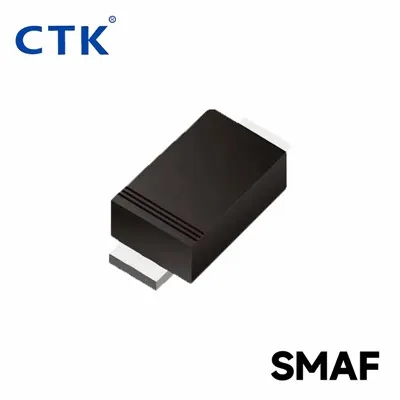
We offer a wide range of switching diodes suitable for various applications, including those in radiation – prone environments. Our products are rigorously tested to ensure their performance and reliability under different radiation conditions. Whether you are in the aerospace, medical, or industrial field, we can provide you with the right switching diodes to meet your specific requirements.
Others If you are looking for high – quality switching diodes with excellent radiation resistance, we invite you to contact us for procurement and further discussions. Our experienced sales team will be happy to assist you in finding the most suitable products for your applications.
References
- Sze, S. M. (1981). Physics of Semiconductor Devices. John Wiley & Sons.
- Neamen, D. A. (2003). Semiconductor Physics and Devices: Basic Principles. McGraw – Hill.
- Cressler, J. D., & Allstot, D. J. (1995). Radiation Effects in Semiconductor Devices. IEEE Press.
Tongke Electronic Co., Ltd
Tongke Electronic Co., Ltd. is one of the most experienced switching diode manufacturers and suppliers in China, featured by quality products and low price. Please rest assured to wholesale advanced switching diode made in China here from our factory. Contact us for pricelist.
Address: No.3,Chayuan Rd, Street 3, AilingKan, Dalingshan, Dongguan, Guangdong, China.
E-mail: jack@ctk-elec.com
WebSite: https://www.ctkchip.com/
