As a seasoned supplier of manual surface grinders, I’ve often encountered inquiries from clients about the grinding accuracy of these versatile machines. In this blog, I’ll delve into the concept of grinding accuracy, its determining factors, and why it matters in various industrial applications. Manual Surface Grinder

Understanding Grinding Accuracy
Grinding accuracy refers to the degree of precision with which a manual surface grinder can shape and finish the surface of a workpiece. It encompasses several key aspects, including dimensional accuracy, surface finish, and geometric form.
Dimensional accuracy is the ability of the grinder to achieve the desired thickness, width, and length of the workpiece within a specified tolerance range. For example, if a component requires a final thickness of 10 mm with a tolerance of ±0.01 mm, the grinder must be capable of grinding the workpiece to a thickness that falls within the range of 9.99 mm to 10.01 mm.
Surface finish is another crucial aspect of grinding accuracy. It refers to the texture and smoothness of the ground surface. A high – quality surface finish not only enhances the aesthetic appeal of the workpiece but also improves its functionality, such as reducing friction and wear in mechanical components. Surface finish is typically measured in terms of roughness average (Ra), which is the arithmetic average of the absolute values of the surface profile deviations from the mean line.
Geometric form accuracy relates to the ability of the grinder to produce workpieces with the correct shape, such as flatness, parallelism, and perpendicularity. For instance, in the production of precision molds, ensuring the flatness of the mold surface is essential for the quality of the molded products.
Factors Affecting Grinding Accuracy
Machine Quality and Rigidity
The quality and rigidity of the manual surface grinder itself play a significant role in determining grinding accuracy. A well – built grinder with a sturdy frame and high – precision components can minimize vibrations and deflections during the grinding process. This stability is crucial for maintaining consistent cutting forces and achieving accurate results. For example, a grinder made from high – grade cast iron and equipped with precision ball screws and linear guides is more likely to provide better accuracy compared to a machine with inferior construction.
Grinding Wheel Selection
The choice of grinding wheel is another critical factor. Different grinding wheels have different abrasive grains, bond materials, and structures, which can affect the grinding performance and accuracy. For hard materials like carbide, a grinding wheel with a hard bond and fine abrasive grains is usually required to ensure a precise cut and a smooth surface finish. On the other hand, for softer materials, a more open – structured wheel may be more suitable to prevent clogging and overheating, which can lead to poor dimensional accuracy.
Operator Skill and Experience
The skill and experience of the operator cannot be underestimated. A well – trained operator knows how to adjust the grinder settings, such as the grinding speed, feed rate, and depth of cut, to achieve the desired accuracy. They can also detect and correct any potential issues during the grinding process, such as wheel wear or workpiece vibrations. For example, an experienced operator can recognize when the grinding wheel needs to be dressed to maintain its cutting edge and accuracy.
Workpiece Material and Characteristics
The material and characteristics of the workpiece also influence grinding accuracy. Harder materials are generally more difficult to grind accurately due to their high resistance to cutting. Additionally, the shape and size of the workpiece can pose challenges. Irregularly shaped workpieces may require special fixturing and grinding techniques to ensure uniform grinding and accuracy.
Measuring Grinding Accuracy
To ensure that the grinding accuracy meets the required specifications, various measurement tools are used. For dimensional accuracy, micrometers, calipers, and height gauges are commonly employed. These tools can provide precise measurements of the workpiece’s dimensions, allowing the operator to make necessary adjustments during the grinding process.
Surface finish is typically measured using a profilometer. This device measures the surface profile and calculates the roughness average (Ra) value. By regularly measuring the surface finish, the operator can determine if the grinding process is producing the desired smoothness.
Geometric form accuracy can be measured using instruments such as straightedges, dial indicators, and optical comparators. These tools can detect any deviations from the required flatness, parallelism, or perpendicularity of the workpiece.
Importance of Grinding Accuracy in Industrial Applications
Precision Manufacturing
In precision manufacturing industries, such as aerospace and automotive, grinding accuracy is of utmost importance. Components used in these industries, such as turbine blades and engine parts, require extremely high levels of dimensional accuracy and surface finish. A small deviation in the grinding accuracy can lead to poor performance, reduced reliability, and even safety hazards. For example, in an aircraft engine, a turbine blade with inaccurate dimensions can cause imbalances, leading to increased vibration and potential engine failure.
Tool and Die Making
In tool and die making, grinding accuracy is essential for producing high – quality molds, dies, and cutting tools. The precision of these tools directly affects the quality of the products they produce. A die with poor flatness or dimensional accuracy can result in defective stamped or molded parts. By achieving high grinding accuracy, tool and die makers can ensure the longevity and performance of their products.
Medical Device Manufacturing
The medical device industry also relies heavily on grinding accuracy. Components such as surgical instruments and implants require precise dimensions and smooth surface finishes to ensure proper functionality and biocompatibility. For example, an orthopedic implant with a rough surface can cause irritation and inflammation in the patient’s body, while an implant with inaccurate dimensions may not fit properly, leading to complications.
Our Expertise in Manual Surface Grinders with High Grinding Accuracy
As a trusted supplier of manual surface grinders, we understand the importance of grinding accuracy in various industrial applications. Our grinders are designed and manufactured with the latest technology and precision engineering techniques to ensure exceptional performance.
We offer a wide range of manual surface grinders that can cater to different requirements and budgets. Our machines are equipped with high – quality components, such as precision ball screws and linear guides, to provide smooth and accurate movement. We also provide comprehensive training and technical support to our customers, ensuring that they can operate the machines effectively and achieve the desired grinding accuracy.
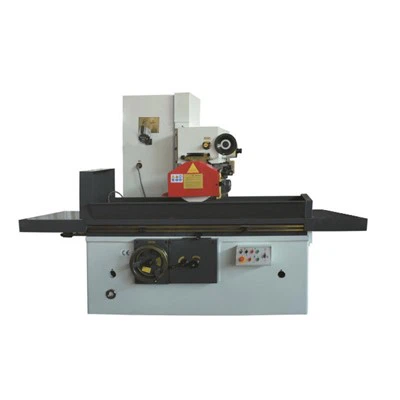
In addition, our experienced team of engineers and technicians can assist you in selecting the right grinding wheel and optimizing the grinding process for your specific workpiece. We are committed to providing our customers with the highest level of quality and service, and we continuously invest in research and development to improve the performance and accuracy of our products.
Contact Us for Your Grinding Needs
Precision Surface Grinder If you are in the market for a manual surface grinder with high grinding accuracy, we invite you to contact us for a detailed discussion. Our sales team is ready to answer all your questions and provide you with a customized solution based on your specific requirements. Whether you are a small – scale workshop or a large industrial manufacturer, we have the expertise and products to meet your needs. Let’s work together to achieve the highest level of grinding accuracy for your production processes.
References
- Kalpakjian, S., & Schmid, S. R. (2008). Manufacturing Engineering & Technology. Pearson Prentice Hall.
- Trent, E. M., & Wright, P. K. (2000). Metal Cutting. Butterworth – Heinemann.
- Stephenson, D. A., & Agapiou, J. S. (2006). Metal Machining: Theory and Applications. CRC Press.
Wuxi Mingxu Machinery Equipment Co., Ltd.
As one of the most professional manual surface grinder manufacturers and suppliers in China, we’re featured by quality products and good price. Please rest assured to buy the best manual surface grinder for sale here from our factory. Also, custom service is available.
Address: No. 5-5 Jinke Wealth Plaza, Changjiang North Road, Xinwu District, Wuxi City, Jiangsu Province
E-mail: yingyingmxjd@163.com
WebSite: https://www.mingxu-china.com/
