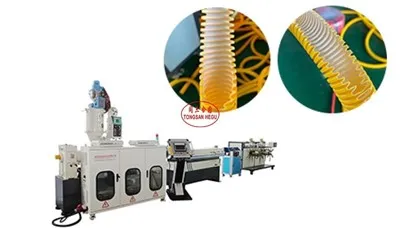
As a seasoned supplier of auxiliary equipment, I’ve witnessed firsthand the pivotal role that communication interfaces play in the seamless operation of these systems. Auxiliary equipment, which encompasses a wide range of devices such as sensors, actuators, and controllers, relies on effective communication interfaces to interact with other components in a larger system. In this blog post, I’ll delve into the various communication interfaces used in auxiliary equipment, their advantages, and how they can enhance the performance of your operations. Auxiliary Equipment
Wired Communication Interfaces
Ethernet
Ethernet is one of the most widely used communication interfaces in industrial applications, including auxiliary equipment. It offers high-speed data transfer rates, typically ranging from 10 Mbps to 10 Gbps, making it suitable for applications that require real-time data exchange. Ethernet is also highly scalable, allowing multiple devices to be connected to a network without significant performance degradation.
One of the key advantages of Ethernet is its compatibility with a wide range of protocols, such as TCP/IP, UDP, and Modbus/TCP. This makes it easy to integrate auxiliary equipment with other systems, including programmable logic controllers (PLCs), human-machine interfaces (HMIs), and supervisory control and data acquisition (SCADA) systems. Additionally, Ethernet networks can be easily expanded and reconfigured, providing flexibility for future growth and changes in your operations.
RS-232
RS-232 is a serial communication interface that has been used for decades in industrial and commercial applications. It offers a simple and reliable way to transfer data between devices, with a maximum data transfer rate of 115,200 bps. RS-232 is commonly used for connecting auxiliary equipment to computers, printers, and other serial devices.
One of the main advantages of RS-232 is its simplicity. It requires only a single pair of wires for data transmission, making it easy to install and configure. Additionally, RS-232 is widely supported by a variety of devices, including microcontrollers, sensors, and actuators. However, RS-232 has some limitations, such as a limited distance range (typically up to 15 meters) and a relatively slow data transfer rate compared to other interfaces.
RS-485
RS-485 is a serial communication interface that is similar to RS-232 but offers several advantages, including a longer distance range (up to 1,200 meters) and the ability to connect multiple devices to a single network. RS-485 uses a differential signaling technique, which makes it more resistant to noise and interference compared to RS-232.
RS-485 is commonly used in industrial applications, such as building automation, process control, and energy management. It is also widely used for connecting auxiliary equipment, such as sensors and actuators, to a central control system. One of the key advantages of RS-485 is its ability to support multi-drop networks, which allows multiple devices to be connected to a single communication line. This makes it easy to expand and reconfigure your system as needed.
Wireless Communication Interfaces
Wi-Fi
Wi-Fi is a wireless communication interface that is widely used in consumer and industrial applications. It offers high-speed data transfer rates, typically ranging from 11 Mbps to 866 Mbps, making it suitable for applications that require real-time data exchange. Wi-Fi is also highly scalable, allowing multiple devices to be connected to a network without significant performance degradation.
One of the key advantages of Wi-Fi is its convenience. It allows devices to connect to a network without the need for cables, providing flexibility and mobility. Additionally, Wi-Fi networks can be easily expanded and reconfigured, providing flexibility for future growth and changes in your operations. However, Wi-Fi has some limitations, such as a limited range (typically up to 100 meters) and a susceptibility to interference from other wireless devices.
Bluetooth
Bluetooth is a wireless communication interface that is commonly used for short-range communication between devices. It offers a low-power, low-cost solution for connecting auxiliary equipment, such as sensors and actuators, to a central control system. Bluetooth has a maximum data transfer rate of 2.1 Mbps and a range of up to 10 meters.
One of the main advantages of Bluetooth is its simplicity. It requires only a single device to be paired with another device, making it easy to set up and use. Additionally, Bluetooth is widely supported by a variety of devices, including smartphones, tablets, and laptops. However, Bluetooth has some limitations, such as a limited range and a relatively slow data transfer rate compared to other interfaces.
ZigBee
ZigBee is a wireless communication interface that is designed for low-power, low-data-rate applications. It offers a self-healing mesh network topology, which allows devices to communicate with each other even if one or more devices fail. ZigBee has a maximum data transfer rate of 250 kbps and a range of up to 100 meters.
ZigBee is commonly used in industrial applications, such as building automation, home automation, and energy management. It is also widely used for connecting auxiliary equipment, such as sensors and actuators, to a central control system. One of the key advantages of ZigBee is its low power consumption, which makes it suitable for battery-powered devices. Additionally, ZigBee networks can be easily expanded and reconfigured, providing flexibility for future growth and changes in your operations.
Choosing the Right Communication Interface
When choosing a communication interface for your auxiliary equipment, there are several factors to consider, including the type of application, the distance between devices, the data transfer rate requirements, and the power consumption. Here are some general guidelines to help you choose the right communication interface:
- Wired interfaces are generally more reliable and secure than wireless interfaces, but they require cables and may be more difficult to install and maintain.
- Ethernet is a good choice for applications that require high-speed data transfer and real-time communication, such as industrial automation and process control.
- RS-232 and RS-485 are good choices for applications that require a simple and reliable way to transfer data between devices, such as connecting sensors and actuators to a central control system.
- Wireless interfaces offer greater flexibility and mobility than wired interfaces, but they may be more susceptible to interference and have a limited range.
- Wi-Fi is a good choice for applications that require high-speed data transfer and real-time communication, such as connecting laptops and smartphones to a network.
- Bluetooth is a good choice for applications that require short-range communication between devices, such as connecting sensors and actuators to a central control system.
- ZigBee is a good choice for applications that require low-power, low-data-rate communication, such as building automation and home automation.
Conclusion
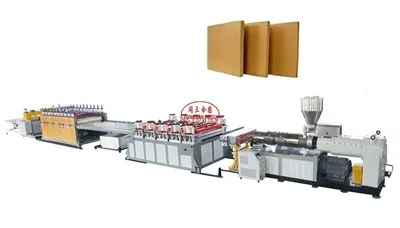
PP Hollow Sheet Machine In conclusion, communication interfaces play a crucial role in the seamless operation of auxiliary equipment. By choosing the right communication interface for your application, you can enhance the performance of your operations, improve efficiency, and reduce costs. As a supplier of auxiliary equipment, I’m committed to providing my customers with the latest technology and solutions to meet their communication needs. If you’re interested in learning more about our products and services, or if you have any questions or concerns, please don’t hesitate to contact me. I’d be happy to discuss your requirements and help you find the right solution for your business.
References
- Johnson, M. (2019). Industrial Communication Networks: Principles and Applications. Wiley.
- Smith, A. (2020). Wireless Communication Technologies for Industrial Automation. IEEE Press.
- Brown, C. (2018). Serial Communication Protocols: A Practical Guide. O’Reilly Media.
Qingdao Tongsanhegu Plastic Machinery Manufacturing Co., Ltd.
With abundant experience, we are one of the most reliable auxiliary equipment manufacturers and suppliers in China. We warmly welcome you to buy durable auxiliary equipment for sale here from our factory. Quality products and reasonable price are available.
Address: West of Xixinzhi Village, Sanlihe District Jiaozhou, Qingdao City, Shandong Province, China
E-mail: info@tongsanhegu.com
WebSite: https://www.tongsanhegumachine.com/
