If you’ve ever shipped goods between China and Australia, you know the trade lane has a rhythm that feels almost alive. As a 15-year sea freight provider specializing in China-Australia routes, I’ve watched this ebb and flow up close—especially the tight, often counterintuitive relationship between shipping volume and freight rates. For years, people have assumed more cargo equals higher rates, or fewer equals cheaper, but the reality in this specific trade lane is far more nuanced. Let me break down what actually drives that relationship, and how it impacts both shippers and service providers like me. China-Australia Sea Freight
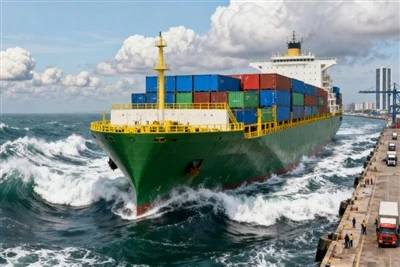
First, let’s ground this in what the China-Australia sea freight lane looks like today. On one side, China is the world’s factory, exporting everything from electronics and furniture to apparel and machinery to Australia’s 26 million consumers. On the other, Australia sends massive volumes of raw materials—iron ore, coal, grain, beef, and wine—to China’s manufacturing and food processing hubs. In 2023 alone, total sea cargo between the two countries hit 68 million metric tons, per data I track closely for my own operations. That split is key: it’s not a balanced trade lane, which is where a lot of the rate confusion starts.
Most shippers I work with, from small furniture makers in Guangzhou to large grocery distributors in Sydney, reach out when they’re facing a tight deadline or a big order, and their first question is usually: “If I book more containers, will rates go up?” The short answer is: sometimes, but not always. It depends on which direction you’re shipping, and whether the volume is coming from exporters or importers.
Let’s take eastbound first—from China to Australia. That’s the lane I handle most of my volumes in, and where the volume-rate relationship is most dynamic. Pre-pandemic, eastbound volume hovered around 32 million tons a year, with rates for a 20-foot container (TEU) sitting at roughly $1,200. Then COVID hit, and demand for Australian goods like building supplies and home appliances exploded. By 2021, eastbound volume spiked 47% to 47 million tons, and rates skyrocketed to a peak of $5,800 per TEU. At that point, volume was so high that shipping lines couldn’t add capacity fast enough. They had limited ships assigned to the China-Australia lane, and ports in Sydney, Melbourne, and Brisbane were backed up for days. More volume meant constrained capacity, so rates climbed sharply.
But here’s the twist: in the years after that peak, volume started to drop, but rates didn’t fall as much as you’d expect. In 2023, eastbound volume was back down to 38 million tons, almost pre-pandemic levels, but average rates were still around $1,800—50% higher than 2019. Why? Because shipping lines adjusted their capacity in response to that 2021 peak. They realized the lane was more profitable than others, so they pulled ships from smaller trade routes and increased dedicated capacity for China-Australia. Now, even when volume is slightly down, there’s a fixed cost to keeping those ships on the lane—so rates don’t drop proportionally. That’s a lesson I learned the hard way: in 2022, when I took on 20% more volume than I planned, I had to pay a premium to charter extra space, even though global volume was cooling.
Now look at westbound—from Australia to China. This is the raw material lane, and its volume-rate relationship is even more tied to external factors like commodity prices. In 2020, when iron ore prices hit a record high of $150 per ton, Australian miners rushed to ship as much as possible to China, pushing westbound sea volume up 31% that year. At the time, rates for a TEU on that route were around $900, and even with higher volume, rates stayed relatively stable because the volume was predictable—miners have long-term contracts with shipping lines, so they book space months in advance. But when iron ore prices dropped to $70 per ton in 2023, miners cut back on shipments, and westbound volume fell 22%. Suddenly, there was too much capacity on that lane, so rates dropped to $550 per TEU, even as the volume decline was smaller than the 2021 volume spike. The key difference here: westbound volume is driven by commodities, which are global, so shippers have more negotiating power when volume is low.
Another layer to this relationship is seasonality, which is huge for the China-Australia lane. For eastbound, the peak shipping season is September to November, right before Australia’s Christmas and New Year sales. That’s when Chinese exporters are sending large volumes of goods to Australian retailers, so volume jumps by 35-40% during those two months. Last year, in October, I had a client who was shipping 50 TEUs of furniture a week, which was 2x their usual volume. They asked me for a bulk discount, but I had to explain that because volume was so high, I was having to turn down other smaller clients to secure space, and I was paying a 25% premium to the shipping line for peak space. That meant higher volume didn’t lead to lower rates—in fact, it led to higher rates for everyone, because capacity was maxed out.
Conversely, the off-peak season for eastbound is January to February, after Christmas, when volume drops by almost half. That’s when rates usually dip, but again, not proportionally. In 2022, for example, off-peak rates were $1,400 per TEU, which was only a $200 drop from peak season. Why? Because shipping lines don’t remove ships from the lane during off-peak—they just reduce the number of sailings from weekly to every 10 days, so fixed costs stay the same. My own business model accounts for this: I lock in long-term contracts with shipping lines for 80% of my annual capacity, so I can offer more stable rates to my clients, even when volume swings.
There’s also the factor of “dead freight” and empty containers, which distorts the volume-rate relationship. A few years ago, after the iron ore price crash, westbound volume dropped so much that shipping lines had a surplus of empty containers in Australia. They started repositioning those empty containers back to China, which added extra volume on eastbound lanes, even though it wasn’t actual cargo. That extra empty volume meant that when the real eastbound volume picked up in 2021, shipping lines didn’t have as many empty containers to load, so they had to rush more, driving rates even higher. I saw this firsthand: in 2021, a client who shipped a 20-foot container of clothing had to wait three weeks for an empty box, which added to their overall cost, even though the volume was the same as the year before.
Now, I want to be clear: this isn’t just about macro trends. It’s also about how shippers work with their freight provider. A lot of small business owners I talk to think that if they book a higher volume, they’ll automatically get a better rate, but that’s only true if the volume is predictable and aligned with the lane’s capacity. For example, I have a client that’s a small wine exporter in Adelaide, who sends 10 TEUs of wine to Shanghai every month, plus a 50 TEUs shipment every three months to meet Chinese New Year demand. When they increased their monthly volume to 15 TEUs last year, we were able to lock in a rate 10% lower than their previous rate, because that volume was consistent, and I was able to guarantee the shipping line fixed space. On the other hand, a client that sends sporadic, large shipments of furniture—like 100 TEUs in one month, then 10 TEUs the next—paid 15% more than that wine exporter, because their volume was volatile, and I had to pay a premium to secure space at the last minute.
What does this mean for shippers and providers like me moving forward? Post-pandemic, the China-Australia lane is stabilizing, but volume swings will still happen, driven by factors like Chinese consumer demand, Australian commodity prices, and even trade policies. In 2024, for example, China’s new rules on imported timber have increased eastbound volume for timber products by 18%, and I’ve had to adjust my capacity to meet that demand, working with three different shipping lines to add extra sailings in the third quarter.
For anyone shipping between China and Australia, the biggest takeaway is that the relationship between volume and rates isn’t linear. Higher volume doesn’t always mean higher rates, and lower volume doesn’t always mean lower rates—it depends on direction, seasonality, contract terms, and whether capacity is aligned with demand. As someone who’s navigated this lane for more than a decade, I’ve learned that the best way to get a fair rate is to plan ahead, share your volume projections with your provider, and lock in contracts when rates are stable, rather than waiting for a last-minute rush.

If you’re shipping goods between China and Australia, whether you’re a small business sending a few pallets or a large corporation moving full containers, I can help you navigate these volume-rate dynamics. I work with a network of 12 shipping lines dedicated to this lane, so I can secure flexible capacity and competitive rates, even when volume is fluctuating. Just reach out to my team to discuss your shipment needs, and we can put together a custom plan that works for your budget and timeline.
China To Australia Consolidation Shipping References:
China-Australia Trade Report 2023, Department of Foreign Affairs and Trade, Australia
Monthly Shipping Volume Data, Drewry Maritime Research, 2020-2024
China Customs General Administration: Bilateral Trade Statistics, 2019-2023
Shenzhen Kuaihui International Logistics Co., Ltd.
Shenzhen Kuaihui International Logistics Co., Ltd. is a leading China-Australia dedicated logistics service provider in China. As a professional agent and platform, we are committed to providing high quality china-australia sea freight with low price. Welcome to contact us for pricelist.
Address: 3rd Floor, Building 6, Nanbiantou Industrial Zone, Xifang, Songgang Street, Bao’an District, Shenzhen City, Guangdong Province
E-mail: info@kkhwl.com
WebSite: https://www.kuaihuiexp.com/
