As someone who’s spent the last five years sourcing, building, and refining 10ft expandable container houses for clients across North America, I’ve lost count of how many people ask me a similar set of questions: “What’s the difference between a regular standard 10ft container house and the expandable version I keep seeing?” “Why would I pay a little extra for something that ‘folds out’?” Most of the time, these questions come from people who’ve never spent time in a cramped, one-room 10ft space or who’ve watched a client try to cram a family of four into a standard container with a couch, bed, kitchen, and dining area. Let me break this down the way I break it down for every new customer who walks through our warehouse or emails me at 7 a.m. with a list of questions. No jargon, no industry fluff—just the real, on-the-ground differences that actually matter when you’re deciding what kind of space works for you. 10ft Expandable Container House
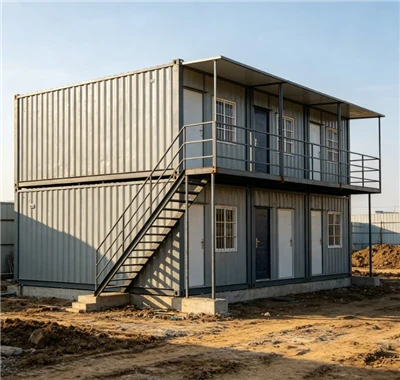
First, let’s start with the basics. For anyone who’s only ever seen a standard shipping container on a cargo ship, a standard 10ft container house is exactly what it sounds like. You take a retired steel shipping container, strip out the corroded interior, insulate the walls and ceiling, add windows and doors, tile the floor, and install basic utilities like electricity, plumbing, and sometimes even a mini split AC unit. When it’s fully set up, it’s a 10ft by 8ft by 8.5ft box—small enough to fit through a standard residential gate or a narrow construction access road, but not so small that it can’t function as a tiny home, a guest cottage, a home office, or a job site storage and office combo. The biggest perk of a standard 10ft container house is its simplicity: there’s no complicated mechanism, no moving parts to break, no installation team needing extra time to unfold or assemble anything. You get a fully finished, move-in-ready space in a day or two, no fuss.
But here’s the thing that trips most people up: that 10ft measurement is the exterior length, and the interior space of a standard 10ft container is almost never the full 10ft. The steel walls are 1.5 inches thick, so you lose 3 inches total from the length, plus another few inches from the insulation and interior paneling. By the time you add in a full-size bed, a compact kitchen with a stove and sink, and a small closet, you’re left with barely enough walking space to turn around. I’ve had clients tell me they thought a standard 10ft container would work for their weekend getaways, only to realize they can’t fit two people and a cooler inside for a long weekend. A friend of mine once used a standard 10ft container as a home office and told me he ended up working from his car on rainy days because there was nowhere to sit once his printer and files took up half the space. That’s the tradeoff with standard containers: portability and speed come at the cost of usable space.
Now, the expandable 10ft container houses we build—this is where the whole equation shifts. Instead of a rigid, fixed box, these are built with the same steel shipping container frame as a standard one, but we add hydraulic or heavy-duty folding mechanisms that let you expand the sides (or sometimes the end) out once the unit is set in place. When it’s folded up, it’s still exactly 10ft long, 8ft wide, and 8.5ft tall—so it fits on the same flatbed truck, fits through the same gates, and takes up the same amount of space while being transported as a standard container. There’s no extra length or width when it’s being shipped, so you don’t have to pay oversize load fees, which is a huge cost saver compared to moving a 20ft or 30ft expandable unit that needs special permits.
When you get it to your site, you just lower it onto a prepared foundation (or even a flat gravel pad), activate the hydraulic system—most of our units take 10 to 15 minutes to fully expand, no heavy machinery needed beyond the truck that delivers it—and suddenly, you’ve got a space that’s twice the size. The expandable panels add 8ft of extra width, so your total interior space becomes 10ft by 16ft. That’s enough space for a full-size bed, a separate kitchen nook, a small dining table, and even a tiny seating area for two. I recently worked with a teacher who used one of our expandable 10ft units as a classroom and office for her after-school tutoring program; she had enough room for a dozen folding chairs, a desk for each student, and a storage cabinet for supplies, all without feeling cramped. Another client used theirs as a guest cottage for his aging parents, and they told me they had room to move around without bumping into walls, which was a huge deal after years of living in a small apartment.
But size isn’t the only difference. Let’s talk about build quality, because that’s something people don’t always consider when they’re comparing the two. Standard 10ft containers are built to hold cargo, not to be lived in long-term. The steel is heavy-duty, yes, but the interior framing is minimal, and the insulation is often thin, leading to uneven temperatures in hot or cold weather. We’ve had customers come to us after buying a standard container house that sweats in the summer, meaning mold grows on the walls and utility lines freeze in the winter because the insulation isn’t sufficient. The utilities in standard containers are also often a last-minute afterthought; plumbers and electricians have to work around the fixed steel frame, which can lead to awkward layouts and higher maintenance costs down the line.
Expandable 10ft containers, on the other hand, are built specifically for living. The steel frame is reinforced to handle the pressure of expanding and folding, so there’s no risk of the walls warping or the unit breaking over time. We use closed-cell spray foam insulation that fills every gap in the walls, ceiling, and floor, so the temperature stays consistent year-round—we’ve had clients in Minnesota use theirs as year-round homes and say they barely need to run the heater in the winter. The utility lines (plumbing, electrical, HVAC) are run through flexible, accessible channels in the frame, so if something needs to be repaired, you don’t have to tear out walls or panels to get to it. I’ve had a client who had a leaky pipe in his expandable unit; our repair team fixed it in 20 minutes, whereas he would have had to tear out half the wall of his standard container to find the same leak.
Flexibility of use is another big difference, and this is something that’s become more apparent as demand for flexible spaces has grown. A standard 10ft container is only really good for a narrow set of uses: small home offices, job site storage, single-person tiny homes. You can’t easily repurpose it if your needs change down the line; if you buy it as a home office and then decide you need a guest cottage, you either have to buy an entirely new unit or add on, which is expensive. Expandable 10ft containers are designed to adapt. If you start with one as a home office, you can later add a bathroom module or a small storage unit, or even connect two expandable units together to make a larger space. A construction client of ours bought two standard containers for his job site and told me he regretted it within a year because he couldn’t expand the space when he added two more crew members. He traded them in for one expandable unit, and now he has enough space for an office, a break room, and storage all in one, without needing a second unit.
Cost is the elephant in the room, so I’m not going to avoid it. A standard 10ft container house typically costs between $10,000 and $15,000, depending on how many finishes you want. An expandable 10ft container is a bit more, usually between $18,000 and $25,000. At first glance, that’s a big difference, but when you factor in the usable space, build quality, and maintenance costs, it’s not as steep as it sounds. Let’s do the math: a standard 10ft container has roughly 80 square feet of usable interior space (after subtracting walls and framing). That works out to about $125 to $187 per square foot. An expandable 10ft unit has 160 square feet, so even at $25,000, that’s $156 per square foot—still a comparable cost, and you get twice the space. You also avoid the hidden costs of standard containers, like installing proper insulation, fixing temperature control issues, and modifying utilities, which can add $3,000 to $5,000 to a standard unit’s total cost. For many people, the expandable unit is actually more cost-effective in the long run.
There are, of course, cases where a standard 10ft container makes more sense. If you’re on an extremely tight budget, only need a temporary storage space, or a small single-person space for a few months, a standard container is perfectly fine. I wouldn’t steer a construction crew toward an expandable unit for a 3-month job site storage; a standard one is simpler to secure and doesn’t have moving parts that could get damaged by heavy equipment. But if you’re looking for a space that’s going to be your primary residence, a guest cottage, a home office you’ll use every day, or a long-term space for your business, the expandable unit is almost always the better choice.
I’ve seen too many people make the mistake of buying a standard container because it’s cheaper upfront, only to realize a few months later that they outgrew the space or hate the cramped, uncomfortable feel of it. Last year, a young couple came to our warehouse with a standard 10ft container they’d bought online, and they were planning to use it as a tiny home for their first year of marriage. They tried to fit a full-size bed, a kitchen, a washer and dryer, and a small dining table into it, and said they spent every night tripping over each other. They ended up selling their standard container and buying one of our expandable 10ft units, and they told me a few months later that it felt like they had a whole new house—even though the exterior size was exactly the same as their old unit.
At the end of the day, the difference between a standard and an expandable 10ft container house boils down to one thing: how much space and flexibility you actually need. A standard unit is great if you want something simple, fast, and low-cost for temporary use. An expandable unit is for anyone who wants a usable, comfortable space that can grow with their needs, without sacrificing the portability and affordability that makes container houses such a popular choice right now.

If you’re tired of choosing between small, cramped spaces and oversize units that cost a fortune to ship, or if you’re ready to stop settling for a container that feels like a metal box instead of a home or a functional space, reach out to our team to learn more about our 10ft expandable container houses. We can walk you through our custom options, answer any questions about installation or maintenance, and help you find the right unit for your budget and your needs. Don’t settle for a space that leaves you feeling cramped—let’s build something that works for you.
Z-folding Container House References:
- International Code Council. (2021). Standards for Modular and Container-Based Residential Structures.
- Container Home Association. (2022). Long-Term Durability of Expandable vs. Standard Shipping Container Housing.
- National Association of Home Builders. (2023). Cost Comparison of Small Residential Structures: Standard vs. Expandable Container Units.
- U.S. Department of Energy. (2022). Insulation and Energy Efficiency in Tiny and Modular Homes.
- Construction Industry Institute. (2021). Portable Job Site Office Solutions: Space and Cost Optimization.
Tangshan Jingrong Trading Co., Limited
With abundant experience, we are one of the most professional 10ft expandable container house manufacturers and suppliers in China. Please feel free to wholesale customized 10ft expandable container house made in China here from our factory. For price consultation, contact us.
Address: Room 1103, Tangshan Rongtong Building, Lubei District, Tangshan City, Hebei Province.
E-mail: Linda@tscontainerhouse.com
WebSite: https://www.tscontainerhouse.com/
