If you’ve ever shopped for tumbler printing machines, you’ve probably seen a wide range of speed claims online—some machines boast “200 tumblers per hour,” while others hover around 50. As a supplier who’s worked directly with small business owners, custom tumbler brands, and large e-commerce operations for over eight years, I can tell you that there’s no one-size-fits-all answer to “what is the printing speed of a tumbler printing machine.” Speed depends on way more than the machine itself, and choosing the right one means looking beyond flashy numbers to what actually works for your production needs. Today, I’m breaking down the science of tumbler printing speed, the factors that make it vary, and what to look for when picking a machine that fits your workflow. Tumbler Printing Machine

First, let’s get clear on what “printing speed” even means for tumblers, because that’s where most people go wrong. Unlike flat substrates like t-shirts or mugs, tumblers are cylindrical, thin-walled, and often coated with a glossy or powder-coated finish that requires specific ink curing times. The two most common types of tumbler printing machines in use today are heat press tumbler printers (often called mug presses, but sized for 20oz or 30oz tumblers) and rotary sublimation printers, plus the newer direct-to-objecet (DTO) inkjet printers. Each has a very different speed profile, and that’s the first variable to account for.
Let’s start with the most widely used option for small to mid-sized businesses: manual heat press tumbler printers. These are the ones you’ve likely seen at craft fairs or small custom shops—they hold one tumbler at a time, use sublimation ink on transfer paper, and require constant pressure, temperature, and time to get a smooth, fade-resistant print. A standard manual tumbler press will print 1 tumbler per 6 to 8 minutes. Before you jump and say “that’s only 10 to 12 per hour,” that’s only the press time. You have to account for prep work too: cutting the transfer paper to size, aligning it just right on the tumbler, wrapping it in Teflon tape to prevent ink smudges, and peeling the transfer once it’s done. Adding that, total output per hour for a manual press is usually 5 to 8 finished tumblers. That’s slow, right? But for a new shop with 10 to 20 orders a week, that’s perfectly manageable. The upside here is that manual presses cost a fraction of other options, and they’re easy to learn—many of my first-time customers are hobbyists who start with a model like our entry-level Manual Tumbler Press and grow into faster machines as their orders pick up.
Now, if you’re doing 50+ orders a day, manual presses aren’t going to cut it. That’s where semi-automatic and fully automatic rotary tumbler printers come in. These machines hold multiple tumblers at once, arranged on a rotating carousel, so you can load or unload tumblers while the next set is printing. A mid-tier rotary sublimation tumbler printer, the type we supply to custom tumbler brands with 100 to 500 orders a week, has a standard speed of 40 to 60 tumblers per hour. Wait, that’s way higher than manual—let’s break that down. Rotary machines use consistent pressure and temperature across all tumblers on the carousel, so once you load the carousel (usually holding 6 to 8 tumblers, depending on the model), you don’t have to adjust each one individually. They rotate continuously, so a print cycle that takes 6 minutes per tumbler still means you can have 8 tumblers printing at once, minus the time it takes to unload and reload the carousel. For reference, our most popular semi-automatic rotary printer hits 50 tumblers per hour in real-world use, not just manufacturer specs. But here’s the catch: that speed only applies if you’re using sublimation ink and transfer paper. Sublimation requires a polyester-coated tumbler, so if you’re printing on stainless steel tumblers that aren’t pre-coated, you have to add a base coat first, which adds 10 to 15 minutes per batch and cuts total speed down to 30 to 40 tumblers per hour. That’s a common mistake new customers make—they don’t realize their tumbler stock will slow the machine down, not the machine itself.
The fastest option on the market right now is direct-to-object (DTO) inkjet tumbler printers. These are the digital printers that spray ink directly onto the tumbler, no transfer paper, no Teflon tape, no need for pre-coated tumblers (you can print on bare stainless steel, plastic, or glass with just a quick cleaning). Top-tier DTO tumbler printers, the industrial models we supply to large e-commerce brands doing 1,000+ tumblers a week, have a printing speed of 80 to 120 tumblers per hour. Wait, that’s double the rotary sublimation speed. But again, real-world speed varies. Why? Because DTO printers have to handle the alignment of each cylinder, the amount of ink deposition (detailed designs with gradients take longer to dry, so the printer has to pause between layers to prevent smudging), and the tumbler’s diameter and shape. A 20oz straight tumbler is much easier for a DTO printer to process than a 30oz curved or skinny tumbler, so you might see 120 tumblers per hour for straight 20oz tumblers, but only 80 for tapered or 30oz models. Also, DTO printers require curing time after printing—most use UV lights that cure the ink in 10 to 15 seconds per tumbler, so that’s built into the speed. If you’re doing single-color prints with simple text, you can hit the top end of that range, but complex full-color art with shadows and blends will bring it down to the lower end.
Now, let’s talk about the factors that actually determine your machine’s speed, because manufacturer specs often exaggerate numbers that don’t translate to real production. First, ink type. Sublimation ink is faster to process because it turns into gas and bonds with the polyester coating immediately during heating, so no extra curing is needed. DTO printers use UV-curable ink, which is fast to cure but can take longer for detailed prints if multiple passes are needed. Then there’s tumbler material and coating, which I touched on earlier. Uncoated stainless steel requires a primer coat before printing, adding 10 minutes per batch. Glow-in-the-dark or color-shifting tumblers might require a base layer that adds to print time. Tumbler shape: straight tumblers have a uniform circumference, so the printer’s roller can move evenly without slowing down to adjust for curves. Tapered tumblers, like the ones that get narrower at the bottom, require more precision, so the machine has to slow down to keep the print aligned, cutting speed by 20 to 30%.
Another huge factor is machine automation. A basic rotary machine you can buy for under $1,000 will have a manual carousel, so you have to stop the machine to load and unload tumblers, which adds 5 to 10 minutes per hour of downtime and drops your effective speed by 30%. A semi-automatic rotary machine, which loads and unloads automatically while the carousel spins, has almost no downtime, so you hit the rated speed. Fully automatic rotary machines, which feed tumblers into the press and remove finished ones without any human intervention, have even higher speeds—some industrial models hit 70 tumblers per hour, and when paired with a pre-treatment system for uncoated tumblers, that stays consistent. For DTO printers, the same logic applies: entry-level DTO printers for small shops have manual feed, so you have to load one tumbler at a time, hitting maybe 40 tumblers per hour, while industrial models with automatic feed and unload hit the 120 tumbler per hour mark.
Wait, you might be wondering why I’m being so specific with numbers, instead of just saying “speed varies from 5 to 120 tumblers per hour.” Because as a supplier, I work with customers all the time who buy the fastest machine they can find, only to be disappointed because their actual speed is half of the rated spec. Last year, a customer came to me upset because he’d bought a “100 tumblers per hour” DTO printer online, but was only getting 30 an hour. When we looked at his setup, he was using curved 30oz tapered tumblers, loading them one at a time manually, and printing full-color designs with 5 layers of ink. None of that was disclosed in the manufacturer’s spec sheet, which listed maximum speed for straight tumblers with single-color prints and automatic feed. That’s the kind of misinformation that leads to bad purchases, so I always make sure my customers understand that rated speed is a baseline, not a guarantee.
There’s also a trade-off between speed and print quality. The old adage “you get what you pay for” applies here. A manual heat press is slow, but it produces consistent, high-quality prints with no banding or smudging. A fast rotary sublimation machine can produce 50 tumblers an hour, but if it’s a cheap model, it might have uneven pressure, leading to faded spots on the tumbler. A fast DTO printer with 120 tumblers per hour can produce crisp, detailed prints, but only if it has a high-resolution print head and enough curing power. I tell every customer: if your main goal is speed and you can afford it, go for the automatic rotary or DTO machine, but make sure your supplier gives you real-world speed data for the exact tumblers you’ll be printing. If you’re a small shop testing the waters, a manual press or entry-level semi-automatic machine is enough, even if it’s slower—you can grow into faster machines as your orders pick up.
Now, let’s talk about how to measure speed yourself, if you’re looking at machines. Don’t just rely on the manufacturer’s number. Ask for a live demo, or ask other customers who are printing the same type of tumblers you plan to. If a supplier won’t connect you with a reference, that’s a red flag. When testing, time how long it takes to load a batch, run the print cycle, unload, and have a finished, ready-to-ship tumbler. That’s your effective speed, not just the press or ink time. For example, if a rotary machine’s press time is 6 minutes per tumbler, and it holds 8 tumblers per carousel, the press cycle is 8 minutes total. If you can load a new carousel in 2 minutes, your total cycle time is 10 minutes, so you can print 6 carousels per hour, which is 48 tumblers—exactly the real-world speed I mentioned earlier.
I’ve seen too many shops overorder on speed, wasting thousands of dollars on a machine they don’t need. A friend of mine has a small custom tumbler shop that does 200 orders a week. He bought a $15,000 industrial DTO printer that does 120 tumblers per hour, because he thought it would help him keep up. But he only has two employees, so they can only process 50 tumblers an hour for finishing (adding lids, boxes, custom packaging), so the printer is sitting idle half the time. He would have been better off with a $3,000 semi-automatic rotary printer that hits 50 tumblers per hour, which matched his finishing capacity, and saved him over $10,000. That’s the kind of mistake that’s avoidable when you understand what speed actually means for your workflow.
So, to circle back: the printing speed of a tumbler printing machine isn’t a single number. It ranges from 5 to 10 finished tumblers per hour for entry-level manual presses, up to 80 to 120 tumblers per hour for high-speed industrial DTO machines, with semi-automatic rotary models landing in the middle at 30 to 60 tumblers per hour. The key is knowing your production volume, the type of tumblers you’ll print, your available labor, and your print quality needs.
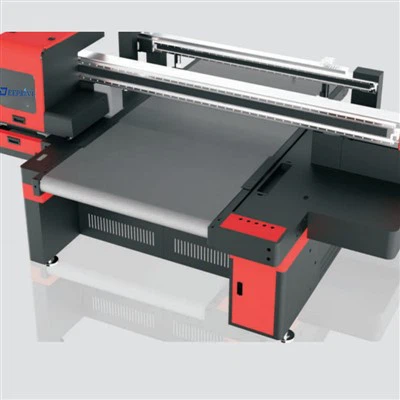
If you’re in the market for a tumbler printing machine and want to make sure you’re getting a speed that fits your business, don’t hesitate to reach out. We provide custom demos, share real-world speed data for every type of tumbler we supply machines for, and help you calculate exactly what you need, no flashy sales pitches. Whether you’re just starting out with a few orders a week or scaling to 1,000+, we can guide you to the right machine for your goals.
Cylinder Printing Machine References
- Sublimation Tumbler Printing: Workflow and Speed Optimization, Printwear Magazine, 2022
- Direct-to-Object Printing for Cylindrical Substrates: Technical Considerations, Inkjet World, 2023
- Custom Tumbler Production Benchmark Report, Small Business Trends, 2024
Shenzhen Deeprint Technology Co., Ltd.
As one of the most professional tumbler printing machine manufacturers and suppliers in China, we’re featured by quality products and good service. Please rest assured to buy customized tumbler printing machine made in China here from our factory. Contact us for free sample.
Address: 6-1, Huangwu Road, Tongle Community, Baolong Street, Longgang District, Shenzhen City 518100,China.
E-mail: ellen@uvdprint.com
WebSite: https://www.uvd-print.com/
