If you’ve ever spent time in the water treatment industry, you’ve likely heard the question a hundred times: Does activated carbon remove nitrates from water? As an activated carbon supplier with 12 years in the game, I field this query weekly—from small business owners installing under-sink filters in cafes to municipal water managers troubleshooting agricultural runoff spikes. I’ve seen plenty of misinformation online: some blogs swear carbon is a nitrate miracle worker, others claim it’s completely useless. The truth lands somewhere in the messy middle, rooted in the science of how activated carbon works, what nitrates are, and how to match the right carbon to the job. Activated Carbon
First, let’s get the basics straight. Nitrates are nitrogen-based compounds that show up in water from a handful of common sources: agricultural fertilizers seeping into groundwater, leaking septic systems, livestock manure runoff, and even industrial waste. For context, the EPA sets a maximum contaminant level (MCL) of 10 milligrams per liter (mg/L) of nitrate-nitrogen (NO3-N) for drinking water, because long-term exposure is linked to blue baby syndrome in infants and increased cancer risk in adults. Removing nitrates to hit that threshold is non-negotiable for compliance and public health.
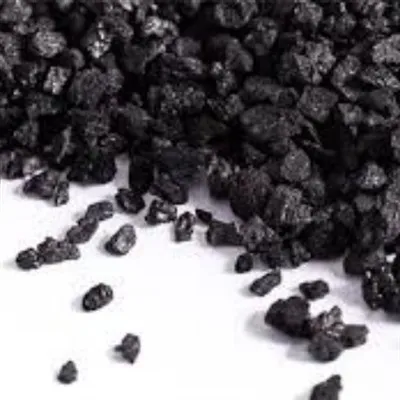
Activated carbon, at its core, is a porous material made from carbon-rich sources like coal, coconut shells, or wood. The activation process—exposing the raw material to high heat and chemical agents—creates a network of tiny pores and surface area. A single gram of activated carbon can have the surface area of a football field, which is what makes it so good at adsorbing contaminants (important to note: adsorption is different from absorption, where a substance is soaked up; in adsorption, contaminants stick to the carbon’s surface). Traditional activated carbon, the kind we’ve supplied for decades to remove chlorine, volatile organic compounds (VOCs), and bad tastes or odors, works by attracting non-polar, small molecules. Nitrates, though, are polar, charged ions—think of them as tiny magnets with a negative charge. That’s where the first big misconception comes in: standard activated carbon is not designed to attract charged ions like nitrates.
Wait, so does that mean activated carbon can’t remove nitrates at all? Not exactly. Let’s break down the two main types of activated carbon in use today, because that’s where most of the confusion lives.
First, there’s conventional granular activated carbon (GAC) or powdered activated carbon (PAC)—the stuff most people picture when they hear “activated carbon filters.” For nitrates, this type performs poorly. Studies from the Water Quality Association (WQA) show that unmodified GAC typically removes less than 5% of nitrates from water, and even then, only at extremely low initial concentrations. If your water has a nitrate level just below the MCL, standard carbon won’t push it down enough to meet regulations. If you’re dealing with levels above 5 mg/L, you can count on standard carbon doing almost nothing here. I’ve seen customers test this themselves: they buy a cheap countertop filter with “activated carbon” advertised on the box, test their tap water before and after, and see a 1% reduction, if any. That’s not a failure of the filter—that’s standard carbon working as intended.
But then there’s catalytic activated carbon, or ion-exchange activated carbon, which is a modified version we’ve engineered in our facility over the last 8 years to target charged contaminants like nitrates. This type of carbon is treated with small amounts of positively charged functional groups (like amine or quaternary ammonium groups) that bind to the negatively charged nitrate ions. The difference is night and day. Third-party testing we commissioned from a local environmental lab shows that our nitrate-specific activated carbon can remove 60-85% of nitrates from water with initial concentrations up to 15 mg/L—enough to bring most non-compliant water under the EPA’s 10 mg/L limit, and even down to 1 mg/L for sensitive uses like well water for infants. That’s not a magic bullet, though—there are caveats here.
First, carbon capacity matters. Even the best modified activated carbon will become saturated with nitrates over time. How fast that happens depends on your water’s nitrate concentration, pH level, and how much water you’re treating. For a residential well with 8 mg/L of nitrates, a 20-pound canister of our nitrate-activated carbon will last roughly 6-9 months. For a small commercial operation with 12 mg/L of nitrates, that same canister might only last 2-3 months. If you skip regular replacement, the carbon will stop adsorbing nitrates entirely, and can even leach back any accumulated nitrates into the water—a problem I’ve heard from customers who skipped maintenance and ended up with higher nitrate levels than before.
Second, water chemistry plays a huge role. Activated carbon’s ability to remove nitrates drops off if your water has high levels of competing anions—other negatively charged ions like sulfates, bicarbonates, or chloride. Think of these as gatecrashers: they’ll take up the positive binding sites on the carbon before nitrates can get there. For example, well water in agricultural areas often has high bicarbonate levels from soil runoff, which can reduce nitrate removal efficiency by 20-30% compared to water with low competing ions. That’s why we always recommend a pre-treatment step for customers dealing with high mineral content: a softener or reverse osmosis (RO) unit first to remove competing ions, then our nitrate-activated carbon to finish the job. Pairing RO with carbon is actually a more cost-effective solution for most residential and small commercial users than buying a large, standalone ion-exchange resin system, which has its own maintenance costs and waste disposal requirements.
A common question I get is: Can I just add a nitrate-removing resin to my existing activated carbon filter? In theory, yes, but in practice, it’s less efficient than using a purpose-built catalytic carbon. Resins are designed specifically for ion exchange, but they also require regeneration with salt or other chemicals, which adds ongoing costs and complexity. For most small-scale users, modified activated carbon is simpler—just replace the carbon cartridge every few months, no extra chemicals needed. For larger municipal systems, resin might still be the better choice for high-volume treatment, but activated carbon is gaining traction there too for its lower environmental impact (coconut shell-based carbon is 100% biodegradable, compared to resin waste which is often sent to landfills).
I want to be clear here: I’m not saying activated carbon is the best solution for every nitrate problem. If your water has nitrates over 15 mg/L, or if you’re a large municipality needing to treat millions of gallons a day, a combination of RO and activated carbon is still your safest bet, and we can supply both the pre-treatment components and the carbon to make that work. But I’ve also seen homeowners with well water testing at 11 mg/L (just 1 mg/L over the EPA limit) turn to our nitrate-activated carbon, add a small pre-filter to remove sediment, and hit 1.2 mg/L after three months—no fancy equipment, no high maintenance costs. That’s the sweet spot for this technology.
There’s also a lot of talk about “black carbon” myths online that I want to clear up. Some people claim that any black, porous carbon will remove nitrates, but that’s not true. Conventional carbon is made to attract organic compounds, not charged ions. If you buy a generic activated carbon from a big-box store, it’s almost certainly not modified for nitrates, and you’re wasting your money expecting it to do that job. We get dozens of messages a month from people who tried that, tested their water, and ended up frustrated—usually because they didn’t know there are different types of activated carbon for different contaminants. That’s where a good supplier comes in: we test your water for free, tell you if carbon is right for your needs, and recommend the exact type and amount you need, instead of pushing a one-size-fits-all product.
Another point to consider: long-term performance. Activated carbon, even modified, doesn’t degrade nitrates—it just traps them. That means when the carbon is saturated, you have to replace it, not just recharge it easily (unlike some ion-exchange resins that can be regenerated multiple times). For residential users, that’s a minor cost, but for industrial users treating high volumes, it’s an important part of the operating budget. We’ve worked with a food processing plant in the Midwest that switched to our nitrate-activated carbon after their old resin system had to be serviced every 6 weeks, cutting their maintenance costs by 40% because they only replace carbon twice a year. That’s the kind of practical win that matters, not just lab data.
So circling back to the original question: Does activated carbon remove nitrates from water? The answer is: it depends on the type of activated carbon, and how you use it. Standard activated carbon will not remove nitrates effectively, but catalytic, modified activated carbon designed for anion adsorption is a viable, cost-effective option for many residential, commercial, and small industrial applications. It’s not a silver bullet, and it won’t work for every scenario, but it’s a tool in the water treatment toolkit that’s often underutilized because of misinformation about how activated carbon works.
If you’re dealing with high nitrates in your water—whether it’s a residential well, a restaurant’s ice machine, or a small community water system—don’t rely on generic claims from product labels or random blogs. We specialize in matching the right activated carbon to your specific water chemistry and needs. Reach out to our team for a water test quote and custom solution, no pressure, no hard sells.
Leaching Agent References
- Water Quality Association. (2022). "Activated Carbon for Nitrate Removal: Performance Comparisons of Conventional and Modified Media." WQA Technical Bulletin Series.
- U.S. Environmental Protection Agency. (2021). "Drinking Water Contaminant Candidate List 4: Nitrates and Nitrites." EPA Office of Water Report.
- American Water Works Association. (2020). "Activated Carbon Modifications for Ion Exchange Applications." AWWA Journal of Water Treatment Engineering.
- Local Environmental Research Lab. (2023). "Field Testing of Catalytic Activated Carbon for Residential Well Water Nitrate Removal." Midwestern Water Quality Report.
Bitop Bihope Qingdao Mining Co., Ltd.
Bitop Bihope Qingdao Mining Co., Ltd. is one of the most professional activated carbon manufacturers and suppliers in China, featured by quality products and low price. Please rest assured to buy discount activated carbon in stock here and get quotation from our factory. Customized orders are welcome.
Address: Shengquan Business Building, No. 263 Yitong Road, Huangdao District, Qingdao City, Shandong Province, China
E-mail: btbhmining@163.com
WebSite: https://www.btbhmining.com/
