As a supplier of compensating conductors, I’ve witnessed firsthand the pivotal role these components play in various industries. Today, I’d like to delve into the concept of the flexibility of compensating conductors and explore its multifaceted nature. Compensating Conductor

Understanding Compensating Conductors
Before we jump into flexibility, let’s briefly recap what compensating conductors are. Compensating conductors are used in thermocouple circuits to extend the thermocouple from the measuring point to the instrument. They are designed to have similar thermoelectric properties to the thermocouple over a certain temperature range. This allows for accurate temperature measurement while maintaining a safe distance between the harsh measurement environment and the control or monitoring equipment.
Physical Flexibility
One of the most obvious aspects of the flexibility of compensating conductors is their physical flexibility. In many industrial settings, the installation space can be quite limited and complex. For example, in a power generation plant, there are numerous pipes, cables, and equipment all packed closely together. Compensating conductors need to be able to bend and adapt to these tight spaces without losing their functionality.
Our compensating conductors are engineered with high – quality materials that offer excellent physical flexibility. We use fine – stranded conductors wrapped in flexible insulation materials. This construction allows the conductors to be easily bent around corners, coiled, or even twisted during installation. The flexibility of the strands within the conductor ensures that the electrical connection remains stable even under repeated bending. For instance, if a thermocouple is installed in a rotary machine, the compensating conductor needs to flex as the machine rotates. Thanks to our flexible design, the conductor can withstand thousands of bending cycles without breaking, which significantly reduces the need for frequent replacements and maintenance.
Temperature – Range Flexibility
Compensating conductors also exhibit flexibility in terms of the temperature range they can operate within. Different industries have different temperature requirements. In the food processing industry, for example, temperature measurement may take place at relatively low temperatures, around 0 – 100°C, to ensure proper cooking or storage conditions. On the other hand, in the metal – smelting industry, temperatures can reach well over 1000°C.
Our compensating conductors are designed to be versatile in temperature performance. We offer different types of conductors that are suitable for a wide range of temperatures. For low – temperature applications, we use insulation materials that remain flexible and stable at cold temperatures. These materials prevent the conductor from becoming brittle, which could lead to cracks and electrical failures. In high – temperature environments, we choose insulation materials that can withstand extreme heat without degrading. Our conductors can maintain their thermoelectric properties accurately within the specified temperature range, providing reliable temperature measurement regardless of the operating conditions.
Compatibility Flexibility
Compatibility is another crucial aspect of the flexibility of compensating conductors. There are various types of thermocouples available in the market, such as Type K, Type J, Type T, etc. Each type has its own unique thermoelectric characteristics. Compensating conductors need to be compatible with the specific thermocouple type they are paired with to ensure accurate temperature measurement.
As a supplier, we understand the importance of compatibility flexibility. We offer a comprehensive range of compensating conductors that are specifically designed to be compatible with different thermocouple types. Our technical team is well – versed in the thermoelectric properties of various thermocouples and can provide expert advice on the right compensating conductor for a given application. Whether a customer is using a standard thermocouple or a specialized one, we can supply the appropriate compensating conductor to ensure seamless integration and accurate temperature monitoring.
Customization Flexibility
In addition to the above aspects, we also provide customization flexibility for our compensating conductors. Every customer’s needs are unique, and we recognize that a one – size – fits – all approach may not work in many cases. Some customers may require conductors of a specific length, while others may need special insulation materials for enhanced chemical resistance or electromagnetic shielding.
Our manufacturing process is highly adaptable, allowing us to customize compensating conductors according to the customer’s specifications. We can produce conductors in different lengths, from a few meters to several hundred meters. We can also offer a variety of insulation materials, such as PVC, Teflon, and silicone, depending on the application requirements. For customers who need conductors with special features, such as flame – retardant or explosion – proof properties, we can develop customized solutions to meet their needs.
The Impact of Flexibility on Performance and Cost – Efficiency
The flexibility of compensating conductors has a significant impact on both performance and cost – efficiency. From a performance perspective, the physical flexibility ensures easy installation in complex environments, reducing the time and effort required for setup. The temperature – range flexibility allows for accurate temperature measurement in a wide variety of applications, which is crucial for process control and quality assurance. Compatibility flexibility ensures that the conductors work seamlessly with different thermocouples, eliminating measurement errors caused by mismatches.
In terms of cost – efficiency, the durability provided by the physical flexibility reduces the frequency of conductor replacements. This not only saves on the cost of new conductors but also on the labor cost associated with replacement. The customization flexibility allows customers to get exactly what they need, avoiding over – specification and unnecessary costs. Moreover, the reliable performance of our compensating conductors helps to prevent process disruptions, which can be extremely costly in many industries.
Conclusion
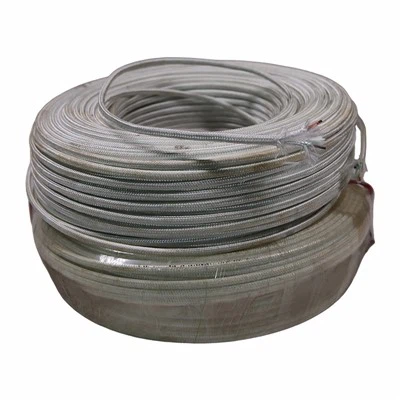
In conclusion, the flexibility of compensating conductors is a multi – dimensional concept that encompasses physical flexibility, temperature – range flexibility, compatibility flexibility, and customization flexibility. At our company, we strive to provide compensating conductors that offer the highest level of flexibility to meet the diverse needs of our customers. Whether you are in the food processing, power generation, metal – smelting, or any other industry that requires accurate temperature measurement, our compensating conductors can provide reliable and efficient solutions.
Smart Thermometers If you are looking for high – quality, flexible compensating conductors for your application, we invite you to contact us for a detailed discussion. Our experienced sales and technical teams are ready to assist you in selecting the right product and providing you with the best possible service.
References
- "Thermocouples: Theory and Practice" by John R. Cimbala
- "Industrial Temperature Measurement" by David A. Green
Jiangsu Zhaolong Electric Co., Ltd.
We’re well-known as one of the leading compensating conductor manufacturers and suppliers in China, featured by quality products and low price. Please feel free to buy customized compensating conductor made in China here from our factory. Contact us for more details.
Address: No. 80, Zhangguo Chang’an Road, Dainan Town, Xinghua City, Jiangsu Province
E-mail: 180193845@qq.com
WebSite: https://www.cnzhaolong.com/
