If you’ve ever stood on a sun-scorched Mediterranean beach, watching families savor ice-cold bottled water while local hotels pay exorbitant bills to keep taps running, you’ve probably wondered: where’s the big solution for water scarcity hitting Europe? For years, seawater desalination has gotten a bad rap—too expensive, too energy-heavy, just a fancy fix for places that don’t feel “thirsty enough.” But here’s the tea: RO (reverse osmosis) systems, the workhorses of most modern desal plants, have changed so much lately that they’re shifting Europe’s entire playbook. And as someone who’s been deep in the RO equipment game for the last decade, I’ve watched this space blow up in ways no one saw coming—especially post-2020, when droughts turned Southern Europe into a parched lab and energy costs forced everyone to stop overcomplicating things. Seawater Desalination RO System
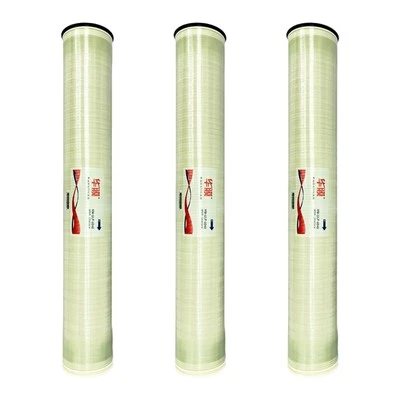
Let’s start with the basics that actually matter to people who care about real-world results, not just engineering textbooks. RO desal works by pushing seawater through super-tiny membranes that trap salt and impurities, leaving clean, drinkable water on the other side. It’s been around for decades, but old systems were clunky: high energy use (think 3-4 kWh per cubic meter of water), frequent membrane replacements, and a price tag that made municipalities hesitate before pulling the trigger. Now? We’re talking energy efficiency down to 1.8-2.2 kWh/m3, thanks to better membrane tech and energy recovery devices (ERDs) that capture leftover pressure from the saltwater stream instead of wasting it. That’s not a minor tweak— that’s the difference between a project that feels like a budget buster and one that fits into regular water utility costs.
So where is Europe actually putting this to use, instead of just talking about it? The obvious headline countries are Spain, Greece, and Cyprus, which have dealt with consecutive years of drought that drained reservoirs to critically low levels. For example, Spain’s Andalusian region, which has been in drought emergency since 2021, just expanded its main desal plant near Almería— one of the largest RO facilities in the EU. A few years back, that plant was using outdated membranes that needed replacing every 2-3 years; now, with our upgraded spiral-wound RO elements, they’re pushing that lifespan to 5 years, cutting annual maintenance costs by almost 40%. That’s the kind of number that makes utility managers sit up and take notice, not just environmental policy wonks.
But here’s the part no one talks about in the news: it’s not just Southern Europe anymore. Countries like Germany, Belgium, and even the Netherlands are testing smaller, modular RO systems for coastal industrial sites, not just big municipal plants. The Netherlands, for all its rain, has aging coastal industrial zones that rely on freshwater piped hundreds of miles inland. A chemical plant near Rotterdam tried a small 5,000 m3/day RO system last year, and now they’re scaling it to 20,000 m3— not just for their own use, but selling excess treated water back to the local grid. That’s a huge shift from desal being a “last resort” to a flexible, reliable water source that works for industries, towns, and even neighborhoods.
Now, let’s get real about the barriers, because no tech is perfect. The biggest one that’s been weighing on Europe? Energy costs. Back in 2022, when natural gas prices spiked after the Ukraine war, desal plants that ran on grid electricity saw their operational bills jump 200% overnight. That’s when I saw a lot of customers suddenly switching our RO systems to run on on-site solar or wind— no more reliance on fossil fuel grids. A small town in Crete, for example, paired our 10,000 m3/day RO system with a 5 MW solar farm, and now their energy costs are down to almost zero. That’s the game-changer that’s making RO desal viable even in places where energy was once a dealbreaker.
Another hurdle that’s slowed adoption? Public perception. A lot of Europeans still think desal water tastes “off” or that it’s bad for the environment. But modern RO systems don’t just remove salt— they add essential minerals back in (a step called remineralization) so the water tastes exactly like tap water, no chemical aftertaste. And the environmental footprint? Newer plants use advanced brine management systems, mixing the concentrated saltwater with wastewater effluent before discharging it, so it doesn’t harm marine life. We’ve even helped a couple of Greek islands test systems that use brine to grow salt-tolerant algae for biofuel, turning a waste product into a revenue stream. It’s a closed-loop system, not a band-aid.
So what’s next for RO desal in Europe, and why does this matter to anyone looking to invest or upgrade? The EU is backing this hard. The European Commission’s 2023 Water Scarcity and Drought Strategy earmarked €2 billion for desal projects, specifically prioritizing RO systems over older thermal technologies (like multi-stage flash distillation) because of their lower energy use and smaller footprint. They’re also pushing standards for RO equipment, so customers don’t have to sift through a million options— we’ve had to get our systems certified under EU’s Water Safety and Drinking Water directives, which means our units are tested to work in every European climate, from the icy coast of Scotland to the scorching shores of Malta.
The biggest trend I’ve seen lately is modularity. A lot of older desal plants are big, fixed facilities that take years to build and cost millions upfront. New RO systems? We can ship them as pre-fabricated skids, plug them into an existing water supply, and get them running in a matter of weeks, not months. For small towns or coastal resorts that only need extra water in the summer tourist season, that’s perfect— you don’t have to invest in a permanent, oversized plant. We just did a project for a family-run hotel chain in Ibiza that rents three modular RO units during peak season, cutting their water costs by 60% compared to buying from the local utility.
Now, let’s cut through the hype and talk about what’s still a work in progress. Membrane fouling— when salt, algae, and dirt build up on the RO membranes and slow water flow— is still a headache, but new anti-fouling membrane coatings and real-time monitoring tech have made a huge difference. We install little sensors on every one of our RO systems that track pressure, flow, and water quality 24/7, and if there’s a problem, our team gets an alert within minutes. No more sending technicians out to do manual checks every week, which saves time and money for our customers.
Another thing: regulatory bottlenecks. Even though the EU is funding projects, getting permits to build a desal plant can take 3-5 years in some countries, especially in protected coastal areas. That’s why we’ve been working with clients on retrofits instead of new builds— upgrading existing water treatment plants with RO modules is way faster, and it skips a lot of the red tape. For example, we added RO units to an existing municipal plant in Barcelona last year, and they’re now producing 15% more freshwater without building a whole new facility. That’s a win-win for everyone.
As someone who’s been in this game, I get that a lot of people are skeptical about big water projects. But the numbers don’t lie: Europe’s desalination capacity is set to double by 2030, according to the International Desalination Association, and RO systems will make up 90% of that new capacity. It’s not just about solving droughts— it’s about making water supply more resilient, especially as climate change makes weather patterns more unpredictable.
If you’re a water utility manager, industrial operator, or anyone looking to add a reliable, cost-effective water source to your coastal or near-coastal property, we’ve got you. Our RO systems are designed specifically for European conditions, we handle all the certification and regulatory paperwork, and we offer flexible, scalable solutions that fit small towns and big cities alike. We don’t do one-size-fits-all— we work with you to figure out exactly how much water you need, what your energy budget is, and how to minimize your environmental footprint.
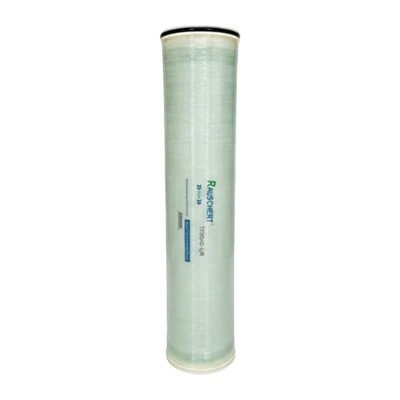
Whether you’re dealing with persistent drought, sky-high water costs, or just want a backup water source for your community or business, RO desal is no longer the fringe tech it once was. It’s a proven, scalable solution that’s already changing how Europe manages its water. If you want to chat more about how our systems can work for your specific needs, feel free to reach out to start the conversation.
Pan Ultrafiltration Membrane References
International Desalination Association. (2024). European Desalination Market Report.
European Commission. (2023). Water Scarcity and Drought Strategy.
Global Water Intelligence. (2022). RO Membrane Technology Trends in Mediterranean Desalination.
Fujian Huamo Technology Co., Ltd.
Fujian Huamo Technology Co., Ltd. is one of the most professional seawater desalination ro system manufacturers and suppliers in China, featured by quality products and good service. Please rest assured to wholesale the best seawater desalination ro system made in China here and get price list from our factory. Contact us for custom service and OEM service.
Address: No.6 Hengtong Rd, Shanmei Village, Xiamei Town, Nanan City, Fujian Province, China
E-mail: info@huaromembrane.com
WebSite: https://www.hmromembrane.com/
