If you’ve ever taken a lab quiz, monitored a patient’s electrolytes at a hospital, or even tracked your post-workout hydration, you’ve indirectly encountered ion sensors—most of you just don’t think about the tiny, unassuming tech that makes those results possible. As someone who’s spent the last decade building and supplying these sensors for everything from cell biology labs to clinical diagnostics, I get it; most people hear “ion sensor” and zone out, thinking it’s stuffy, overly complicated lab gear that’s way out of their wheelhouse. But let’s cut the jargon for a sec—these things are the quiet backbone of so much of what makes biological systems tick, and yeah, my team and I make a lot of them. Ion Sensors

First, let’s ground this: what even are we talking about when we say “ion sensors in bio systems”? At their core, they’re molecules or tiny tools that can pick up specific charged particles (ions) like sodium (Na⁺), potassium (K⁺), calcium (Ca²⁺), or chloride (Cl⁻) in, say, a cell, a blood sample, or a petri dish, and turn that “this ion is here” signal into something humans (or lab machines) can read. Without them, we couldn’t tell if a neuron was firing properly, if a patient’s potassium levels were spiking to dangerous territory, or if a batch of cell culture was actually viable.
Let’s start with the biological ones first—because before we built man-made ion sensors, living things had already been perfecting theirs for millions of years. Ever wondered how your heart keeps beating in rhythm? Or why you yank your hand away from a hot stove faster than you can think? That’s ion sensors at work, no fancy lab gear required.
Neurons, your brain’s tiny signal carriers, are basically walking ion batteries. Their membranes are lined with little protein doors (called ion channels) that only let specific ions through. When a neuron gets a signal from a neighbor, those doors fling open: sodium ions rush in, potassium rushes out, and that creates a tiny electrical pulse (action potential) that zips down the axon. But here’s the sensor part—there are actually specialized proteins (sometimes called ionotropic receptors) that sit on the neuron’s surface, waiting to grab a specific ion (like sodium) and trigger that pulse. Without these built-in sensors, neurons couldn’t tell when an ion was there to fire a signal. Even your sense of taste uses this: your tongue’s taste buds have ion sensors that pick up sodium for salt, hydrogen ions for sourness, and that’s how your brain goes “oh, this is lemonade.”
Then there’s calcium—everyone’s favorite “signaling ion.” If your cells were having a party, calcium would be the bouncer that tells everyone to get to work. When a cell needs to do something—like a muscle cell contracting, or a cell dividing, or even a immune cell chasing a virus—it releases a wave of calcium ions, and tiny proteins called calcium-binding proteins (like calmodulin) sense that spike. Think of calmodulin as a little ion antenna: when it latches onto four calcium ions, it changes shape, grabs other proteins, and starts the whole process. That’s why when you hear about drugs targeting calcium for heart conditions, or researchers using calcium dyes to watch neurons fire, they’re basically messing with these natural biological sensors.
Okay, so living things have these built-in sensors—but why do we need man-made ones? Because as useful as biological ion sensors are, they’re not always easy to work with in a lab or clinic. Maybe you need to measure calcium in a single live cell that’s moving around a petri dish, or test 100 blood samples in an hour for potassium levels, or track sodium levels in a freshwater fish’s blood over 24 hours. You can’t very well pluck a calmodulin protein out of a cell, purify it, and stick it into every sample—that’s messy, expensive, and hard to standardize. That’s where my team comes in. We build synthetic ion sensors that mimic the biological ones but are designed to do specific jobs, reliably, every single time.
Let’s break down how our sensors work, plain and simple. Most of the ones we supply for academic labs and clinical settings fall into two main categories: ion-selective electrodes (ISEs) and optical ion sensors. I’m not gonna bore you with the 2001 technical manual, but I’ll give you the gist.
First, ion-selective electrodes. These are the ones you’ve definitely seen in a hospital or a high school chemistry lab—they’re the little plastic probes with a wire sticking out of them. The tip of the probe has a super thin, specially designed membrane that’s tuned to pick up only one ion (like potassium, not sodium). When you stick that probe into a sample (like blood or a cell lysate), the specific ion in the sample gets pulled into the membrane. That movement of charge creates a tiny voltage difference—like, we’re talking millivolts, tiny, but enough that the attached meter can read it and spit out a number for concentration. For example, if a patient’s potassium is 6.5 mmol/L, that probe will give a different voltage than if it’s 4.0 mmol/L (the normal range). It’s so precise that these are the gold standard for clinical electrolyte tests, and we supply thousands of these every month to labs and hospital networks.
Then there are optical ion sensors—these are the ones that light up. Most researchers use these to monitor ions in live cells, because you can watch the signal in real time under a microscope. We make things like fluorescent dyes that bind to specific ions (like calcium) and change color or brightness when they do. Like, if a cell’s calcium level is low, the dye glows dim blue; when calcium spikes, it lights up bright green. We’ve also got newer optode sensors that you can coat onto little glass slides or even tiny beads, so you can measure ions in super small volumes, like a single drop of cell culture media. These are game-changers for developmental biologists who want to watch how ions change while a frog embryo develops, or neurobiologists tracking calcium in individual neurons as they fire.
Wait, but how do we make sure these sensors only pick up the ion we want? That’s the secret sauce, honestly. For ISE membranes, we use specialized compounds called ionophores—they’re basically molecular locks that only fit one key ion. For potassium, it’s something like valinomycin, a cyclic peptide that wraps around potassium ions like a tiny hand, and is too big to fit sodium (which is smaller). For calcium, we use ionophores that have a shape that matches calcium’s charge and size perfectly, so they ignore other ions floating around in the sample. We test every single batch of these sensors 10 times over before they leave our warehouse—we spike samples with random other ions, check if the reading is off, and if it is, we tweak the membrane or the dye formula. No cutting corners here, because if a nurse gets a wrong potassium reading for a patient, that’s a big problem.
A lot of people ask me: why not just use the natural biological sensors? Let’s be real, biological sensors are cool, but they’re finicky. They break easily outside of a cell, they can only be used for a short time before they degrade, and they’re expensive to purify in large quantities. Our synthetic sensors, on the other hand, can be stored for months (even years) in a drawer, give consistent readings every time, and can be tailored to almost any ion researchers or clinicians need—we’ve got sensors for everything from the big ones like Na⁺, K⁺, Ca²⁺, Cl⁻, to smaller ones like magnesium (Mg²⁺) or even lithium (Li⁺), which is used to treat bipolar disorder.
I’ll give you a real example of how this works in the wild, because numbers and theory are boring. Last year, we supplied a set of our calcium optical sensors to a lab at a state university studying autism. The researchers were looking at how neurons in autistic people’s brains have abnormal calcium signaling—they were using the dyes to track calcium spikes in live neurons grown from stem cells. Before they used our sensors, they were using a cheaper competitor product that would give spiky, inconsistent readings that they couldn’t trust. They switched to ours, and within a month, they had solid data showing that the neurons had 2x the normal calcium spikes, which is a big step toward figuring out what’s going wrong in those cells. That’s the stuff that makes our jobs worth it—we’re not just selling plastic and dyes, we’re helping researchers make breakthroughs that could help thousands of people.
Another example: a pediatric hospital we work with uses our potassium ISEs for newborn screening. Newborns have tiny blood volumes (like, a drop from a heel prick), so their tests need to be super precise. Our ISEs can give a reliable reading from 10 microliters of blood, no extra sample needed, which means they don’t have to stick tiny babies more times than necessary. That’s the kind of impact we don’t shout about enough—small, consistent, reliable tools that make a huge difference for patients.
Now, let’s talk about the not-so-glamorous side, because ion sensors aren’t perfect. They have limits. For example, if you’re testing a really dirty sample, like wastewater or soil, you might have other charged molecules that mess with the membrane. Or, with optical sensors, if a cell is moving, the dye can get washed out or unevenly distributed, so you have to do extra controls to make sure your reading is right. That’s why we’re always tweaking our formulas—last year, we launched a new version of our chloride sensor that’s less affected by pH changes, which was a big complaint from the environmental labs that use them to test river water.
A lot of customers also ask us about miniaturization—can we make sensors that are small enough to put inside a living organism, like a mouse, to track calcium in its heart in real time? Yeah, we’re working on that. We’ve already made tiny optode sensors that can be implanted under the skin of lab animals, and they can send data wirelessly, so researchers don’t have to keep the animal hooked up to a big machine. That’s the next big shift in this field—sensors that are small enough to be used in vivo, not just in a petri dish or a test tube.
At the end of the day, ion sensors are just tools. They’re the middleman between what’s happening in a cell or a patient’s body and the data that lets researchers or clinicians make a decision. I’ve been in this game for long enough to see how far we’ve come—10 years ago, measuring calcium in a single neuron would take a whole lab full of equipment and a day of work. Now, a grad student can stick a drop of our dye on a cell, put it under a microscope, and get a real-time reading in 10 seconds. That’s progress, right?
But we’re not stopping there. We’re always iterating, talking to our customers (the grad students, the lab techs, the hospital lab managers) to figure out what they actually need, not just what we think they should have. If you’re someone who works with ion sensors—whether you’re a researcher troubleshooting a dead probe, or a clinician looking for more reliable electrolyte tests, or even a high school student who’s just curious about how this stuff works—we want to hear from you. We don’t do one-size-fits-all, and we’re happy to work with you to tailor a sensor to your specific project, whether that’s a small academic experiment or a large clinical trial.
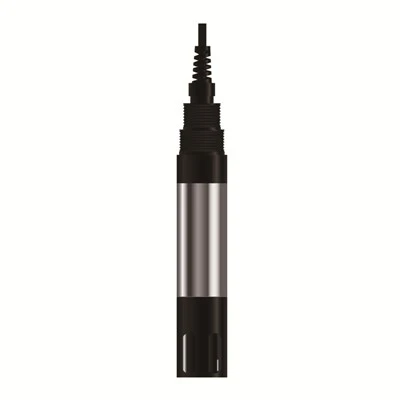
If you’re ready to chat about what you need, whether you just need a single probe for your lab or a bulk order for a hospital network, reach out. We can walk you through our different products, answer all your questions, and help you pick the right sensor for your work. Don’t overthink it—no sales jargon, no pressure, just people who know this stuff and want to help.
Dissolved Oxygen Sensors References
- Börjesson, S. I., & Elinder, F. (2018). Ion channels as biological ion sensors. Physiological Reviews, 98(2), 819–870.
- Lindner, E., & Pretsch, E. (2010). Ion-selective electrodes and array sensors for bioanalysis. Analytical Chemistry, 82(12), 5095–5117.
- Miyawaki, A., Llopis, J., Heim, R., McCaffery, J. M., Adams, J. A., Ikura, M., & Tsien, R. Y. (1997). Fluorescent indicators for Ca2+ based on green fluorescent proteins and calmodulin. Nature, 388(6645), 882–887.
- Ammann, D. (1986). Ion-Selective Microelectrodes: Principles, Design, and Application. Springer-Verlag.
- Whitfield, J. H., Jr. (1971). The regulation of intracellular calcium. Current Topics in Membranes and Transport, 2, 1–50.
Shanghai Multiweal Environmental Technology Co., Ltd.
As one of the most professional ion sensors manufacturers in China, we’re featured by quality products and low price. Please rest assured to buy discount ion sensors in stock here from our factory. Contact us for custom service and OEM&ODM service.
Address: 5-2, Lane 801, Qiangye Road, Sheshan Town, Songjiang District, Shanghai
E-mail: mtw@shmultiweal.com
WebSite: https://www.multiweal.com/
