What’s up, folks? If you’ve ever dabbled in WPC (Wood-Plastic Composite) profiles—think decking, wall panels, door frames, or those fancy outdoor trim pieces—you know there’s way more going on behind that smooth, consistent finish than just shoving wood flour and plastic resin into a machine. As a WPC profile machine supplier, I get asked about this all the time: “How do you turn a gooey, mixable material into a rigid, precise shape without it melting apart or warping mid-run?” The answer’s simple (well, sort of): the cooling system. It’s the unsung hero of every WPC profile line, and skip over it, and you’re stuck with wonky parts, wasted materials, and way too much downtime. Let’s break this down like we’re chatting over a cup of coffee, no jargon overload, promise. WPC Profile Machine
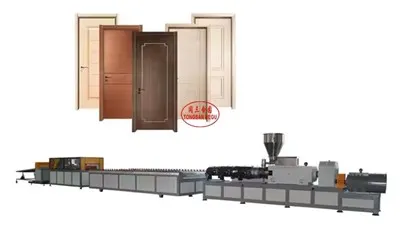
First, let’s set the scene: WPC feedstock is a hot, sticky blend—usually around 170–190°C (338–374°F) when it leaves the extruder’s die. That mix’s made of wood fiber (sawdust, wood waste, whatever) and thermoplastics like PVC, PE, or PP. At that temp, the plastic’s soft enough to squeeze through the die and take the shape you want (like a 20-foot deck board or a 4-inch wall trim). But leave it that hot, and two bad things happen fast: 1) the profile will droop, sag, or warp before it even holds its shape, and 2) the plastic might start to degrade—especially PVC, which can turn brittle or discolored if it stays too hot too long. That’s where the cooling system steps in: it cools the profile just enough to lock in its shape, stabilize the material, and get it ready for the next steps (like cutting, finishing, or packing).
Not all cooling systems are the same, though. Most WPC profile lines use a two-stage setup: primary cooling (right after the die) and secondary cooling (further down the line). Let’s dig into each, because skipping either one is a recipe for disaster.
Primary cooling is the make-or-break stage. This is where the hot profile exits the die and immediately hits a dedicated cooling tank—sometimes called a calibration tank, because that’s its job: calibrating the exact dimensions of the profile. Wait, why a tank? Because water is a way better heat conductor than air, right? It pulls heat out of the profile way faster, so it goes from mushy to rigid in minutes. But here’s a trick we use as a supplier: we don’t just fill the tank with cold tap water. We control the temperature super precisely—usually between 20–40°C (68–104°F), depending on the WPC formula. For example, if you’re running a PVC-based WPC deck board (which is stiffer and more prone to heat distortion), you’ll want that tank temp on the lower end, around 25°C. If it’s a PE-based profile (more flexible, common for outdoor trim), you can bump it up a bit to 35°C, because you don’t want to shock the material too fast and cause internal cracks.
And it’s not just a big bucket of water. The primary cooling tank has internal fixtures: calibration molds (usually metal, like aluminum or steel) that match the exact shape of your profile, and spray nozzles that blast water directly on the surface of the profile as it moves through. Wait, why both submersion and spraying? Because submersion cools the inside of the profile, while the sprays take care of the outer layer—so you get even cooling, no hot spots. If you only submerge it, the outer layer might cool too fast, trapping heat inside, which leads to bubbles or warping. If you only spray, the outside cools quick but the inside stays soft, so the profile sags. We tested this with a customer last year who tried cutting corners on their cooling system—they were only spraying, and their 12-foot wall panels would warp ½ an inch before they finished them. Swapping to a combined spray-submerge primary tank fixed that right away.
Now, secondary cooling. Once the profile leaves the primary tank, it’s rigid enough to hold its shape, but it’s still warm enough that it can change dimensions if it’s exposed to the wrong conditions—like a hot summer day in the warehouse, or a quick run into the rain. Secondary cooling is usually a longer section, often called a cooling chamber, that uses air instead of water. Wait, air? Why not just keep using water? Because if you submerge a hot profile for too long, especially a big, thick deck board, the water can seep into the wood fiber part of the WPC. That’s a huge problem—trapped water will make the profile rot from the inside out, or swell and crack when it dries later. Air cooling lets the surface finish dry off, while gradually lowering the profile’s temp down to room temp, so it’s stable enough to handle without messing up its shape.
Secondary cooling chambers aren’t just empty boxes, either. They have fans, sometimes with adjustable speeds, and often humidity control. For thick profiles (like 2-inch-thick decking), we might add fans that blow cool air directly on the top and bottom, and sometimes even internal rollers to keep the profile straight as it moves through. For thin trim pieces, the chamber can be shorter, since they cool faster. I’ve seen customers try to skip secondary cooling and end up with profiles that look fine when they leave the line, but then shrink ¼ of an inch overnight—wasting a whole order. That’s the kind of mistake we teach new operators to avoid, because it’s way cheaper to get the cooling system right upfront than to rework a thousand bad parts.
Now, let’s talk about common mistakes we see with cooling systems. First, wrong temperature settings. If the primary tank is too hot, the profile won’t set, leading to sagging. If it’s too cold, the plastic might freeze up before it’s fully shaped, causing cracks or uneven surfaces. Second, poor water circulation. If the water in the primary tank isn’t moving, you get stagnant hot spots—so one side of the profile cools faster than the other, leading to warping. That’s why our machines come with built-in circulation pumps, not just a static tank. Third, ignoring maintenance. The nozzles in the primary spray system can get clogged with wood dust or plastic residue over time, so they stop spraying evenly. We tell customers to clean those nozzles every couple weeks, and flush the tank monthly—simple stuff, but it makes a huge difference. One of our long-time clients was having inconsistent profile dimensions for months, and it turned out their spray nozzles were 70% clogged. A 10-minute clean fixed their downtime issues.
Wait, can you adjust the cooling system for different products? Absolutely. That’s one of the best parts of modern WPC profile machines. If you’re switching from deck boards (thick, PVC-based) to wall panels (thinner, PE-based), you just tweak the primary tank temp and the fan speed in the secondary chamber. We build our machines with modular cooling systems, so it’s easy to adjust without reconfiguring the whole line. For example, if a customer wants to run a custom window frame profile, we can dial in a slightly lower primary temp to make sure the sharp corners hold their shape, and speed up the secondary cooling to keep the line moving fast without warping.
Why does this matter for you, if you’re someone looking to set up a WPC profile line? The cooling system isn’t a “set it and forget it” part—it’s responsible for 3 big things: 1) consistent product quality (no warped or uneven profiles that get rejected), 2) material efficiency (less waste from bad parts), and 3) production speed (a well-tuned cooling system lets you run the line faster without messing up the finish). A lot of new WPC entrepreneurs cut costs by buying a machine with a cheap, basic cooling system, but then they end up losing way more money on reworks and downtime. That’s where we come in as a supplier: we don’t just sell you a machine—we make sure the cooling system is tailored to your products, so you don’t have to deal with those headaches.
Let’s wrap this up. The cooling system of a WPC profile machine is a two-stage beast: primary water cooling to lock in shape right after the die, and secondary air cooling to stabilize the profile without water damage. It’s not flashy, but it’s the difference between a product that sells and one that ends up in the scrap bin. We’ve worked with hundreds of clients, from small startup shops to big manufacturing plants, and the ones that nail their cooling system have way fewer issues than the ones that skip over it.
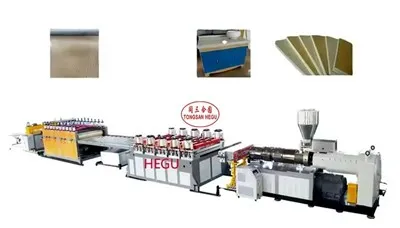
If you’re in the market for a WPC profile machine, or you’re having trouble with your current line’s cooling system, don’t hesitate to reach out. We can walk you through the right setup for your specific products, answer any questions, and help you tune your system to run smooth. No pressure, just real advice from a supplier who’s been in this game for years.
Corrugated Pipe Machine References:
- Wood-Plastic Composites (WPC): Manufacturing, Properties, and Applications, CRC Press, 2021.
- Extrusion Processes for Thermoplastics and Composites, Society of Plastics Engineers, 2019.
- Guidelines for WPC Profile Production Equipment, International Wood Products Association, 2022.
Qingdao Tongsanhegu Plastic Machinery Manufacturing Co., Ltd.
With abundant experience, we are one of the most reliable wpc profile machine manufacturers and suppliers in China. We warmly welcome you to buy durable wpc profile machine for sale here from our factory. Quality products and reasonable price are available.
Address: West of Xixinzhi Village, Sanlihe District Jiaozhou, Qingdao City, Shandong Province, China
E-mail: info@tongsanhegu.com
WebSite: https://www.tongsanhegumachine.com/
