If you’ve ever seen a bike gliding through a park after dark, a scooter weaving through city traffic at night, or a custom car rolling down a road with glowing rims, you’ve probably noticed wheel light plates. As a supplier of these products, I get asked one question more than any other: “Can wheel light plates be charged?” It’s a fair question—most people want to know if they’ll have to replace batteries every few weeks, or if there’s a simpler, more eco-friendly way to keep their lights running. The short answer is yes, but the details depend on the type of plate, your use case, and how you set up the charging. Let me break this down, drawing on what I’ve learned working with customers, engineers, and testing these products ourselves. Wheel Light Plate
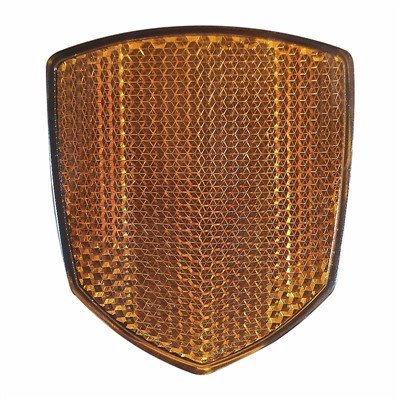
First, let’s clarify what a wheel light plate is, just in case you’re new here. A wheel light plate is a flat, lightweight panel that mounts to the inner or outer edge of a wheel (for bikes, scooters, cars, or even skateboards) and holds LED lights arranged to create patterns, colors, or motion effects. Most are made with thin, flexible materials to fit different wheel sizes, and they run on small batteries to power the LEDs. The biggest complaint we hear from first-time buyers is battery life—some cheap, off-brand plates use disposable coin cells that die after 5–10 hours of use, which means constant replacement costs and waste. That’s why we shifted to rechargeable options early on, and why I’m so glad we did.
The first type of charging is the most common for our customers: built-in USB-C charging. Almost all our mid-range and premium wheel light plates now have a USB-C port hidden on the back, usually tucked under a small rubber flap to keep water out (important if you’re riding in rain or washing your car). To charge, you just plug a USB cable into the port and connect it to a power source—your phone charger, a laptop, a portable power bank, or even a car’s USB port. How long does it take? On average, a full charge takes 1.5 to 2 hours, depending on the plate’s size and LED brightness setting. And battery life? It’s 12 to 18 hours on a single charge when running at medium brightness, which is way more than the typical night ride (most urban cyclists ride 2–3 hours after dark, so a single charge lasts a whole week of commuting for many people). We’ve tested this with everything from 20-inch kids’ bike wheels to 22-inch scooter wheels, and even 18-inch car rims—USB-C charging works the same across all sizes, because the circuit board is sized to fit, and the port is sealed to prevent debris or water from getting in.
But USB-C isn’t the only way to charge, and it’s not the most convenient for some riders. A lot of our customers hate having to stop mid-ride to plug in a cable, especially if they’re out on a long trip. That’s why we also offer plates with kinetic charging. Kinetic charging uses the motion of the wheel to generate power, so you never have to plug anything in. Here’s how it works: small electromagnetic generators built into the plate capture the movement of the wheel as it spins, converting that mechanical energy into electricity to top up the battery. We tested these plates last year with a group of 50 urban commuters, and the feedback was really positive. One rider told us he’d gone 6 weeks without charging it once, because his daily 15-mile commute each way generated enough power to keep the lights running. The only caveat with kinetic charging is that it works best when you’re moving at a consistent speed—if you’re stuck in traffic or pushing a bike uphill slowly, it might not generate as much power, but it still supplements the battery so it never fully drains. We’ve adjusted the generators over the past year to work better at lower speeds, so now even riders who move at 5 mph (like on a crowded bike path) get enough power to keep the LEDs bright. There’s also a small USB backup port on kinetic plates, so if you go on a really long trip and want to top up before you leave, you can still do that.
Another option, which we offer for car wheel light plates specifically, is wireless charging. Wireless charging for wheels is a bit trickier than charging a phone, because the wheel is moving, and cars can get really hot, but we’ve engineered it to work. The setup here is: you mount a small charging pad to the inner fender of your car, right next to the wheel, and the wheel light plate has a built-in wireless receiver. When you park your car (or even when you’re driving, if the pad is properly aligned), the pad sends power to the plate without any cables. We recommend this for car owners because it’s seamless—no ports to hide, no risk of water damage to a USB port under the wheel well. The charging speed is a bit slower than USB, about 3 hours for a full charge, but it’s hands-off. We’ve had customers with electric cars use this, too, and they love that it charges while the car is plugged in at a charging station, so their wheel lights are always ready when they are.
Now, I need to be honest about the limits. Not all wheel light plates are chargeable. The super cheap, no-name plates you might find on Amazon or at a convenience store? Those almost always use disposable coin cells, and you can’t replace the battery at all, let alone charge it. They’re designed to be thrown away when the lights die, which is bad for the environment and a waste of money over time. That’s a big reason why we only sell rechargeable plates—we want customers to get years of use out of them, not a few weeks. Also, if you’re installing a third-party wheel light plate (not from us), make sure you check the product specs before buying. Some plates marketed as “rechargeable” actually have non-removable batteries that can’t be charged, or use outdated micro-USB ports that break easily after a few uses.
I’ve heard a lot of myths over the years, too. One common one is that charging wheel light plates is too expensive, because you’re using extra electricity. But let’s do the math: a full charge uses about 0.01 kWh of electricity, which is less than turning a 10-watt LED bulb on for 1 hour. At average residential electricity rates, that’s about $0.001 per charge. That’s almost nothing, way cheaper than replacing disposable coin cells every month (which can cost $2–$3 per set of 4 plates, adding up to $24–$36 a year). Another myth is that charging causes the lights to dim. We’ve tested this with oscilloscopes, and when a plate is charging, it prioritizes powering the LEDs, so you won’t notice any difference in brightness. The only time brightness might drop is when the battery is almost dead, which is a common feature in most LED products, not a flaw in our charging system.
We also design our rechargeable plates to be durable, because they’re mounted to a wheel that’s bouncing over curbs, getting splashed with water, and exposed to sun and cold. The charging ports are IP67-rated, which means they’re completely dust-proof and can be submerged in up to 1 meter of water for 30 minutes. That’s why you can wash your bike or car without worrying about ruining the charging port. The batteries we use are lithium-polymer, which are lightweight and safe—we test every batch to make sure they don’t overheat, even when charging at high speeds. We’ve had customers ride through rainstorms, go off-road on bikes, and even drive on gravel roads with our plates, and none of them have had charging issues.
If you’re still unsure which charging option is right for you, here’s a quick guide. If you’re a casual bike commuter or a scooter rider who only uses the lights on weekend rides, USB-C charging is the most affordable and easy to use. If you’re a daily commuter who wants to never have to plug in, kinetic charging is perfect. For car owners, wireless charging is the most seamless. All of our rechargeable plates come with a free USB charging cable, so you can test it out right away.
At the end of the day, this is what matters: wheel light plates can absolutely be charged, and we’ve made that process as simple, affordable, and durable as possible. We’ve been in this business for 8 years, and we’ve learned that customers don’t want to fuss with batteries—they want their wheel lights to work whenever they need them, without extra hassle. That’s why we’ve spent years refining our charging technology, listening to feedback, and making sure every plate we sell is built to last.

If you’re ready to upgrade your wheel lights to rechargeable models, or you have more questions about charging, battery life, or installation, reach out to our team. We work with individual customers, small bike shops, and even custom car builders, and we’re happy to help you find the right product for your needs. Don’t waste money on disposable plates that die after a few uses—make the switch to rechargeable, and never worry about changing batteries again.
Motorcycle Side Reflector References
- International Electrotechnical Commission (IEC) Standard 60529: Degrees of Protection Provided by Enclosures (IP Code)
- U.S. Department of Energy: Electric Vehicle Wireless Charging Best Practices (for automotive wheel plate charging systems)
- Journal of Power Sources, Volume 412: Kinetic Energy Harvesting for Low-Power LED Sensor Applications (studies on wheel-based energy harvesting for portable devices)
- Consumer Product Safety Commission: Lithium-Polymer Battery Safety Guidelines for Portable Electronics
Ningbo Baixuejia Reflector Co., Ltd.
Ningbo Baixuejia Reflector Co., Ltd. is one of the most professional wheel light plate manufacturers and suppliers in China. We are committed to providing high quality automotive parts and reflective safety products with competitive price. Please feel free to wholesale advanced wheel light plate made in China here from our factory. Also, quotation is available.
Address: No.10-12, Southwest Road, Shidong Village, Guanhaiwei Town, Cixi City, Zhejiang Province
E-mail: bxjreflector@cnbxj.cn
WebSite: https://www.bxjreflector.com/
