Hey there, if you’ve ever shopped for kids’ trampolines, you’ve probably stared at the specs section and went, “Wait… ‘weight limit’ is just a random number, or is it actually a big deal?” As someone who’s been in the children’s trampoline game for over 10 years, I can tell you it’s way more than a box to check on a product sheet. Let’s break this down—no super jargon, just real stuff that matters for parents, caregivers, and even folks looking to restock. Children’s Trampolines
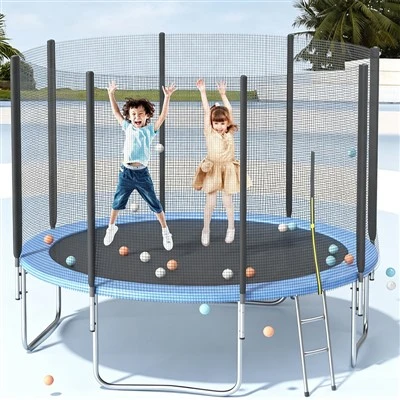
First, let’s get one myth out of the way: that weight limit isn’t some arbitrary number a manufacturer pulled out of thin air. It’s based on three main things, and I see this all the time when I’m working on new designs or checking stock for our retailers. The first is the frame and the jump mat itself. Kids’ trampolines (the backyard ones, or even the small indoor ones for bedrooms) don’t use the same heavy-duty materials as adult trampolines—duh, they’re made for smaller bodies. But the limit is specifically how much total weight the mat and frame can handle safely, not just when they “don’t break.” For example, a 7ft round trampoline we sell has a 150lb weight limit, but that’s not because the mat will snap if a kid hits 151. It’s because the springs, the frame supports, and the stitching on the mat are rated to handle repeated jumps under that amount without getting damaged over time. If a kid who’s 160lb jumps on it every day, you might notice the mat feels looser in a year, or the frame starts to bend a little—stuff that’s a total safety risk down the line.
Then there’s the safety padding. Wait, the big foam pads that cover the springs? Those have a weight limit too, weirdly enough. I’ve had a customer call me super stressed because their 8-year-old hit the spring pad and scraped their knee, and when they checked the box, the limit was for the total weight of everyone using the trampoline at once. Oh right! That’s another thing most people miss. A lot of parents think “weight limit = max one kid,” but no—some smaller trampolines (like 4ft for toddlers) have a limit that’s total group weight. So if two toddlers are playing together, you can’t add their individual weights and expect it to work; you have to stay under the cap for both of them combined. I remember a time early in my career, we had a mom get mad because she put her 50lb kid and his 40lb little cousin on the 4ft trampoline, and the mat dipped weird. Turns out that trampoline’s total limit was 70lb, not 100, so that’s why it was off. That’s why now I make a point to tell every retailer we work with to flag that detail on their product pages—no one wants a mix-up like that.
Now, let’s talk about age vs. weight, because that’s where things get confusing. A 6-year-old might be 45lb, but a bigger 6-year-old could be 70lb. So for a trampoline marked “for ages 3-10,” the weight limit is the real rule, not the age range. I’ve seen parents skip this and buy a trampoline for their 10-year-old who’s 90lb, when the limit is 85lb. That’s a no-go, plain and simple. The age range is just a guideline for size, not for load. One of our best-sellers is an 8ft trampoline with a 200lb weight limit for kids ages 6-12—we worked with a testing lab to confirm that even with a 100lb kid jumping multiple times a day, it’s not going to wear out faster. We did a stress test where we put a 180lb dummy on it and bounced it 10,000 times, and the mat held up, but we still set the limit at 200 because that’s the safe sweet spot. We didn’t want to push it to the edge, y’know?
Wait, also—don’t forget gear. If your kid is wearing a heavy backpack (we’ve seen that, because they brought their Lego stash out to the yard!) or a bulky winter coat in the backyard, that adds to the total weight. Super obvious, but easy to overlook. And if you’re using a trampoline with a safety enclosure net? The net poles also factor into the weight limit. Some cheaper brands skip reinforcing those, so if a kid leans too hard on the net while bouncing, it could pull the whole frame if the weight is too high. That’s why we only use galvanized steel for our frames—we tested different grades, and the cheaper steel bent after a few hundred jumps, while the galvanized stuff stayed steady for thousands.
Now, what happens if you go over the weight limit? It’s not just a “the trampoline breaks” scenario. We’ve heard stories of frames warping so bad the mat slanted, causing kids to trip. Or springs snapping and flying off—luckily no one got hurt, but that’s scary. The worst one was a trampoline where the stitching on the mat came undone because a 120lb kid was bouncing on a 90lb limit one, and they fell through the gap. So it’s not something to brush off as a “rule that’s too strict.” That’s why as a supplier, we make sure all our products have the weight limit printed big on the box, and on the product page, with a clear note about total weight if it’s a shared-use small trampoline.
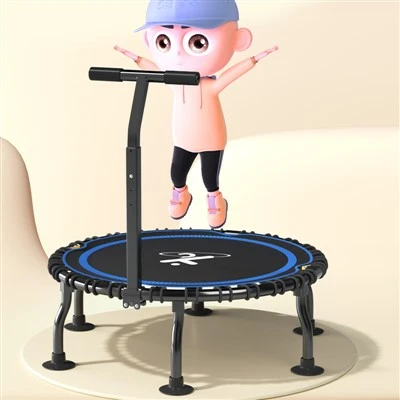
Here’s the other side: a lot of parents ask, “Can I buy a trampoline with a higher weight limit so they can use it longer?” Totally fine, just make sure it fits their space and needs. If you have a small backyard, a 10ft trampoline with a 250lb limit works, but it’ll take up way more space than a 7ft one. For indoor use, the small mini trampolines for toddlers usually have a 50-70lb limit, which is perfect for 2-5 year olds—you don’t need a higher limit for little kids who are just learning to bounce.
I get it, weight limits can feel like a hassle, but they’re basically there to keep kids safe. As someone who’s been around these things for years, I’d rather a parent pick a trampoline that’s the right weight limit than one that’s bigger or cheaper but not safe. If you’re in the market, whether you’re a parent looking for a backyard trampoline or a retailer wanting to stock reliable stuff, feel free to reach out to chat more. We can help you figure out which model fits your needs, no pressure—just solid info.
Indoor Trampoline References
- Consumer Product Safety Commission (CPSC). (2022). Safety Standard for Trampolines for Children. U.S. Consumer Product Safety Commission.
- American Society for Testing and Materials (ASTM). (2021). Standard Safety Specification for Recreational Trampolines. ASTM International.
- International Trampoline Industry Association (ITIA). (2023). Best Practices for Children’s Trampoline Load Limits. International Trampoline Industry Association.
Zhejiang Aidi Industrial & Trading Co., Ltd.
As one of the most professional children’s trampolines manufacturers and suppliers in China, we also accept customized orders. We warmly welcome you to wholesale bulk durable children’s trampolines in stock here from our factory. If you have any enquiry about quotation and free sample, please feel free to email us.
Address: Yongkang City, Zhejiang Province
E-mail: Sales1@ykaidy.com
WebSite: https://www.cndibo.com/
