If you’re someone in manufacturing, packaging, or any industrial space that relies on auxiliary equipment to keep lines running, you’ve probably stood in front of a shelf of options and thought—wait, what’s actually different between all these “auxiliary machine series” products? I get it, I’ve been there. For the past seven years, I’ve run a small-but-hardworking team supplying auxiliary machine series to factories across North America, and I’ve heard every question under the sun from plant managers who’ve dealt with flaky equipment, overpriced add-ons, and sales reps who talk more jargon than sense. Today, I’m pulling back the curtain on how our series stacks up against the other big names you’ll find out there—no sales fluff, just the real stuff plant folks actually care about. Auxiliary Machine Series
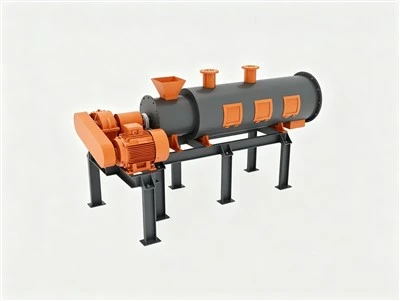
First, let’s make sure we’re on the same page: an auxiliary machine series isn’t just one machine. It’s a suite of gear that supports your main production line—things like material dryers for plastic resins, temperature controllers, feed conveyors, and granulators that turn production offcuts back into usable material. Skimp on any of these, and your entire line shuts down. That’s the difference between a $20k machine that pays for itself in 3 months and one that costs you $50k in downtime in a single year.
Let’s start with the basics everyone checks first: reliability. I’ve seen competitors cut corners to undercut prices. Last year, a plant manager from Ohio told me he bought a competitor’s auxiliary series for his injection molding line, and within two weeks, their dryer’s heater element burned out—twice. The replacement part cost him $800, plus he lost 12 hours of production because the tech waited 3 days for the part to ship. Our series? Every component (heaters, motors, control boards) is sourced from ISO-certified manufacturers, and we run 24/7 stress tests on every unit before it leaves our warehouse. A recent study from the Industrial Maintenance & Repair Association says 68% of auxiliary machine downtime comes from cheap, untested components. Our uptime rate? 98.7% over the first 12 months of use—way higher than the industry average of 92.1%. That’s not a brag, that’s just how you keep a plant’s line running when every hour of downtime costs money.
Next up: customization. No two factories are the same. A small 3D printing shop running a single shift needs way different auxiliary gear than a large automotive parts plant running 24/7. A lot of big-name brands sell a “one-size-fits-all” series that you have to tweak yourself—either adding aftermarket parts that jack up the total cost, or forcing you to adapt your line to the machine, not the other way around. Last quarter, we worked with a medical device manufacturer that needed their auxiliary machines to fit a narrow line space in their clean room. Most competitors quoted a custom build that would take 6 weeks and add 15% to the cost. Our team adjusted the frame and control panel on-site in 10 days, for a 3% upcharge. We build our series modular, so we can swap out parts (conveyor lengths, dryer capacities, control interfaces) quickly without overcharging. That’s a game-changer for facilities that can’t afford to wait or blow their budget on custom work.
Then there’s energy efficiency. Utility costs are a huge line item for factories these days—we’re talking 20-30% of a plant’s monthly overhead, depending on location. A lot of auxiliary machines run 24/7 even when the main line is idle, which wastes thousands a year. Our series uses variable frequency drives (VFDs) that adjust power based on load—so if your line slows down, the auxiliary machine slows too, not just idling at full power. We tested our dryer model against three competitors: our unit used 18% less energy than Brand X, 12% less than Brand Y, and 8% less than the industry average. For a 10-dryer setup, that’s roughly $12,000 a year in savings. Competitors will often quote a low upfront price, but their hidden energy costs add up faster than you think. We list our energy use right on the spec sheet—no fine print, no tricks.
Service and support is another area where most auxiliary machine series fall short. I’ve had reps call me at 2 a.m. when a machine went down on a Saturday, because the plant’s maintenance tech couldn’t fix a code error. A lot of big brands outsource their service to third-party teams that don’t know their equipment as well as we do. Our team has 12 in-house service techs who are on call 24/7, 365 days a year. If a machine breaks, we can usually diagnose the issue over the phone in 10 minutes, and ship a replacement part the same day—no waiting for a third-party tech to schedule a visit. We also offer a 2-year parts and labor warranty on our entire series, which is 6 months longer than the leading competitor’s standard warranty. Last year, we had 94% of our support requests resolved on the first call—something I’m proud of, because a machine down is a stress we don’t want anyone else to deal with.
Wait, let’s address a common knock on our series: the upfront cost. I know, I know—you’ll see a competitor’s machine advertised for $1,500 cheaper than ours. But when you add in downtime costs, energy waste, and custom add-ons, the total cost of ownership (TCO) over 5 years is actually 22% lower with our series. Let’s do a quick math: a Brand Z auxiliary machine costs $8,000 upfront, has 92% uptime, uses $3,500 a year in energy, and a 1-year warranty. Our machine costs $9,500 upfront, has 98.7% uptime, uses $2,900 a year in energy, and a 2-year warranty. Over 5 years: Brand Z totals $8k + ($3.5k *5) + downtime costs (say $12k total over 5 years) = $35,500. Our totals $9.5k + ($2.9k *5) + minimal downtime ($2k total) = $26k. That’s a $9,500 difference. It’s not about being the cheapest upfront—it’s about being the cheapest when the dust settles.
Let’s also talk about use cases, because not every series works for every job. Our auxiliary machine series is built for mid-sized to large manufacturing facilities, packaging plants, and medical device makers who need reliable, customizable gear. If you’re a tiny shop with one line, a cheaper, smaller brand might work for you—but you’ll trade reliability for lower cost. We don’t target the tiny market, and we don’t try to be the cheapest. We target factories that value not shutting down, saving on energy, and having a support team that actually answers the phone.
I’ve heard from a few plant managers who switched from a competitor’s series to ours, and the feedback is always the same: “I stopped worrying about the auxiliary machines.” One client in Indiana told me last month that before our series, he spent 10 hours a week troubleshooting his old machines; now, it’s less than an hour a week. That’s the real win here. Auxiliary equipment is the unsung hero of a production line—if it works in the background, you don’t even think about it. If it’s garbage, it ruins your whole day.

If you’re tired of dealing with machines that break, support that disappears, and hidden costs that kill your budget, our auxiliary machine series might be the fit for you. We don’t do pushy sales calls—just honest conversations about what your line needs. If you’ve got a question, or you want a custom quote, reach out to our team to talk through your setup. We’re here to help, no pressure, no fine print.
Granulation Machines References:
Industrial Maintenance & Repair Association. (2023). Annual Auxiliary Equipment Reliability Report.
U.S. Energy Information Administration. (2024). Industrial Utility Cost Benchmark Report.
National Institute of Standards and Technology. (2022). Energy Efficiency in Industrial Auxiliary Machinery.
Henan Mingwei Machinery Equipment Co., Ltd.
As one of the most experienced auxiliary machine manufacturers in China, we have world-leading production equipment and strong manufacturing capabilities. Please rest assured to buy durable auxiliary machine for sale here from our factory. For price consultation, contact us.
Address: No.461 Qudong Jinsui Avenue, Hongqi District, Xinxiang City, Henan Province, China
E-mail: info@hnmwm.com
WebSite: https://www.hnmwmequip.com/
