If you’ve ever placed an order for custom CNC turned parts, you’ve probably found yourself asking: “Wait, how long is this gonna take?” That question—what’s the lead time for CNC turning services—is one of the first things almost every new customer asks us here at our shop, and honestly, it makes total sense. Lead time isn’t just a random number we pull out of thin air; it’s the thing that keeps your production line on track, helps you meet your customer deadlines, and avoids those last-minute panics when a part doesn’t show up when you need it. As someone who’s been running a CNC turning service for the past 12 years, I’ve seen lead times shift a lot over that time, and I can tell you: there’s way more to it than just “how fast can we machine a part.” CNC Turning Services
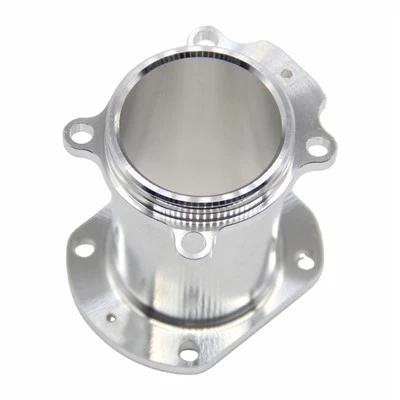
First off, let’s break down what lead time actually means for CNC turning, because it’s not the same for every shop. For us, lead time starts the second you send us your finalized part files and quote approval, right? It wraps up when your parts are packaged, labeled, and ready to ship (or for local pickup, when they’re sitting on our loading dock). It doesn’t count the time you spent designing the part, or waiting for it to get to the point where you’re ready to order—those are separate steps. A lot of new folks mix that up, so I try to spell it out clearly right off the bat.
Now, let’s get into the factors that actually impact how long that lead time ends up being. Not every factor is in our control, which is why we’re always upfront with customers about where delays could pop up, instead of giving a flat number that might not work for their order.
First big one: part complexity. This is huge, and it’s something I never skip when I talk to a new customer. A simple part—say, a plain aluminum bolt with a 1-inch diameter, no threads, no holes, just a basic cylinder—takes maybe 10 to 15 minutes to machine on our lathes. We can knock out a batch of 100 of those in a couple of hours, tops. But if you’ve got a part with multiple internal threads, counterbores, intricate contour cuts, or tight tolerances (we’re talking +/- 0.0005 inches here, not the standard +/- 0.005), that changes everything. That kind of part takes way longer to program, set up the lathe tooling, and even inspect. Last month, a customer came to us with a custom medical component that had 7 different threaded features, a tapered face, and a set of tiny coolant holes we had to drill mid-turn. Programming that didn’t just take an hour—it took our lead machinist almost 3 hours, just to make sure every feature lined up correctly. And even once it’s set up, machining one of those parts takes closer to 45 minutes. So a batch of 50 of those? That’s not a half-day job, that’s two full days of machining. That complexity is why lead time jumps from 3 business days for simple parts to 10 or 12 for the super detailed stuff.
Next: material type. Not all materials machine the same, and that directly affects lead time. Let’s run through the most common ones we work with. Aluminum is the gold standard for speed here—it machines clean, cuts fast, and doesn’t gum up tooling like some other materials do. Steel, especially stainless steel, is a total opposite. It’s tough, it hardens when you machine it (work hardening, in industry terms), so we have to run slower cuts, use tougher tooling, and sometimes even take extra passes to get the finish right. Titanium? That’s even worse. It’s lightweight, strong, great for aerospace parts, but it’s a pain to machine. It generates a lot of heat, so we have to use high-pressure coolant, and each part takes longer. We had a customer last year who needed a batch of titanium brackets for a drone; each bracket took almost an hour to machine, and tool changes were way more frequent than with aluminum. So if you’re ordering a titanium part, you can plan on lead time being at least a couple of days longer than the same part in aluminum. Plastics, like Delrin or nylon, fall somewhere in the middle—they machine pretty fast, but you have to watch out for chipping, so we might adjust our process a tiny bit, which adds a touch of time.
Then there’s order quantity. Duh, right? A single prototype part is way different than a 10,000-piece production run. Prototypes are usually one-offs, so we can drop everything to machine that part once the files are approved—lead time for prototypes is often 1 to 2 business days, sometimes even same-day if you’re in a pinch. But when you’re talking about a big production batch, we have to schedule it around other orders, make sure we’ve got enough tooling and material, and sometimes run the lathes for multiple shifts to get it done. A couple of years ago, we had a automotive customer who needed 5,000 aluminum spacers for a new car model. That batch took 5 full days to machine, plus 2 days for inspection and packaging, because we had to make sure every single spacer was within tolerance, no burrs, and ready for their assembly line. The more parts you order, the longer the lead time—though we do offer rush pricing for folks who need a big order in a hurry, as long as it doesn’t conflict with other urgent jobs.
Wait, let’s not forget about lead time for tooling, if the part needs custom tooling. That’s a step a lot of new customers don’t think about. If your part uses a standard drill bit or tap, no problem—we already have those on hand. But if you need a custom form tool for a weird contour, or a specialized tap for a thread that’s not a standard size, we have to order that. Custom tooling can take anywhere from 3 business days to a week, depending on what it is. A customer last quarter needed a part with a unique 1.5-inch serrated edge—we didn’t have a form tool for that, so we had to order it, which added 5 days to their lead time. We always tell customers up front if their part needs custom tooling, so there’s no surprise when we say their lead time is longer than the standard for similar parts.
Now, what about rush orders? I get it, sometimes stuff comes up. Maybe your original supplier bailed, or your customer pushed their deadline up. We do offer expedited lead times, usually 24 to 48 hours for most simple parts, even some medium-complexity ones—though rush pricing applies, obviously. But we can’t do miracles. If it’s a super complex part, a big production run, or we’re already swamped with urgent jobs, we might have to turn you down for a rush, or quote a lead time that’s still a few days out. We’d rather be honest about that than promise something we can’t deliver, because nothing kills a customer relationship like a missed deadline.
Let me also talk about what delays actually cause a lead time to stretch, because that’s another thing we have to warn customers about. If you send us part files that aren’t finalized—like, you change a dimension after we start machining, or you add a feature—That’s gonna set you back a day or two, easy. We’ve had customers send a file, we set up the lathe, then they decide to make a hole bigger. Suddenly we have to scrap the half-machined part, adjust the program, get a new tool, and start over. That’s why we always tell you to triple-check your files before you approve the quote. Also, material shortages? Believe it or not, even with all the supply chain stuff getting better lately, some materials are still tough to get. If you order a rare type of stainless steel, it might take an extra day or two for us to get it in, which pushes back your lead time. And inspection—we don’t just machine parts and send them out. We have a quality control team that checks every batch, especially for tight tolerances. If a part fails inspection, we have to rework it, which adds time. We try to catch issues before they get to QC, but sometimes a tool wears out mid-cut, or the material has a flaw, so that’s a possibility.
Now, let’s get to the average lead times we actually quote, based on common job types, so you have a frame of reference. Simple prototypes (1-off, basic geometry) or small batches (1-10 parts): lead time is 1-3 business days. Medium complexity parts, small batches (10-50 parts, some threads, simple contours): 3-7 business days. Complex parts (multiple features, tight tolerances, like medical or aerospace components) or medium production runs (50-500 parts): 7-12 business days. Large production runs (500+ parts): 10-18 business days, sometimes longer if it’s a new material or requires custom tooling. That’s the ballpark we give 90% of our customers, and we stick to it as long as there are no hiccups.
Wait, let’s clear up a common myth I hear all the time: “CNC turning is super fast, so lead time should be 1 day, right?” Nah, not if you care about quality. A lot of shops will promise 1-day lead time, but cut corners on programming, skip secondary operations, or rush the inspection, which leads to bad parts. We’d rather take an extra day or two and get you parts that fit, work, and pass your QC than send out something that’s gonna get rejected. I’ve seen too many customers come back to us after a bad experience with a cheap fast shop, saying they had to throw away 20% of their parts because of bad machining. That’s not saving you money, that’s costing you time and headaches.
If you’re reading this and have a CNC turning project lined up, the best thing you can do is have all your info ready when you reach out: your part files, how many parts you need, what material you want, and if you have a hard deadline. We can give you an exact lead time once we review all that, no guesswork. We’ll also tell you if there’s anything that could make it longer, so you can plan accordingly.
At the end of the day, lead time for CNC turning isn’t a static number. It’s a balance between part design, material, quantity, and our ability to get the job done right. We’re not here to drag our feet—we want to get your parts to you as fast as possible, without sacrificing quality. If you’re ready to get a quote, or just have questions about lead time for your specific project, don’t hesitate to reach out. We’ll walk through every step, explain exactly how long it’ll take, and make sure it fits your timeline.
It’s also worth mentioning that as CNC technology evolves, lead times are getting shorter across the board. Newer lathes with faster spindle speeds and better tooling let us machine parts quicker, and CAD/CAM software has made programming more efficient, so we can turn around complex parts faster than we could 5 or 10 years ago. But even with all that, the basics still hold: simpler parts, common materials, small batches = faster lead times. Complex parts, rare materials, big runs = a bit longer.
I’ve been in this industry long enough to know that trust is everything. If a shop gives you a super short lead time without asking any questions, that’s a red flag. They’re either not doing the prep work they need to, or they’re overpromising and underdelivering. We always ask about your part specs, your quantity, and your deadline, because that’s how we give you an accurate lead time, and that’s how we make sure you’re not left waiting longer than you have to.

So to wrap it up: the lead time for CNC turning services depends on your part’s complexity, material, order quantity, and if you need custom tooling. Simple, low-volume jobs can be done in 1-3 days, while complex, high-volume runs might take 10 or more. Always check your files before you start, be upfront about your deadline, and pick a shop that’s honest about their lead times. If you’re ready to move forward with your project, we’re here to help figure out the perfect timeline for you. Reach out anytime to chat about your needs.
Precision CNC Machining REFERENCES
- American Society of Mechanical Engineers (ASME) B4.6:2017 – Metal Cutting Machine Tools – Safety Requirements
- SME (Society of Manufacturing Engineers) Guide to CNC Turning Operations, 2022 Edition
- Gardner Business Media, 2023 CNC Machining Industry Lead Time Benchmark Report
- National Institute of Standards and Technology (NIST) – Advanced Manufacturing Lead Time Reduction Case Studies, 2021
- Custom Manufacturers Association (CMA) – 2022 Report on Precision Machining Lead Time Variables
Shenzhen Multi-Wins Precision Technology Co., Ltd.
As one of the most professional CNC turning manufacturers and suppliers in China, we have world-leading production equipment and strong manufacturing capabilities. Please feel free to buy customized CNC turning made in China here from our factory. Also, quotation is available.
Address: 1 Phase, Yi’an City Central Garden, Longfei Avenue, Longgang District, Shenzhen, GD, China. 518100
E-mail: info@multi-wins.com
WebSite: https://www.multi-wins.com/
