Hey there, if you’re running a warehouse or distribution hub and your electric stacker battery dies mid-shift, we get it—panic mode is real. One minute you’re moving pallets like a pro, the next you’re stranded by a racking unit, staring at a stack of boxes that still need to get to the loading dock. As someone who’s been selling electric stackers for years, I’ve fielded way too many late-night calls from operators dealing with this exact mess. Let’s break this down step by step, no jargon, just actual stuff that works. Electric Stacker
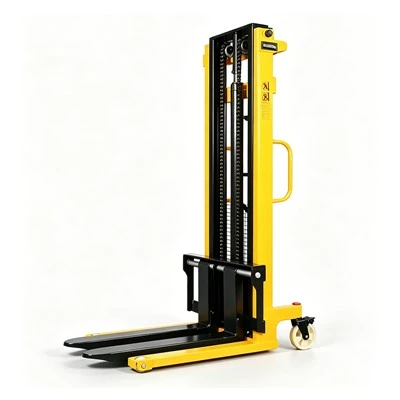
First off, don’t just sit there staring at the dead battery—this is where quick thinking saves your day, not overcomplicating things. If you’re in a pinch, the very first move is to move the stacker out of the way. A dead unit parked in an aisle is a safety hazard for other workers and a total block for your workflow. Most electric stackers have a manual release lever under the footplate or near the back wheel—yes, that thing that looked like an afterthought when you unboxed your machine. Flip it, and the hydraulic and drive systems disengage, so you can push it around like a hand truck. Just make sure you take it slow—stackers are heavier than they look, and those pallets don’t need to shift mid-push.
Next, check if it’s actually dead, not just “acting dead.” I’ve seen so many operators swap out a perfectly good battery because they missed a simple tripped breaker or loose connection. Grab your multimeter (or even just a small flashlight to get a good look) and pop off the battery cover—most stacker batteries are easy to access, no tools needed. First, check the main circuit breaker, usually a big red switch on the side of the battery compartment. If it flipped, flip it back, wait 10 seconds, then try powering the stacker again. If that doesn’t work, check the terminals—sometimes corrosion builds up even if the stacker was only used a few times a week. A quick scrub with a wire brush and a splash of baking soda mixed with water will clean that right up. If it still won’t turn on? Alright, it’s actually dead—time for a replacement or a charge.
Wait, before you go hunting for a spare, let’s talk charging if you can hold off. A lot of operators make the mistake of plugging a dead battery in and running back to their desk, assuming it’ll be ready in an hour. But electric stacker batteries (we use lithium-ion, which is way better than lead-acid for this) have specific charging rules. If it’s a lithium-ion battery, don’t leave it charging for more than 8 hours straight—overcharging kills the cells fast. If it’s lead-acid (we only sell a small number of these for budget-focused customers, but still), you shouldn’t charge it from totally dead to full in less than 4 hours—fast charging that kills the internal plates. Pro tip: if your warehouse has a dedicated charging bay, use that—wall outlets near the aisles are often overloaded, which slows charging or damages the battery. And one more thing: don’t charge it in a spot that’s too hot or too cold. Batteries hate extreme temps—if it’s 90 degrees in your loading dock or 35 in your cold storage, move the battery to a climate-controlled area to charge.
If you can’t wait 4 hours (or 8), then you’re gonna need a spare battery. But here’s the thing—don’t just grab any battery off the shelf. We see customers try to mix and match batteries all the time, and it never ends well. Electric stackers are built for specific battery capacities—use a 24V battery for a 24V stacker, a 48V for a 48V, and make sure the amp-hour (Ah) rating matches what your machine calls for. A lower Ah battery will die halfway through your shift, and a higher one is just a waste of space and money. Also, check the connectors—they have to lock in tight, no wiggling. Loose connectors cause power drops and can fry your stacker’s electronics, which is a way bigger cost than a good battery.
Now, if you’re totally out of spares or your charging station is broken (we’ve heard that one too—old chargers die all the time), what then? Short-term, you can rent a battery. But here’s the catch: most rental places have 24-hour turnaround, so if your shift ends at 5pm, you might be waiting till 9am the next day for a new one. That’s why keeping a spare battery on hand is non-negotiable for any warehouse that uses their stackers 5+ times a day. We actually recommend every customer who buys more than one stacker gets at least one extra battery—paying a few hundred bucks now saves you thousands in downtime later.
Wait, let’s talk about preventing this from happening in the first place, because “my battery died” shouldn’t be a weekly thing. The biggest mistake operators make is not doing pre-shift battery checks. Spend 2 minutes every morning: pop open the compartment, check the terminals, test the charge with a simple battery tester (we give these out for free to all our regular customers), and make sure the breaker is on. Also, don’t wait till the battery is totally dead to charge it. Lithium-ion batteries hate being discharged below 20%—if you let them get that low, you’re shortening their lifespan by half. We have customers who charge their batteries at 40% use, and their batteries last 3-4 years, vs. 1-2 years for guys who drain them to zero every time.
And if you’re dealing with an old battery that dies every few weeks? It might not just be age—we see a lot of batteries go bad because of bad charging habits. Using a charger that’s not made for your specific stacker is a huge one. Third-party chargers might seem cheaper, but they don’t regulate voltage the way our stock chargers do, so they overcharge or undercharge, killing the cells. Also, storing batteries unused for more than a month? Charge them to 50% first, then top them off every 2 weeks. If you leave a lithium-ion battery totally dead for a month, it’ll never hold a charge again—we’ve tested this, it’s not a myth.
Wait, let’s cover the big “what if” scenario: if the battery dies and you have no spare, no charger, and a pallet of 50 boxes that need to go to the shipping dock. Manual pushing is an option, but only if the pallet is light. If it’s a heavy load, that’s just asking for back injuries or a damaged stacker, which will cost you way more than waiting for a rental battery. We’ve had customers try to push 2,000 lbs worth of pallets with a dead stacker and bend the drive axle—replacement parts cost $800, plus 3 days of downtime. So that’s a hard no—reschedule that heavy load, get a rental, or call a local service to bring a charger.
Now, if you’re the type who’s like, “This happened yesterday, and I’m tired of scrambling”—let’s talk when it’s time to replace your battery. If your battery is less than 2 years old and dying way faster than it used to, that’s a defect, not normal wear and tear. We warranty all our batteries for 2 years, so reach out if that’s your situation. If it’s older than 2 years and only holds 50% of its original charge, replacement is the way to go—fixing old batteries (replacing cells) is more expensive than just buying a new one, and you still risk it dying mid-shift.
At the end of the day, a dead electric stacker battery isn’t a end-of-the-world problem—it’s a problem you can fix with a little preparation and quick troubleshooting. The worst thing you can do is ignore it and hope it works tomorrow, or cut corners with cheap batteries or third-party chargers. We’ve sold thousands of electric stackers, and the customers who have the least issues are the ones who keep an extra battery on hand, do pre-shift checks, and use the right charging gear.
If you’re dealing with repeated battery issues, or you want to make sure you’re set up with backups to avoid downtime, hit us up for a chat. We can walk you through our battery options, help you pick the right spare for your stacker, and even hook you up with discounted chargers and battery testers to keep your gear running smooth. No sales pitch, just real advice from folks who’ve been in your shoes when a battery died and threw your whole day off.
Manual Stacker References:
- Lithium-ion Battery Best Practices for Material Handling Equipment, Material Handling Industry Association, 2023
- Electric Stacker Maintenance & Troubleshooting Guide, Industrial Truck Association, 2022
- Lead-acid vs. Lithium-ion Battery Lifespan Analysis, Battery University, 2021
- Warehouse Downtime Cost Report, National Retail Federation, 2023
- Electric Truck Charging Safety Standards, Occupational Safety and Health Administration, 2022
Huazheng Heavy Industry Machinery Equipment Co., Ltd.
With abundant experience, we are one of the most professional electric stacker manufacturers and suppliers in China. Please feel free to buy high quality electric stacker for sale here from our factory. We also accept customized orders.
Address: Room 423-101, Building C-4, Electronics Valley Technology Center, No.3088 Lekai North Street, Gaokai District, Baoding City, Hebei Province, China
E-mail: sales02@hzheavy.com
WebSite: https://www.hzheavy.com/
