Hey there, Fire-resistant Door
If you’ve ever stood in a commercial building’s stairwell or walked past a unit that’s marked with that small, bold “FR” symbol, chances are you glanced at it without thinking much. But let me tell you—when it comes to fire safety, that door isn’t just a slab of metal or wood with a paint job. As someone who’s been a fire-resistant door supplier for 18 years, I’ve heard every question under the sun from facility managers, contractors, even homeowners who’ve had a last-minute panic when their insurance agent asked for proof of fire-rated components. The one I get asked most often? “What exactly is a 1-hour fire-resistant door?” It’s not a marketing buzzword, and it’s way more important than you might think.
Let’s start with the basics: what a fire-resistant door isn’t. It’s not a cheap interior door with some extra paint, and it doesn’t mean it can hold back a roaring inferno all night. A 1-hour fire-resistant door is a specifically tested and certified assembly—frame, door panel, hardware, seals, all of it—designed to withstand exposure to a standard fire for a minimum of 60 minutes. That’s not a guess; it’s tested using the exact temperature curve that real-world fires follow: starting at 1,000°F after 5 minutes, jumping to 1,700°F by 10 minutes, and hitting 2,000°F around 30 minutes, holding that level for the rest of the hour. The test doesn’t just check if the door doesn’t burn through—it checks three key things: integrity, heat transmission, and radiation.
Integrity is the big one. That means the door doesn’t crack, split, or warp so much that flames or hot gases leak through. If a door fails integrity at 58 minutes, it doesn’t count as 1-hour rated—those last two minutes could be the difference between a fire spreading down a hallway and people getting out safely. Then there’s heat transmission. The door has to keep the temperature on the non-fire side below 325°F, which is hot enough to cause third-degree burns in minutes, and way too hot to let people pass through. Radiation is the third piece: it blocks enough radiant heat so that nearby materials don’t ignite from the heat bouncing off the door. All three of these are non-negotiable for a 1-hour rating.
Now, I’ve seen people mix up “fire-resistant” with “fire-rated,” but there’s a tiny difference that matters. Fire-resistant is the general term, but a 1-hour rating is a specific performance level. A 1-hour door is often used in places where people need time to evacuate—like apartment building stairwells, hospital corridors, office building exit routes, or commercial kitchens where grease fires are a real risk. A 90-minute door is for higher-risk areas, like utility rooms or large storage closets, but the 1-hour is the workhorse of most buildings. I remember a job last year where we retrofitted a 10-year-old office building that had been using standard interior doors for its stairwells. The local fire marshal made them replace them with 1-hour rated doors after a routine inspection, and the facility manager told me afterward that the cost was way lower than the fine they would’ve faced, not to mention the peace of mind for the 200 employees who work there.
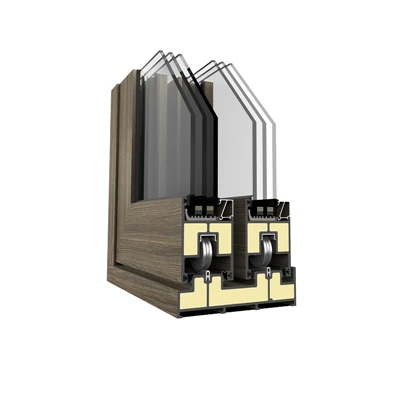
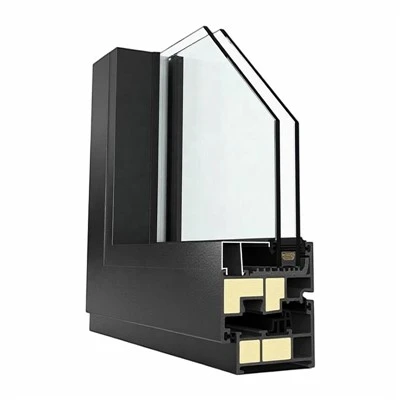
Let’s get into what makes a 1-hour door actually work, because it’s not just solid wood. We use a few core materials in our products, and each has a job. The door panel itself is usually wood-based (like solid core or mineral core) or steel. Mineral core is a big one for 1-hour ratings—it’s non-combustible, dense, and doesn’t break down under heat. Some budget brands use wood core with a fire-retardant glue, but over time, especially in humid environments, that glue can degrade, and the door won’t hold its rating. The steel ones we offer are 18-gauge minimum, with a frame that’s made from the same steel, welded at the corners to prevent gaps. Then there’s the intumescent seal—this is the secret. It’s a strip around the edge of the door that stays invisible until it heats up; when the temperature hits around 200°F, it swells up to 10 times its original thickness, blocking gaps between the door and frame that would let smoke and flames through. I’ve tested this myself on a training day: I held a blowtorch to the edge of a door for 10 minutes, and the seal swelled so much you couldn’t see a crack. That’s the kind of detail people don’t notice until it matters.
Hardware is another make-or-break part. You can have a perfect door panel, but if the hinges are made of regular steel that melts after 30 minutes, the door will fall off and fail. We only use hinges and latches that are certified for 1-hour fire resistance—they stay strong under heat, so the door stays in place. Even the door handle has to be rated; a regular plastic handle would melt, leaving a gap that lets heat through. I’ve seen installers cut corners here too—once, a contractor I was working with tried to use a standard door lock on a 1-hour door, and I made them take it out and replace it. A door is only as good as its weakest point, and that lock was definitely it.
Now, let’s talk about when you actually need a 1-hour fire-resistant door. This is a question we get all the time, and it’s not just “every commercial building.” Local building codes, like the International Building Code (IBC) in the US, specify where these doors are required. For example, if a building has more than three stories, the stairwells need 1-hour doors to contain fire in the exit route. Hospital patient rooms often have 1-hour doors between rooms and corridors to keep fire from spreading to vulnerable patients. Even some multi-unit residential buildings require 1-hour doors between individual units and shared hallways, to stop a kitchen fire in one apartment from reaching others. I once had a homeowner call me in a panic because their basement workshop had a grease fire, and the 1-hour door between the workshop and the main house kept the fire from spreading upstairs. They said they never thought about that door being anything special until that fire happened.
A common misconception is that these doors are heavy, ugly, or hard to open. That’s a myth we’ve worked hard to bust. Modern 1-hour doors are designed to be used every day—they have smooth surfaces, are easy to operate for people with disabilities, and don’t stick if they’re installed right. Sure, they’re thicker than standard interior doors (usually 1 ¾ inches, compared to 1 ⅜ inches for standard), but that extra thickness is what gives them the insulation and strength to hold back fire. We also offer them in different finishes, so they can match the rest of the building’s design—no more industrial-looking doors that clash with a lobby’s marble or wood trim.
As a supplier, the most important thing I can tell you is that certification is non-negotiable. Every 1-hour fire-resistant door we sell is tested to meet strict standards, and comes with a certificate that shows it passed. We don’t cut corners on testing, because I’ve seen what happens when doors aren’t properly rated. A few years ago, there was a small apartment fire in a suburban building where a cheap, unrated door was used in the stairwell. The fire spread through the stairwell in under 10 minutes, and one tenant had to jump from a second-floor window to escape. That could’ve been avoided if that door had been a proper 1-hour rated one. We don’t just sell doors—we sell safety, and that means standing behind every product we provide.
Maintenance is another part that people overlook. A 1-hour fire-resistant door isn’t a set-it-and-forget-it item. You have to check the seals regularly to make sure they’re not torn or dirty, because if the seal is damaged, it won’t swell up when heat hits. You also have to make sure the door closes properly—if it’s misaligned, there will be gaps that let flames through. We recommend a professional inspection every two years, because small issues like a loose hinge or a sticky latch can turn into safety problems if they’re not fixed. I’ve seen doors that were installed correctly, but then a cleaning crew leaned a ladder against them and bent the frame, ruining their rating. It’s not just about installation—it’s about taking care of the door over its lifetime.
Let’s get back to the core of the question: what is a 1-hour fire-resistant door, really? It’s a system that’s been engineered and tested to give people 60 minutes of extra time. Time for the fire department to arrive, time for people to evacuate, time for the fire to be contained before it becomes deadly. It’s not just a door—it’s a critical part of a building’s passive fire protection, which is the first line of defense against fire, before sprinklers or firefighters even arrive. When a fire starts, every second counts, and that extra hour can mean the difference between a minor incident and a tragedy.
If you’re a facility manager, contractor, building owner, or even a homeowner planning a renovation, and you’re not sure if you need a 1-hour fire-resistant door, or if your current doors meet the required rating, don’t guess. Fire safety isn’t something to leave to chance. We’ve been in this business for nearly two decades, and we’ve helped thousands of clients find the right door for their specific needs, whether that’s a single door for a small office or a full set for a multi-story building. We work closely with fire marshals and building inspectors to make sure every door we provide meets or exceeds local codes, and we can guide you through the entire process, from selecting the right door to installation and maintenance.
If you’re ready to talk about your fire-resistant door needs, or if you have questions about ratings, materials, or compliance, we’re here to help. We don’t do pushy sales—we do honest advice, because we know that when it comes to fire safety, the best choice is the right choice for your building and the people who use it.
Fiberglass Swing Door Reference:
National Fire Protection Association. (2021). Fire Protection Handbook (20th ed.). Quincy, MA: NFPA.
International Code Council. (2022). International Building Code. Washington, DC: ICC.
Underwriters Laboratories Inc. (2020). Standard for Safety for Fire Tests of Door Assemblies (UL 10B). Northbrook, IL: UL.
Henan Enbuess Composite Materials Co., Ltd.
Henan Enbuess Composite Materials Co., Ltd. is one of the most professional fire-resistant door manufacturers and suppliers in China, also supports customized service. Please feel free to buy bulk durable fire-resistant door made in China here from our factory. Welcome to contact us for free sample.
Address: No.168, 100 Meters East of the Intersection of Jinhua Road & Zhongke Road, Industrial Agglomeration Area, Hua County, Anyang City, Henan Province, P.R. China
E-mail: leila.salesdir@enbuess.com
WebSite: https://www.enbuessfrp.com/
