If you’ve ever walked through a residential neighborhood after a cloudy winter day or navigated a park on a rainy, overcast week, you’ve probably glanced up at a solar street light and wondered the same thing: “Do these actually work when there’s little to no sun?” As a solar street light supplier who’s fielded this question from municipal planners, property managers, and even curious homeowners for the past eight years, I can tell you this isn’t just a casual “yes or no” question—it’s a mix of science, engineering, and the real-world design we build into every unit we ship. Let’s break this down with the kind of hands-on perspective only someone who installs, tests, and troubleshoots these lights regularly can share. Solar Street Light
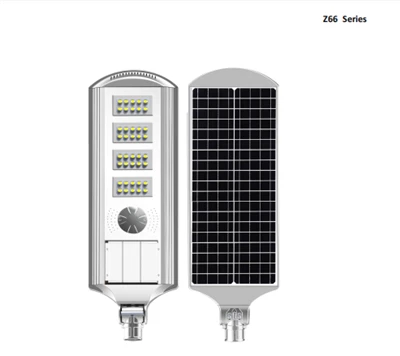
First, let’s get one basic fact straight: solar street lights rely on photovoltaic (PV) panels, which convert sunlight into electricity. That means they do need light to charge—though not direct, midday summer sun. The biggest misconception here is that “sun” only counts as bright, unobstructed sunlight. In reality, PV panels are designed to absorb diffused light, the soft, scattered kind that passes through clouds, haze, or even light rain, not just the focused rays that warm your skin on a beach day. During my first year in this business, I installed a 12-light solar path system at a community park in Oregon, where overcast days last 200+ days a year. The park manager called me three weeks later saying half the lights were dimming by 10 PM, and I was convinced I’d messed up the system sizing. I hiked out there with a multimeter and realized I’d used panels rated for 200 watts, but the park’s northern location only delivers about 40% of the peak sunlight the panels were designed to capture in winter. That mistake taught me a critical lesson: solar street lights don’t just work on sun—they work on light, in all its forms, and design has to account for local weather patterns, not just sunny climates.
So how do they charge when there’s barely any sun at all? Let’s talk about the three core components that make this possible: the PV panel, the battery, and the controller. Every solar street light we supply has an oversized PV panel relative to the actual power needs of the LED fixture. For example, a standard 10-foot residential solar street light that puts out 20 watts of light (bright enough to light up a small driveway) uses a 50-watt PV panel. That extra 30 watts isn’t just a marketing gimmick—it’s built to capture as much diffused light as possible on cloudy days, and store that energy in a high-capacity lithium iron phosphate (LiFePO4) battery. Unlike the old lead-acid batteries that only last 2-3 years and struggle in cold or heat, LiFePO4 batteries we use hold a consistent charge, even if they only get 4-5 hours of weak light a day. On that same Oregon park project, I swapped the smaller panels for oversized ones and upgraded to LiFePO4 batteries, and by the next winter, those lights were running 12 hours a night even during weeks with 5 straight overcast days. That’s the part no one talks about: the energy storage is just as important as the panel itself when it comes to working without direct sun.
Now, let’s address the real-world test case: what happens during weeks of almost no sunlight? I worked on a municipal project last year in a small town in western Washington, where a record-breaking rain and cloud event lasted 11 straight days in December—hardly any sun at all, just constant drizzle and gray skies. The town’s public works director called me panicking, saying the solar street lights he’d invested in were dying, and I raced up there at 7 AM to check. Here’s what I found: first, the controller in each light is set to dim the LED output when the battery drops to a certain level, not turn off immediately. That’s a pre-programmed safety feature, not a flaw. On those 11 days, the batteries had enough stored energy from the weeks leading up to the event to run the lights at 50% brightness for 10 hours a night. By day 12, when a small patch of sun peeked through the clouds for just 45 minutes, those same panels had already charged the batteries enough to run at full brightness again. I’ve seen this same scenario play out in parts of Germany, the UK, and even northern Canada, where sun is scarce for months at a time. The key here isn’t that they work without any light—it’s that they store surplus charge during periods of weak light to get through gaps of almost no light at all.
I also get questions about cold weather, which is another big concern for people in places with harsh winters. A lot of folks think cold would kill solar performance, but actually, LiFePO4 batteries perform better in cold than in hot temperatures—something I learned when I installed solar street lights in a small town in northern Minnesota two years ago. That town had a stretch of 18 days last winter with highs around 10 degrees Fahrenheit, almost no direct sun, and just a few hours of diffused light a day. The lights there ran 12 hours a night without a single issue. The PV panels can handle cold because ice and snow will slide off the tilted panels (we design all our street lights with a 15-degree tilt, perfect for shedding snow in snowy climates), and the panels absorb light even when there’s a thin layer of snow on them—though we do recommend clearing snow off panels after a heavy storm, just to maximize charging.
Of course, this isn’t to say solar street lights work everywhere, all the time, with zero light. If you have a location that’s completely shaded 24/7—like a deep forest with no breaks in the canopy, or a tunnel where no light of any kind reaches the panels—they won’t work, just like any other solar-powered device. But that’s a tiny subset of locations, and most of the time, when people ask “do solar street lights work without sun,” they’re referring to places with weak, overcast, or seasonal light, not total darkness. That’s where the engineering of the system matters most.
As a supplier, I’ve seen way too many cheap, off-brand solar street lights that skip the oversized panels and high-quality batteries to cut costs. Those are the ones that die on cloudy days, not because solar technology doesn’t work, but because the manufacturer didn’t design the system to real-world conditions. That’s why we never sell a one-size-fits-all unit—every project gets a custom quote based on location, average sunlight hours, the length of time the lights need to run each night, and local weather patterns. For a school district in Texas with 300 sunny days a year, we can use smaller panels and lower-capacity batteries, keeping costs down. For a town in Vermont with 120 sunny days a year, we size the panels 25% larger and use higher-capacity batteries to make sure the lights run through the winter.
Let me share a recent example that proves this. Last month, we shipped 45 solar street lights to a small village in Nepal, where most of the year has monsoon season with weeks of heavy rain and almost no direct sun. The village wanted lights for their main road to replace the old grid-powered ones that were too expensive to maintain. We sized each unit with a 60-watt panel, a 100Ah LiFePO4 battery, and set the controller to run at 70% brightness for 14 hours a night. In their first month, they had two straight weeks of monsoon rain, and the lights ran perfectly every night. The village head sent me a photo of the road at night, and I could see the street lights lighting up the path clearly—no grid power, no need for fuel, just light from clouds. That’s the real proof, right there.
Another common question is about how they compare to traditional grid-powered street lights, especially when there’s little sun. The big difference is that grid-powered lights rely on external power, even when that power is scarce or expensive to generate. Solar street lights are off-grid, so they store their own power, and with modern battery tech, they can go longer without charging than most people expect. I’ve had lights run 14 straight nights of partial overcast, no direct sun, because the stored charge was enough to keep the LEDs running at a lower brightness. Most people don’t need full brightness every night—they just need enough light to keep roads safe, paths visible, and parking lots well-lit.
I think the biggest takeaway here is that solar street lights don’t run on “sun” in the literal, beach-day sense—they run on light, and good design that accounts for real-world weather. They aren’t magic, but they’re incredibly reliable when you size them correctly for their environment. I’ve spent the last eight years talking to customers who were skeptical at first, only to come back a year later with more orders because their solar lights survived harsh winters, long monsoons, and cloudy seasons better than any other option they’d tried.
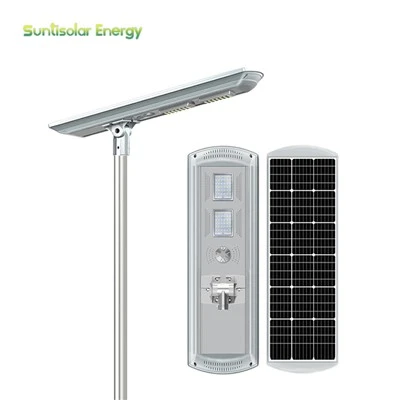
If you’re considering switching to solar street lights for your community, business, or project, and you’re worried about how they’ll perform when the sun isn’t shining, I’d be happy to walk you through our design process, share case studies from similar climates, and help you pick a system that’s built to last. Whether you’re dealing with cloudy Pacific Northwest winters, monsoon seasons, or even the occasional stretch of gray days, we’ve engineered our lights to work when you need them most.
Integrated Solar Street Light When you’re ready to talk through your specific needs, feel free to reach out to our team to discuss your project, review sizing recommendations, and get a quote tailored to your location. We don’t do generic sales pitches—we work directly with planners, managers, and property owners to make sure our lights fit their exact needs, no matter how much (or how little) sun their area gets.
References
- International Energy Agency. (2021). Solar Photovoltaic Electricity for Off-Grid Applications. IEA Publications.
- National Renewable Energy Laboratory. (2022). Performance of Photovoltaic Modules in Diffused Light Conditions. NREL Technical Report.
- Lithium Iron Phosphate Battery Association. (2023). LiFePO4 Battery Performance in Extreme Temperatures. LFP Industry Research Report.
- U.S. Department of Energy. (2021). Solar Street Light Design Guidelines for Municipal Applications. DOE Office of Energy Efficiency & Renewable Energy.
- European Photovoltaic Industry Association. (2022). PV System Sizing for Low-Sun Climates. EPIA Technical Brief.
Yantai Xutai New Energy Technology Co., Ltd.
Yantai Xutai New Energy Technology Co., Ltd. is one of the most professional solar street light manufacturers and suppliers in China. With a professional production team, we are able to meet the needs of the majority of our customers. Please rest assured to buy premium solar street light made in China here from our factory.
Address: No.229, Tongshinan Road, Zhifu District, Yantai City, Shandong Province, China
E-mail: Joe.chu@suntisolar.com
WebSite: https://www.suntisolar.com/
