If you’re reading this, chances are you either own a Ruiqi air compressor pump, you’re thinking of buying one, or you’re already dealing with that annoying noise, inconsistent pressure, or random shutdowns that make you want to toss the whole thing in the trash. Let me cut to the chase: I’ve been a Ruiqi Air Compressor supplier for 7 years, and I’ve seen firsthand that most pump issues aren’t because the product is bad. They’re because people skip the basic maintenance steps. And trust me—skipping them ends up costing way more in repairs, lost production time, or even a whole new pump way sooner than it should. Today, I’m breaking down exactly what you need to do to keep your Ruiqi pump running strong for years, no fancy tools or engineering degree required. Ruiqi Air Compressor
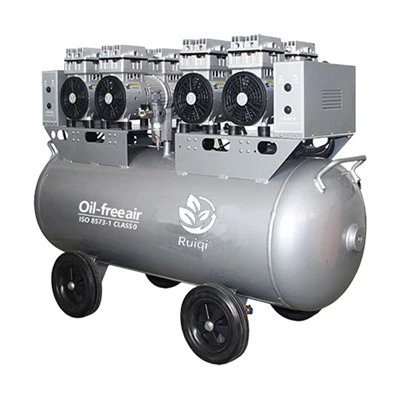
First, let’s get one thing straight: Ruiqi pumps aren’t the fancy, overcomplicated ones you see on industrial supermodels. They’re built for real shops, small manufacturing lines, construction sites, and even big auto body garages—they work hard, and they need simple, consistent care like any hardworking tool. The worst mistake I see new owners make is waiting until the pump is sputtering to do anything. Let’s start with the daily checks, because those take 2 minutes max and save you hours of headaches later.
Daily stuff is non-negotiable. Every morning before you fire it up, give the pump a quick once-over. First, check the air filter—you know that big, round (sometimes rectangular) plastic cover on the intake side? If it’s covered in dust, wood shavings, metal chips, or whatever gunk your workspace throws at it, that’s a problem. A clogged filter makes the pump work way harder than it should to pull in air, which burns out the motor and wears down the cylinder and piston way faster. I had a customer last year who ran a cabinet shop; he skipped changing his filter for 8 months because he “didn’t have time” and ended up needing a new piston and cylinder kit before his 1-year warranty even expired. Don’t be that guy. Also, do a quick visual for leaks around the pipes, fittings, and the pump body. Even a tiny, slow air leak can drop your pressure by 10-15 PSI over an hour, making your tools work harder and the pump cycle nonstop. If you spot a leak, don’t just cram it with Teflon tape—check if the fitting is cross-threaded first, that’s a super common issue when people rush to hook up the pump.
Next, the moisture drain. This is another daily must, especially if you’re working in humid environments or outdoors where dew or rain can get in. Every time you finish using the pump, open that little valve at the bottom of the air tank and the pump’s aftercooler (yes, most Ruiqi pumps have an aftercooler, don’t skip draining that too) until all the water is out—until you just hear air coming out. Water in the tank and pump system causes rust, which eats away at the inside walls of the cylinder and valve, and can even get into your air tools or paint sprayers, ruining a job. I had a customer who runs a painting business; he drained the tank but never the aftercooler, so during a big commercial paint job, water shot out of his spray gun and left streaks all over a $15,000 office lobby. That’s a mistake that could’ve cost him way more than the 10 seconds it takes to drain that extra valve.
Now, moving to weekly checks—these take 10 minutes, tops, and cover the stuff you can’t catch in a quick daily glance. First, oil level and quality. Wait, hold on—yes, Ruiqi pumps are oil-lubricated (most of their reciprocating models are, anyway, which is the most common for small to mid-sized operations), so oil is the blood of the pump. Checking it is not optional. The pump has a clear sight glass on the crankcase—make sure the oil level is between the two lines, never above or below. Too much oil will get pushed into the air system, causing oil buildup in lines and tools. Too little oil? Friction goes through the roof, and your pump’s bearings, crankshaft, and piston will seize up. Also, don’t just top it off with random oil—use the right oil, per Ruiqi’s specs. Wait, I hear you: “The manual is in a box somewhere, right?” Yeah, I get it, most people toss manuals. As a Ruiqi supplier, I can tell you that for most standard reciprocating pumps, you want a SAE 30 non-detergent air compressor oil. Don’t use motor oil—it has detergents that can gunk up the pump’s valves over time. And when you change the oil (which you should do every 500 operating hours, or every 3 months, whichever comes first), make sure you drain the old oil when the pump is warm—oil flows better when warm, so you get all the gunk out. I always tell customers to mark their calendars for oil changes, because it’s easy to forget once you’re deep in work. Also, while you’re at it, check the belts if you have a belt-driven pump (most Ruiqi industrial pumps are belt-driven, not direct drive, which is why they’re so durable). Look for cracks, fraying, or slack. If the belt is too loose, it slips, makes noise, and doesn’t transfer power properly. If it’s too tight, it wears out the bearings. To adjust the tension: press down on the middle of the belt with your thumb, it should give about ½ inch. That’s the sweet spot.
Monthly maintenance is where you get ahead of bigger issues, so don’t skip this. First, the valve checks. The inlet and exhaust valves in the pump head are the things that let air in and out as the piston moves. Over time, carbon buildup, gunk, or wear can make them leak, which drops pressure and makes the pump cycle way more. You don’t need to take the whole pump apart to check them—most Ruiqi pump heads are designed so you can pop the valve covers off with a few screws. Just take a look at the valve plates; if they have pitting, scratches, or are covered in carbon, that’s a sign you need to clean or replace them. Cleaning them is simple: take them off, soak them in carb cleaner for an hour, wipe them down, and make sure they seat properly when you put them back. I’ve had customers go 2 years without checking valves and end up with a pump that takes twice as long to build pressure—replacing a $20 valve kit is way cheaper than buying a new pump or paying for a full rebuild. Also, every month, tighten the pump head bolts. Vibration from running the pump can make bolts work loose over time, which can cause the head to warp or leak air. Don’t over-tighten them either—use a torque wrench if you have one, 15-20 ft-lbs, which is standard for Ruiqi pump heads.
Seasonal maintenance is the big one, especially if you’re using your pump in extreme temperatures. If you’re storing your pump for the winter, or using it in freezing conditions, you can’t just leave water in the lines and tank. If temperatures drop below 32°F, water will freeze, expand, and crack the tank or the pump’s lines. That’s a way bigger repair than draining the system. Before storing, drain every last drop of water, run the pump for 10 seconds with the drain valves open to blow out any remaining moisture, and then lightly coat the inside of the cylinder with a little oil (pull the pulley by hand a few times to spread it around) to prevent rust while it’s sitting. If you’re using your pump in very hot conditions (like outdoor construction in the summer), make sure the cooling fins on the pump head are free of dust and debris—those fins are there to keep the pump from overheating, and if they’re clogged, the pump will run hot, wear out faster, and can even trip the thermal overload. I once had a construction customer leave his pump running for 12 hours straight in 95°F heat with clogged cooling fins; the pump seized up mid-job and cost him $2,000 in lost revenue for the day. That’s a preventable mistake.
Wait, let’s talk about common mistakes I see all the time, because even if you do all the steps above, a few small habits can kill your pump early. First, overloading the pump. A lot of guys hook up 10 air tools at once, way more than the pump’s rated CFM (cubic feet per minute) output. If your pump is rated for 10 CFM, don’t run 12 CFM worth of tools at the same time. That makes the pump cycle nonstop, overheats it, and wears it out way faster. Second, not using a water separator and regulator on the outlet of the pump. Even if you drain the tank every day, a separator catches any leftover moisture, and a regulator keeps pressure steady, so your pump isn’t working harder than it needs to. Third, skipping warranty checks. Ruiqi has a 1-year warranty on most of their pump models, right? I see people do maintenance wrong and then get mad when their pump breaks, but if you follow the maintenance schedule, the warranty covers parts and labor, no problem. Don’t void your warranty by modifying the pump—stick to OEM parts, not random off-brand filters or oil.
Let me also address the elephant in the room: when should you call for a professional, or when is it time to replace parts? Most minor issues (filters, oil, belts, valves) are DIY, but if your pump is making a loud knocking noise, the motor is overheating constantly, or it’s not building any pressure at all, that’s when you should reach out. As a Ruiqi supplier, we work with technicians who know these pumps inside and out, and we can get you parts or service fast, no running around trying to find random parts online.
Wait, let’s wrap this up with a quick recap, because I know people skim. Daily: Check filter for clogs, inspect for leaks, drain all moisture. Weekly: Check oil level and quality, adjust belt tension if needed. Monthly: Inspect valves, tighten head bolts, clean cooling fins. Seasonal: Prep for storage or extreme temperatures, don’t overload the pump. That’s it—simple steps, no fancy stuff, and it adds up to a pump that lasts 10+ years instead of 2 or 3.
If you’re a Ruiqi pump owner and you’re not sure if you’re doing maintenance right, or if you need parts, or if you’re looking to upgrade to a bigger pump for your growing business, reach out to our team anytime. We’re here to answer questions, ship parts fast, and help you pick the right pump for your needs, no pressure, no annoying sales pitches. Don’t wait until your pump quits on you mid-job—take 5 minutes today to do the basics, and you’ll save yourself a ton of time and money down the line.
References
Gardner Denver Air Compressor Parts Compressed Air Airend and Pump Maintenance Guide, Ruiqi Industrial Group, 2022.
Reciprocating Air Compressor Best Practices, Compressed Air and Gas Institute, 2021.
Air Compressor Oil Specifications, National Fluid Power Association, 2020.
Suzhou Ruiqi Intelligent Equipment Co., Ltd.
As one of the most professional ruiqi air compressor manufacturers and suppliers in China, we also support custom service. As we have world-leading production equipment and strong manufacturing capabilities, we warmly welcome you to buy high quality ruiqi air compressor made in China here from our factory. Contact us for pricelist.
Address: No. 1729, Zhongshan South Road, Wujiang District, Suzhou City, Jiangsu Province, China, 16th Floor
E-mail: wts476626494@126.com
WebSite: https://www.ruiqicomp.com/
