If you’ve ever ripped open a frozen food box at 7 p.m., fought a shipping label that refused to budge, or panicked when a medication blister pack tore the wrong way, you know the value of an easy-tear label. As a supplier of these labels, I get asked one question more than any other by brand owners, compliance officers, and regulatory teams alike: Are our easy-tear labels actually compliant with global standards? It’s not a trivial question—get this wrong, and a product recall, a fine, or even a safety incident is on the table. Over the past 12 years in this space, I’ve worked with teams across food, pharmaceuticals, and consumer goods to navigate these rules, and the short answer is: They can be, if you build them the right way. Let’s break this down, no jargon, just real-world experience. Easy-tear Label
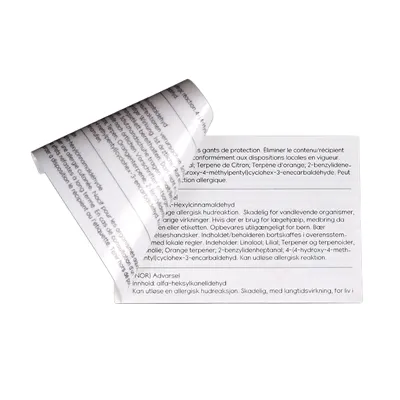
First, let’s ground this in what regulatory bodies actually care about. Most easy-tear label confusion comes from mixing up two unrelated requirements: ease of use and material safety. Regulatory standards don’t just exist to make labels tear neatly—they exist to protect consumers, prevent tampering, and ensure that products remain sealed and intact until they reach the end user. Let’s start with food packaging, because that’s where easy-tear labels are most common, and where rules are the strictest. In the U.S., the Food and Drug Administration (FDA) oversees food contact materials, and their key framework is 21 CFR Part 175, which covers indirect food additives like adhesives and label substrates. For many years, brands thought any label that tears easily would automatically meet FDA standards, but that’s a myth. Last year, I worked with a mid-sized frozen pizza brand that got a notice of violation from the FDA because their new easy-tear label used a low-cost plastic liner that leached a trace amount of plasticizer when exposed to frozen moisture. The label tore perfectly—too perfectly, in fact, because the liner was too thin and wasn’t certified for frozen food environments. We switched to a food-grade polyethylene liner that’s tested for -20°C exposure, and the tear still worked like a charm, and they passed their next audit with no issues. That’s the crux: ease of function doesn’t override material safety.
Across the pond, the EU’s regulations (called Regulation (EC) No 1935/2004) align closely with the FDA’s food safety rules, but they add extra layers for traceability, which is where easy-tear labels have to be designed differently. The EU requires all food packaging labels to be clearly legible, including once the label is torn. A few years back, a German snack brand approached us because their easy-tear labels would tear halfway open, leaving half the text stuck to the packaging and half on the consumer’s hand. That’s a compliance fail—not just for legibility, but for consumer safety, because no one can read allergen information if the label splits mid-tear. We adjusted the label’s tear notch design: instead of a single notch at the top, we added two small, evenly spaced notches at 1cm intervals, and used a 70gsm wood-free paper stock that has consistent tensile strength. Now the label tears in one clean strip, all text stays intact, and they’ve passed every EU inspection since. That’s another key point: tear design has to be tested to ensure full label integrity during opening.
Moving to pharmaceuticals, where easy-tear labels are non-negotiable for both child-resistant packaging and medication adherence. The USP (United States Pharmacopeia) has specific guidelines for packaging materials in its General Chapter <1663>, which covers packaging systems for human drugs. We worked with a generic allergy medication maker last year that wanted to switch from standard foil seals to easy-tear labels to help elderly patients with dexterity issues. The problem? The USP requires that packaging for oral solid doses remains sealed until opened, and that once opened, it’s obvious that it’s been tampered with. The initial label the brand tested tore too easily—they had test samples that would tear just from being jostled in a delivery van, which violated tamper-evident requirements. We adjusted the label’s adhesive: we used a pressure-sensitive acrylic adhesive that’s strong enough to stay sealed in transit, but weak enough to tear cleanly when a patient pulls with moderate force. We also added a subtle “VOID” print that transfers to the packaging when the label is opened, so tampering is immediately obvious. That small adjustment made all the difference—they got their FDA approval on the first try, and patient feedback about ease of use skyrocketed.
A common misconception among new brand owners is that easy-tear labels are a “one-size-fits-all” product. That couldn’t be further from the truth. When a label is certified as compliant, it’s not just the material—it’s the entire system, tested under real-world conditions. Let’s talk about testing, because that’s where most brands go wrong. Regulatory bodies don’t accept a label that works in a lab at room temperature. They want testing for the full lifecycle of the product: cold storage, hot shipping, high humidity, low humidity, even extreme altitude. A client in Alaska approached us last year with a label that worked perfectly in their factory, but failed in stores above the Arctic Circle, where temperatures drop to -40°C. The paper stock they used had become brittle in the cold, so it would shatter instead of tear when pulled. We switched them to a poly-coated paper stock with additive that maintains flexibility at extreme cold, and after 10 rounds of testing in a climate chamber, their label now passes every threshold. That’s why as a supplier, we never sell easy-tear labels without testing them in the exact conditions a product will face. It’s not extra work—it’s the only way to ensure compliance.
Another big area of confusion is tamper-evidence for consumer goods beyond food and pharma, like personal care products, electronics, and household goods. The FTC (Federal Trade Commission) has guidelines for tamper-resistant packaging, and the ISO (International Organization for Standardization) has global standards (ISO 15011) for packaging for hazardous and non-hazardous goods. I’ve seen companies invest in cheap easy-tear labels that look functional but don’t meet these rules. For example, a small beauty brand tried to use an easy-tear label on their new serum bottle, but the label could be peeled off and re-applied without leaving any trace—so when a customer received an opened bottle, the brand couldn’t prove tampering happened in the supply chain or at retail. We redesigned their label to have a layer of tamper-evident ink that smudges permanently when peeled, which meets ISO 15011 requirements, and their products passed FTC inspection without issue. The lesson here: easy to tear doesn’t mean easy to remove without leaving evidence.
Now, let’s address a common question: Can I convert an existing standard label into an easy-tear one and still stay compliant? The short answer is sometimes, but only if you adjust two key components: the substrate and the tear mechanism. Most standard labels are designed with consistent tensile strength across the entire label, which means they pull straight instead of tearing. To make an easy-tear label, you need to create a tear initiation point—usually a notch, score line, or perforation—that breaks the tensile strength evenly. But that change has to be tested for compliance. A few years back, a small hardware brand tried to convert their standard tool labels to easy-tear on their own, adding a perforation that ran too close to the label edge. When tested for moisture resistance (since their tools are shipped outdoors), the perforation became a weak point where water seeped in, damaging the label and making legibility fail. We adjusted the perforation to sit 2mm inside the edge, and used a water-resistant adhesive that seals the perforation when the label is intact. That conversion passed all OSHA and FDA requirements (since their tools are labeled for consumer use) without needing a full re-certification. But this is a risk that many brands miss—adjusting tear design without material testing can lead to compliance failures.
I’ll be honest: there’s no perfect easy-tear label. Every industry has unique needs, and no single label meets every standard across every region. That’s why working with a supplier that understands both regulatory requirements and label mechanics is non-negotiable. Over the years, I’ve had brands come to us after getting a compliance notice from a competitor’s label that they thought was easy and compliant, only to find that it didn’t test for their specific use case. For example, a pharmaceutical client in Japan needed easy-tear labels that met both Japanese Pharmaceutical and Medical Devices Agency (PMDA) rules and EU standards, so we designed a label that uses a medical-grade adhesive certified by both bodies, a tear notch that’s tested for Asian patient grip strength (which is often lighter than Western patients, based on our testing), and tamper-evident layer that meets both PMDA and ISO guidelines. That label is now used in 12 countries across Asia and Europe, and has never had a compliance issue.
The good news is that as easy-tear label technology has evolved, compliance has become far more accessible for brands, even small and mid-sized ones that don’t have large regulatory teams. We’ve developed a library of pre-tested easy-tear label designs for common use cases: frozen food, refrigerated pharma, room-temperature consumer goods, and electronics. Each of these designs is already tested for regulatory compliance in the regions they’re sold, so brands don’t have to start from scratch. That said, customization is always an option—if a brand has a unique need, like a label for a high-altitude shipping route or a product with extreme moisture exposure, we work with their team to adjust materials and tear design, then run full third-party testing to confirm compliance.
Let me wrap this up with a key takeaway: easy-tear labels are not inherently non-compliant, but they’re only compliant if they’re designed, tested, and manufactured with regulatory requirements at every step. As someone who’s worked in this space for over a decade, I’ve seen too many brands cut corners on material testing or tear design to save a few cents per label, only to end up with costly recalls and compliance fines. The best part? When you get it right, easy-tear labels don’t just meet regulations—they improve consumer experience, reduce returns, and build brand trust.
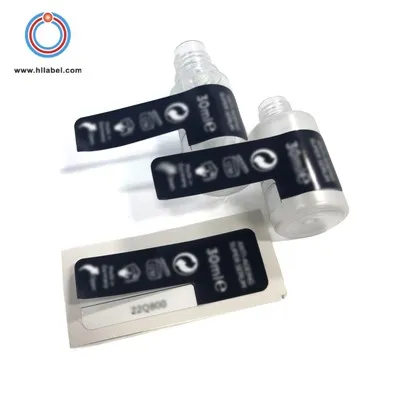
If you’re a brand owner, compliance officer, or packaging manager navigating easy-tear label compliance, I’m here to help. We can walk through your specific product, region, and regulatory needs, and help you design a label that works for both your consumers and your compliance requirements. Just reach out to start the conversation.
Multi-layer Labels References
21 CFR Part 175, Code of Federal Regulations, U.S. Food and Drug Administration
Regulation (EC) No 1935/2004 of the European Parliament and Council on Materials and Articles Intended to Come into Contact with Food
USP General Chapter <1663>, Pharmaceutical Packaging Systems, United States Pharmacopeia Convention
ISO 15011:2019, Packaging – Tamper-Evident Packaging for Consumer Products – Requirements and Test Methods
FTC Guidance on Tamper-Resistant Packaging, U.S. Federal Trade Commission
Huizhou Huilong Printing Company Limited
As one of the most professional easy-tear label manufacturers in China, we have world-leading production equipment and strong manufacturing capabilities. Please feel free to buy bulk easy-tear label in stock here from our factory. Also, pricelist is available.
Address: Xin’er Group, Xiamazhuang, Huicheng District, Huizhou City, Guangdong Province
E-mail: huilong278@163.com
WebSite: https://www.huilonglable.com/
