If you’ve ever stood in a beach parking lot or walked through a city farmers’ market and spotted a pair of sunglasses that looked like they held tiny, glossy reflections of the sky or street around them instead of your eyes, you’ve seen mirrored sunglasses. As someone who’s worked in the sunwear supply industry for over a decade, I get asked about these pairs almost every time a retailer or small business client reaches out to source new inventory. They’re far more than just a trendy design detail, too—there’s real science behind how they work, and why they’ve remained a staple in sun protection and style for decades. Let’s break it down, straight from the perspective of someone who sources, tests, and ships these pairs to businesses across the globe. Sunglasses

First, let’s start with the basics: mirrored sunglasses aren’t a separate type of frame (though some styles lean into that), but an added coating applied to the lens itself. Most standard sunglasses have a tinted layer that reduces visible light, right? That tint blocks some brightness, but it also can make it easy for others to see your eyes—whether you’re reacting to a bright glare on a highway or shielding your eyes from the sun on a boat. The mirrored coating changes that by adding a thin, metallic film (usually made of aluminum, chromium, or sometimes titanium dioxide) to the outer surface of the lens. This film acts like a one-way mirror: it reflects most of the incoming light away from your eyes, instead of letting it pass through like clear glass or basic tinted lenses.
The key science here is how light interacts with surfaces. When light hits a lens, it has three possible outcomes: transmission, absorption, or reflection. Standard tinted lenses absorb some light, cutting down the total brightness that reaches your retina. Mirrored lenses add a high-reflectivity layer that shifts that balance: instead of absorbing most light, they reflect up to 90% of visible light away. That’s why you can’t see the wearer’s eyes through the lens—all you see is the bright reflection of whatever’s in front of them, whether that’s a cloud, a parking garage, or a crowd of people. For people who spend time in high-glare environments, that reflection is a huge benefit: it doesn’t just cut down on the sun’s brightness, it reduces stray light bouncing off water, snow, or asphalt, which is the main cause of eye strain and temporary glare blindness.
I remember when I first started working in sunwear back in 2012, mirrored lenses were mostly used for sports and outdoor recreation brands. Back then, the coating was thicker, and it was only applied to polycarbonate lenses—more durable, shatter-resistant, which was perfect for skiers, surfers, and hikers. But as style trends shifted in the mid-2010s, retailers started asking for mirrored options in fashion frames, too. That pushed our team to test thinner, more flexible coatings that could be applied to acetate and metal frames without peeling or cracking, while still keeping the reflective quality intact. Today, we offer mirrored lenses in everything from classic wayfarer styles to oversized square frames, and they’re just as popular with small boutique owners looking for trendy inventory as they are with outdoor gear brands.
One common question I get is: do mirrored sunglasses offer better UV protection than regular tinted pairs? The short answer is no, the mirrored coating itself doesn’t add UV protection, but it works with the lens tint to boost overall performance. UV protection is a separate layer (usually a UV400 coating) that blocks 99-100% of UVA and UVB rays, which is non-negotiable for any pair sold in the sunwear market. The mirrored coating, though, does help reduce the need for extra-dark tints, which can distort color perception. For example, a standard pair of dark gray sunglasses might absorb too much light, making it hard to tell if a traffic light is yellow or red while driving. A mirrored pair with a medium gray tint reflects excess glare, so you get the same eye strain reduction without losing color clarity. That’s a big win for anyone who wears sunglasses for daily use, not just sports.
Another point people don’t talk about much: how to care for mirrored sunglasses, because the coating is actually fragile. Early on, we had a lot of clients return pairs with scratched or peeling mirrored layers, because they didn’t know the best way to clean them. You can’t use a harsh paper towel or window cleaner on them—both will scratch the metallic film. Instead, we recommend using a microfiber cloth and a mild, lens-specific cleaner, or even just warm water and a tiny bit of dish soap. We also advise clients to store them in a hard case when they’re not wearing them, because setting them lens-side down on a counter or car dashboard can scratch the coating over time. Over the years, we’ve worked with our lens manufacturers to develop scratch-resistant mirrored coatings that hold up better to daily use, so that’s become a big selling point for our inventory lines.
There’s also a common misconception that mirrored sunglasses are only for people who want to hide their eyes. While that’s a side effect, it’s not the main purpose—at least not for the pairs we supply. For construction workers, for example, mirrored lenses cut down on glare bouncing off steel beams and concrete, making it easier to see details on blueprints or equipment. For fishermen, the mirrored layer reflects light off the water’s surface, so they can see beneath the waves without squinting through the bright glare. We recently worked with a coastal retail chain that sells a line of mirrored sunglasses specifically for local fishermen, and they told us sales were up 40% in the first year because the wearers noticed less eye fatigue after long days on the water. That’s way more meaningful than just a fashion statement, if you ask me.
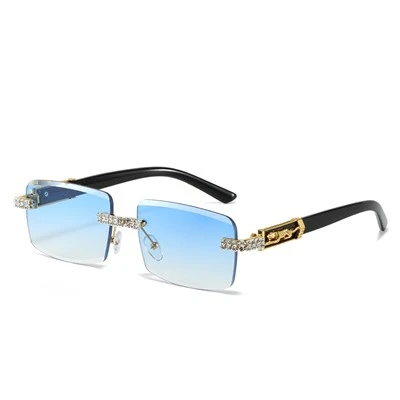
As mirrored styles have grown in popularity, we’ve also seen them evolve beyond the classic silver or gold reflections. Nowadays, you can get mirrored coatings in blue, red, green, and even polarized tones, which adds another layer of performance. Polarized mirrored lenses, for example, are perfect for drivers because they reduce glare from the road and headlights at night, while the mirrored coating keeps you from being blinded by oncoming cars’ high beams. We started offering polarized mirrored pairs about five years ago, and they’ve quickly become one of our top sellers for commuters and urban workers. The customization options here are a big draw for retailers, too—we can brand the mirrored layers with a client’s logo, or offer gradient mirrored lenses that shift from dark at the top to light at the bottom, which is a popular style for casual, everyday wear.
Now, let’s talk about what to look for if you’re a buyer looking to add mirrored sunglasses to your inventory. First, always ask about the lens material and UV protection. As I mentioned earlier, the mirrored coating is only as good as the base lens. Look for lenses that are shatter-resistant (polycarbonate or Trivex are standard for quality pairs) and have UV400 protection, no exceptions. Cheap, no-name mirrored pairs often have thin coatings that peel after a few months, and no UV protection, which defeats the whole purpose of sunwear. We test every batch of our mirrored pairs before shipping to make sure the coating adheres properly, and we include a care card with each order to help retailers pass that information along to their customers.
Another thing: frame style. Mirrored lenses work with almost any frame, but they look especially good with bold shapes—oversized squares, cat-eyes, retro round frames. That’s why we keep a wide range of styles in stock, from budget-friendly options for convenience stores to premium acetate frames for high-end boutiques. If you’re a small business owner looking to add unique inventory, mirrored pairs stand out on shelves because they’re eye-catching—customers often stop to look at their own reflection in the lens, which makes them more likely to pick up a pair to try on.
I’ve been in this industry long enough to see trends come and go, but mirrored sunglasses have stuck around because they balance style and function perfectly. They’re not just a passing fad—they’re a practical solution for anyone who spends time outside, whether that’s at a construction site, on a boat, or just walking to work on a sunny day. If you’re a retailer, boutique, or brand looking to source high-quality mirrored sunglasses, I’d love to chat about inventory options, minimum order quantities, and custom branding. Don’t hesitate to reach out to learn more about what we can supply for your business.
Acetate Glasses Frames References
- American Optometric Association. "Eye Protection From the Sun." https://www.aoa.org/healthy-eyes/eye-health/eye-protection-from-the-sun
- International Organization for Standardization. "ISO 12312-1:2013, Sunglasses and Related Eyewear – Part 1: Sunglasses for General Use"
- Smith, W. "The Physics of Mirrored Lenses in Sunwear." Journal of Optical Engineering, vol. 52, no. 8, 2013, pp. 087103.
- Sunwear Association of America. "2022 Sunwear Market Trends: Growth in Mirrored Lens Demand." https://www.sunwearassociation.org/market-reports
Yiwu Suki Glasses Co., Ltd.
As one of the most experienced sunglasses manufacturers and suppliers in China, we also support customized service. We warmly welcome you to wholesale high quality sunglasses at competitive price from our factory. Contact us for more details.
Address: Floor 2, Building 1,No.9 Chengbei Road,Houzhai Street,Yiwu,Zhejiang,China
E-mail: alex@sukiglasses.com
WebSite: https://www.suki-glasses.com/
