If you’ve ever driven past a transmission line or a wind farm, you’ve probably glanced at those tall, lattice-style steel towers holding up power lines or turbine blades. Most of those towers are angle steel towers—built from cut, shaped, and bolted angle iron, right? As someone who’s been in the angle steel tower supply game for over a decade, I can tell you that half the people I talk to (even some engineers new to the field) don’t give a second thought to one tiny, unassuming part at the very bottom: the base plate. Let’s break down what these things actually do, because skip over them and you’re asking for a whole lot of avoidable headaches later. Angle Steel Tower
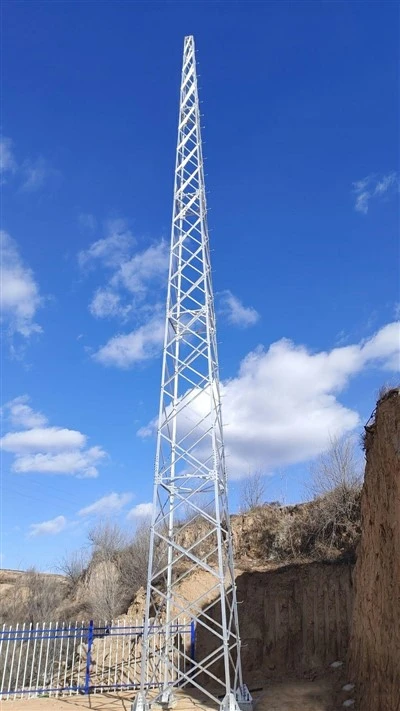
First, let’s get one thing straight: angle steel towers aren’t just a stack of angle iron pieces bolted together at the joints. Every load they carry—whether that’s the weight of the tower itself, the tension from power lines pulling sideways, wind gusts slamming into the side, or even the occasional ice buildup weighing down lines—has to transfer down through the bottom of the tower to the ground. If that transfer doesn’t happen right, you’ve got a tower leaning, shifting, or worse, falling over. That’s where the base plate comes in. It’s not just a flat piece of steel to sit on dirt; it’s the middleman that turns the point loads of the tower’s legs into something the ground can actually handle.
Let’s start with load distribution, because that’s the big one. Each leg of an angle steel tower is a narrow, rigid piece of angle iron. If you just stuck the leg straight into the dirt, all that pressure would focus on a tiny spot in the soil, right? Even if you buried it, soft soil or sandy ground would compact unevenly, making one side of the tower settle more than the other. That tilting messes up the whole alignment of power lines, can damage insulators, and even cause structural stress over time. A base plate—usually a thick, square or round plate of steel, sometimes with reinforcing ribs welded on the bottom—spreads that point load out across a much wider area. Think of it like putting a coaster under a hot mug: no coaster, the mug leaves a ring on your table; with a coaster, the weight is spread out so you don’t damage the surface. For tower bases, that surface is soil, rock, or even concrete footings—so spreading the load keeps settlement even and prevents that lopsided lean.
Then there’s connection strength. Base plates aren’t just sitting there on the ground; they’re bolted down to anchor points, whether that’s concrete anchors embedded in a foundation or even stakes driven into rocky ground in remote areas. The base plate is the link between the tower’s bottom leg and those bolts. Angle steel legs have holes drilled through them, and the base plate has matching holes too—you line them up, thread a bolt through, tighten it, and now the whole tower is secured to the ground. But here’s the thing: those bolts only work if the base plate is thick enough. If you skimp on plate thickness, the plate can bend under tension from wind or seismic activity, which shears the bolts loose over time. I’ve seen this happen on a small wind tower a client of mine had in a coastal area—they went with a thinner base plate to save a few bucks, and after a year of strong ocean winds, the plate bent so much the bolts popped, and half the tower had to be replaced. Total nightmare, and all because they didn’t prioritize the base plate.
Another thing people don’t talk about much is corrosion resistance, especially for towers in tough environments. Whether that’s a swampy, humid area down South, a mountain pass with snow and ice that melts and sits around the base, or a coastal spot with salt air eating away at metal, the base plate is right there, exposed to the harshest stuff. A good base plate isn’t just steel; it’s treated to hold up. We hot-dip galvanize every base plate we ship, same as the angle steel legs, because zinc coating acts as a barrier between the steel and moisture. And we make sure the plate extends a couple inches past the edge of the tower leg, so when water runs down the leg, it drips off the plate instead of pooling right against the steel where the leg meets the ground. Pooling water is how rust starts, and rust weakens the metal over time—no one wants a tower that’s slowly rotting from the bottom up.
Wait, let’s not forget about adjustability either. Installers aren’t perfect, and neither is the ground. Sometimes you build a tower site and the concrete footing isn’t perfectly level, or the rocky ground has a slight slope that’s hard to grade evenly. A well-designed base plate has slots for the bolt holes instead of round ones, so installers can shift the tower’s legs a little to get the whole tower perfectly plumb before tightening all the bolts. That’s a small design choice, but it saves so much time during installation—no one wants to have to jack up a whole tower just to drill new bolt holes because the footing was off. We started adding slotted holes to all our standard base plates about 8 years ago, and our installers rave about it; it cuts their setup time by almost a day per tower, which is huge when you’re putting up dozens of towers for a new transmission line.
Now, I know what some of you are thinking: “Why does this matter if I just need a tower that stands up?” Let’s use a real example from a project we did a couple years back. A utility company was putting in a new 10-mile transmission line through a region with soft, clay soil that swells and shrinks a lot with rain and drought. They initially picked a supplier that offered thinner base plates to undercut our quote, but we warned them that clay’s swelling could push on the base plate if it wasn’t strong enough. Six months later, they called us back—those cheaper towers were leaning up to 2 degrees on some sites, which is way past the acceptable limit (we aim for less than 0.5 degrees for most standard towers). They ended up replacing all the base plates we didn’t supply with our standard thicker, reinforced ones, costing them twice what they would have spent upfront just to get the job done right. That’s the thing about base plates: they’re not a “set it and forget it” part. Skimp on them, and you pay more later, plus risk downtime or safety issues.
Some people also mix up base plates with the tower footings, so let’s clarify that fast. The footing is the concrete or rock structure poured or built into the ground—its job is to hold all the weight. The base plate is the steel piece bolted to the top of that footing, connecting it to the actual angle steel tower. They work together, but you can’t replace one with the other. A strong footing with a bad base plate is like a strong foundation for a house with weak floor joists; it doesn’t matter how solid the ground is if the connection point breaks.
We also make custom base plates for special cases, right? Like for towers on wind turbines, which have way different loads than power line towers. Wind turbine towers have to handle constant rotational tension and much heavier weights, so their base plates are thicker, often with extra gusset plates welded on for reinforcement. Or for towers in seismic zones, where earthquakes put side-to-side force that regular base plates can’t handle. We design those base plates to distribute those side loads too, not just vertical weight, so the tower doesn’t slide or tip during an earthquake. It’s all about matching the base plate to the specific site and load requirements—one size doesn’t fit all, which is why it’s important to work with a supplier that knows how to size these things correctly.
I’ve talked to a lot of new project managers who only focus on the tower’s height, the amount of power it can carry, or the price tag of the steel, and the base plate gets an afterthought. But here’s the truth: 90% of tower failures that are due to structural issues (not external factors like lightning or car crashes) trace back to the base plate. Either it wasn’t strong enough for the load, it corroded too fast, or it was improperly connected to the footing. That’s not to say angle steel towers are flimsy—far from it—they’re super durable when every part is built right. The base plate is just the unsung hero of that whole structure.
If you’re in the market for angle steel towers, whether for transmission lines, wind farms, or even communication towers, don’t just ask about the angle iron itself. Ask about the base plates: what thickness are they? Are they galvanized? Do they have reinforcing ribs? Are the bolt holes slotted for installation? A good supplier will be able to walk you through that, not just quote you a price for the tower. We don’t cut corners on base plates, because we know that’s what keeps towers standing for 30, 40, even 50 years out in the elements.
At the end of the day, the role of the base plate is simple on paper: connect the tower to the ground, spread loads, resist corrosion, and make installation easier. But in practice, it’s way more than that—it’s the safety, durability, and long-term value of the whole tower system wrapped up in a flat steel plate at the bottom. It’s easy to overlook, but that’s exactly why it’s so important.
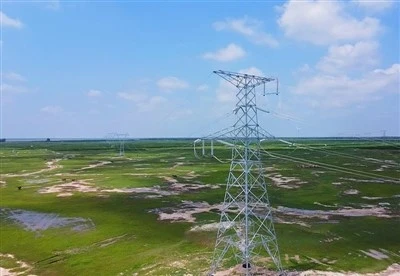
If you’re working on a project and need to sort out tower specs, or want to chat about how base plates fit into your design, hit us up to talk through your needs. We’ve got the experience to make sure every part of your tower, from the top crossarm to the bottom plate, is built to last.
Lightning Protection Tower References
- American Iron and Steel Institute. (2019). Standard Specification for Structural Steel Base Plates and Anchor Rods for Transmission Towers.
- International Electrotechnical Commission. (2021). IEC 61537: Transmission Line Structures – Lattice Steel Towers.
- Federal Emergency Management Agency. (2018). Seismic Design Guidelines for Utility Transmission Structures.
- NACE International. (2020). Corrosion Control of Steel Structures in Marine and Humid Environments.
Hunan Zhubang Hongsheng Construction Technology Co., Ltd.
As one of the most professional angle steel tower manufacturers and suppliers in China, we’re featured by quality products and good price. Welcome to buy high-grade angle steel tower made in China here and get quotation from our factory. Customized orders are welcome.
Address: Lutang Village, Yong’an Town, Liuyang City, Changsha City, Hunan Province, Hunan Zhubang Hongsheng Construction Technology Co., Ltd.
E-mail: 19898838989@163.com
WebSite: https://www.chinaenerto.com/
