If you’ve ever driven past a cell tower and wondered what goes into upgrading its gear—like adding a 5G antenna or expanding the backhaul—you’re not alone. As a communication tower supplier, I get dozens of questions a week from operators, small carriers, even rural broadband co-ops, all asking the same thing: “How much does it actually cost to add equipment to a tower?” It’s not a one-size-fits-all answer, and that’s why I’m breaking this down like we’re sitting in my office, no corporate jargon, just real numbers and what actually drives the price. Communication Tower

First, let’s get one thing straight: the base cost for a tower alone is a totally separate bill. We’re here talking about adding equipment to an existing tower that’s already up, right? No new tower construction, just retrofits. That changes everything. But even then, the price swings hard depending on what you’re adding, where the tower’s located, and how much prep work we have to do before we even unbox the gear.
Let’s start with the basics: what kind of equipment are we talking about? Most of the requests I get fall into three buckets: small cell antennas, 5G radios, and backhaul gear. Small cells are the tiny, low-profile antennas you see on towers these days for dense urban areas—think downtowns or college campuses where you need extra coverage without building a whole new tower. A single small cell antenna runs between $1,200 and $3,000, just for the hardware. But that’s not the end of it. You also need a mounting bracket, which is $200 to $500, and if the tower’s old—say, built in the 90s—you might need to reinforce the existing mounting points to hold the extra weight. Reinforcement can add $1,500 to $5,000, depending on how accessible the tower is. If it’s a remote site, like a rural hilltop with no roads, you might have to use a crane that charges by the hour, and those can hit $1,000 an hour just to show up.
Then there’s 5G radios, which are way bigger and more powerful than small cells. Operators are adding these to older 4G towers all the time to upgrade coverage. A mid-band 5G radio (the kind that covers a few square miles) costs between $5,000 and $15,000. That’s a big jump, but the mount is similar to a small cell—$300 to $800—unless the tower’s weight limit is already maxed out. If it is, you have to do a structural assessment, which is non-negotiable. We can’t put gear on a tower that can’t handle it, full stop. That assessment alone is $1,000 to $3,000, and if it reveals weak joints or rusted brackets, the repair work adds another $2,000 to $10,000, depending on how high up the problem is. Oh, and don’t forget the cable runs. You need fiber optic cables to connect the new radio to the tower’s core network, and if the tower is 200 feet tall, pulling that cable alone takes 4 to 6 hours of labor, which we bill at $150 to $250 an hour per technician. For a 200-foot tower, that’s another $1,200 to $3,000 in labor just for cable.
Backhaul gear is the other big cost people overlook. Backhaul is how the tower sends data to the internet, right? If you’re adding a new radio, you might have to upgrade your backhaul to handle the extra traffic. A basic microwave backhaul link (common for rural towers) is $2,000 to $6,000, but if you need a fiber backhaul upgrade because your existing line is too slow, that can add $10,000 to $50,000, especially if the fiber run has to cross private property or go through tough terrain.
Now, location is the wild card here. I can’t tell you how many times a operator will call me saying, “I need to add a radio to my tower 10 miles west of Des Moines” and then I have to hit them with the crane cost for a remote site. If your tower is in a downtown area, the crane might have to wait for traffic restrictions, which adds hours of time. Urban cranes are also way more expensive—$800 to $1,200 an hour vs. $500 to $800 for a rural crane. Plus, in dense cities, you might need a city permit to do any tower work, and those can cost $500 to $2,000, depending on how fast you can get approval. Some cities take 2 weeks, some take 2 months— that delays the project, and every day the crane’s on standby is another $800 you’re out.
Labor is another huge variable. We don’t just send one guy to bolt on an antenna. Tower work is specialized, OSHA-certified stuff. Technicians have to be trained to work at heights, handle heavy gear, and follow strict safety rules. A two-person crew will cost you $300 to $500 an hour. For a 200-foot tower, that’s 4 to 8 hours of work, so that’s $1,200 to $4,000 in labor right there. If it’s a 400-foot tower, that doubles, obviously. And if the weather’s bad—like wind speeds over 20 mph— we can’t work, so you’re not only waiting, you’re possibly paying a penalty for delaying your service launch.
Wait, let’s throw in real-world examples to make this concrete. Last quarter, a small rural carrier came to us wanting to add a single 5G radio to a tower in northern Minnesota. The tower was 180 feet tall, the existing structure was in good shape, so no reinforcement needed. Let’s break their cost down: $7,500 for the radio, $500 for the mount, $2,000 for cable and cable installation, $3,500 for a crane (10 hours at $350 an hour, since it’s rural), $2,500 for two technicians at $250 an hour for 5 hours, plus $800 for a county permit. Total came out to around $16,800. That’s not bad, right?
Then, last month, a big downtown carrier in Chicago wanted to add four small cells to a tower in the Loop. Their tower was 250 feet tall, had a maxed-out weight limit, so we had to do a structural assessment first: $2,500. The four small cells were $2,000 each, so $8,000 total. Mounts were $400 each, $1,600. They needed fiber backhaul upgrade, which was $12,000. Labor: downtown crane was $1,000 an hour for 8 hours, so $8,000, plus three technicians for 7 hours at $300 an hour, $6,300. Permits for downtown were $1,800. And because of traffic delays, they had a $1,500 crane standby fee. Total cost there? Around $43,700. Way higher, just because of location and weight issues.
Now, what are the hidden costs people almost never plan for? Let’s talk about electrical work. All that new gear needs power, right? If the tower’s existing power supply can’t handle the extra load, you have to upgrade the electrical panel at the base. That can run $3,000 to $15,000, depending on how old the panel is and how much power you need. Another big one: tower access agreements. If you don’t own the tower, you have to pay the tower owner a leasing fee. Those fees can be 5% to 15% of your total equipment cost, so for the Minnesota project, that’s an extra $800 to $1,200, and for the Chicago one, $2,000 to $6,500. And if the tower owner has a team that does their own assessments, you might have to pay their fees too, which can add another $1,000.
Wait, also, what about if you’re adding multiple pieces of equipment? There are bulk discounts, obviously. If you’re adding 10 small cells, we can knock 10% to 15% off the unit price, because we can buy in bulk and the installation is more efficient—we don’t have to move the crane as much, the technicians work faster on repeat jobs. That adds up. For a large carrier adding 20 radios, that discount can save them $20,000 to $50,000 easily.
Now, let’s get to what’s not included here. I’m not counting the cost of network optimization after installation, because that’s separate from the tower work. Also, any changes to your core network that might be needed to support the new equipment—like upgrading your servers or software— that’s on your end. And if you have to move existing gear to make room for new stuff, that’s another $1,000 to $5,000, depending on how heavy the old equipment is.
Let’s wrap this up with a ballpark range to give you an idea. For a single small cell on a good, accessible tower, you’re looking at $3,000 to $8,000 all in. For a single mid-band 5G radio on a solid tower, that’s $15,000 to $35,000. For multiple radios or small cells, add the bulk discounts, so $10,000 to $25,000 per unit, depending on the numbers. If the tower’s remote, has weight issues, or is in a city, add 20% to 50% to that range.
I see a lot of people trying to get exact numbers online, but the truth is, every tower is different. A tower in Wyoming with no access is way cheaper to work on than a tower in San Francisco’s financial district with permit waits and strict noise rules. That’s why the only way to get an accurate quote is to talk to someone who actually does this every day, not a generic online calculator.
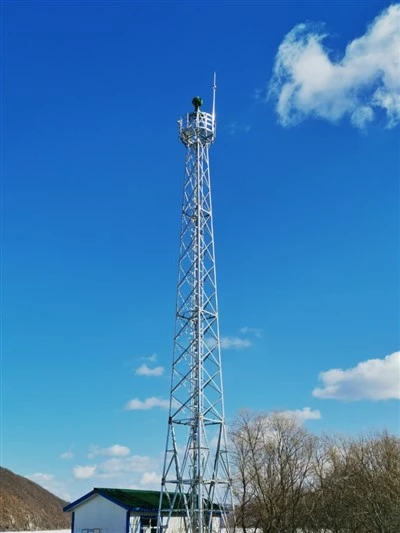
If you’re looking to add equipment to your tower, we can walk through your specific site, tell you what prep work you might need, break down the costs, and even help with permits and assessments. No hidden fees, no corporate hoops— just straight answers. Reach out to us to get a custom breakdown tailored to your project, whether it’s a single small cell or a full 5G upgrade.
Power Transmission Tower References
- CTIA – The Wireless Association. 2024. “Tower Retrofit Cost Benchmark Report.”
- Occupational Safety and Health Administration (OSHA). 2023. “Standards for Tower Work and Structural Retrofits.”
- Rural Broadband Association. 2024. “Cost Considerations for Tower Upgrades in Remote Areas.”
- Federal Communications Commission (FCC). 2023. “Permit and Leasing Requirements for Commercial Tower Modifications.”
Hunan Zhubang Hongsheng Construction Technology Co., Ltd.
As one of the most professional communication tower manufacturers and suppliers in China, we’re featured by quality products and good price. Welcome to buy high-grade communication tower made in China here and get quotation from our factory. Customized orders are welcome.
Address: Lutang Village, Yong’an Town, Liuyang City, Changsha City, Hunan Province, Hunan Zhubang Hongsheng Construction Technology Co., Ltd.
E-mail: 19898838989@163.com
WebSite: https://www.chinaenerto.com/
