If you’ve ever ordered magnets for anything from a DIY speaker build to a warehouse lifting setup, you’ve probably seen both cylindrical and ring magnets pop up. As someone who’s worked with cylindrical magnets for years, I get how easy it is to mix these two up at first—they’re both permanent magnets, they both stick to metal, and at a glance, they might even look similar. But trust me, there are some big differences that will make or break your project, and knowing which one you need saves you from wasting time and money on the wrong part. Cylindrical Magnets

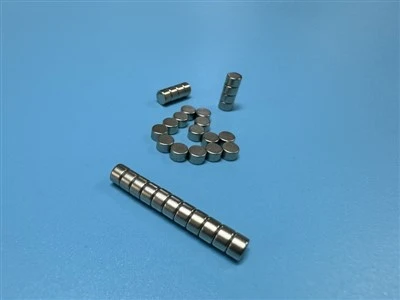
Let’s start with the basics: shape. That’s the most obvious one, right? Cylindrical magnets are just solid rods of magnetic material, usually neodymium, ferrite, or alnico, with a flat top and bottom and a consistent diameter all the way through. There’s no hole running through the center. Ring magnets, on the other hand, are hollow in the middle—they’re like a donut shape, with an outer diameter, inner diameter, and thickness. But shape is just the tip of the iceberg here. The biggest differences come down to how they generate magnetic fields, their use cases, and even their pricing.
First up, magnetic field distribution. This is where things get technical, but I’ll break it down simply. For cylindrical magnets, the magnetic field is strongest at the two flat ends—those are the north and south poles, so if you press the end of a cylindrical magnet to a fridge, it sticks way harder than if you press the side. The side of a cylindrical magnet has a weak, diffuse field, so it’s not great for sticking to surfaces. That’s why we use cylindrical magnets for things like fridge magnets, where you want a strong pull right at the end.
Ring magnets are different because they have a hole through the middle. Most ring magnets have their poles on the flat faces too, but because of the hollow center, their magnetic field spreads out through that hole. That makes them perfect for applications where you need a field that goes through a central space—like motors, sensors, or even something as simple as a lathe chuck. If you’ve ever taken apart a small electric motor (the kind in a toy or a cordless screwdriver), you’ll see ring magnets lining the inside of the casing. That central hole is where the motor’s rotor spins, so the field needs to wrap around that space to turn the rotor. If you tried to put a solid cylindrical magnet in there, it wouldn’t fit, and the field wouldn’t be aligned right to generate motion.
Another thing: pull force. Pull force is how much weight a magnet can lift, and it’s tied directly to the magnetic material’s surface area and volume. For the same material and similar size (say, 1 inch in diameter), a cylindrical magnet is solid, so it has more magnetic material overall than a ring magnet of the same outer diameter. That means a cylindrical magnet will almost always have a higher pull force. If you need something heavy duty—like lifting metal parts in a factory, or holding a sign up in a windy area—cylindrical magnets are going to be stronger for their size. But if you don’t need super high pull force, and you need that central hole, a ring magnet is the way to go, even if it’s slightly weaker.
Wait, there’s also side pull force to think about. That’s how much force it takes to slide a magnet sideways off a metal surface. For cylindrical magnets, the side pull force is really low because the main field is at the ends. For ring magnets, because their poles are flat, the side pull is a bit better than a cylindrical magnet, but still not as strong as their end pull. If you need a magnet that won’t slide around on a surface, neither is ideal, but that’s a small detail to keep in mind.
Now, let’s talk about common use cases, because that’s what most people actually care about. I’ve worked with a ton of different customers, so I can rattle off examples of when one is better than the other. Cylindrical magnets are everywhere in consumer products. They’re the tiny magnets inside earbuds that hold the charging case shut, the ones in DIY crafts and science fair projects, and the small ones used for sensor switches in doors or windows. Because they’re solid, they’re easy to machine into custom lengths or diameters, which makes them versatile for small, precise parts. We even get orders from customers who use them for fishing lures—you can tie a line around them, and they’ll pick up lost hooks or sinkers at the bottom of a lake.
Ring magnets, though, are the backbone of a lot of industrial and electronic tech. Like I said earlier, motors and generators use them all the time—both AC and DC motors rely on the ring shape’s hollow center to fit rotors and shafts. They’re also used in loudspeakers, the big ones that make bass: the ring magnet sits around the voice coil, and the central hole lets the coil move freely to vibrate the speaker cone. Another big one: magnetic separators. If a factory needs to pull iron particles out of plastic or grain, they might use a ring magnet around a pipe, so the product flows through the hole and the metal gets stuck to the magnet’s inner surface. That’s way easier than using a solid cylindrical magnet, which would block the flow entirely.
What about pricing? I get asked about this a lot, especially from new customers who are just starting out. For the same material and similar overall size, cylindrical magnets are usually cheaper. Because they’re solid, there’s no extra work to cut a hole through them, and less material is wasted in the manufacturing process. Ring magnets require extra machining to drill or punch the center hole, so that adds to the cost. That said, if your project needs that central hole, you don’t really have a choice—you’ll go with a ring magnet. But if you can use a cylindrical magnet and don’t need the hole, you’ll save a bit of money.
Wait, there’s a common misconception I have to clear up: some people think the shape changes the pole orientation. Like, they think a ring magnet has a pole around the inside or outside, but that’s only for some special designs. Most standard cylindrical and ring magnets have poles on the flat ends—same as a bar magnet. The only difference with the ring is the hollow center. There are rare exceptions, like radial magnets where the pole is around the outer edge, but those are specialty parts, not the standard ones you’ll find for most projects. I’ve seen a few customers come to us asking for radial ring magnets for custom motors, but that’s a whole different category.
Another thing to consider when you’re ordering: tolerance. Cylindrical magnets are super consistent in their dimensions, because they’re easier to mold or cut to a uniform size. The diameter and length are pretty exact, which matters for things like fitting into a tight space. Ring magnets, because they have an inner diameter, can have a bit more variance there, especially if they’re ferrite or a lower-grade neodymium. But if you’re ordering high-precision neodymium ring magnets, the tolerance is just as tight as cylindrical ones. It all comes down to the material and the grade you pick.
Let me give you a quick example of a mix-up I saw recently. A customer came to me last month saying they needed magnets for a project to hold a bike basket to a bike rack. They ordered a bunch of ring magnets, but they kept falling off. Turned out, they’d put the ring’s side against the metal rack, not the flat end. The ring’s end pull is weaker than a cylindrical magnet, so that was the problem. I sent them a sample of our small cylindrical magnets, and they said it stuck way better. That’s exactly the kind of mistake that happens when you don’t understand the difference between where the magnet’s strength is.
So, how do you pick which one you need? Let’s break it down into quick questions. First: do you need a hole through the center for a shaft, wire, or to let something flow through? If yes, ring magnet. If no, go with cylindrical. Second: do you need the strongest possible pull force for your size? Cylindrical, hands down. Third: are you working with a motor, speaker, or magnetic separator that relies on that central field? Ring is non-negotiable. Fourth: are you on a tight budget? If you don’t need the hole, cylindrical will save you some cash.
Wait, I should also mention that both come in different materials. Neodymium is the strongest, so it’s used for small, high-strength applications. Ferrite is cheaper and more corrosion-resistant, so it’s good for outdoor signs or household use. Alnico is heat-resistant, so it’s for things like sensors that get warm. You can get both cylindrical and ring magnets in all these materials, so don’t let the material mix up make it harder to pick.
I’ve been working with cylindrical magnets for over 10 years now, and I’ve seen every mistake a customer can make. The biggest one is assuming all magnets are the same. You can’t use a ring magnet the same way you use a cylindrical one, and vice versa. If you’re building something, take 10 minutes to map out what you need: do you have a space that needs to pass through the middle? Do you need maximum sticking power? That’s the key.
At the end of the day, it’s not that one is better than the other—it’s that they’re built for different jobs. Cylindrical magnets are the workhorses for everyday, high-strength applications where you don’t need a hole. Ring magnets are the specialty pickups for industrial and electronic uses that require that central opening. If you’re still not sure which one to get for your project, don’t guess. Reach out to our team—we can help you figure out the right size, material, and shape to fit your needs, no wasted order, no hassle.
When you’re ordering magnets, you want someone who knows the difference inside and out, not just someone who sells them. We’ve worked with everyone from hobbyists building their first robot to big factories ordering thousands of magnets a month, so we can match you to the right part, no matter your budget or project. Don’t risk your build on a wrong magnet—get in touch with us to chat through your requirements, and we’ll help you get exactly what you need.
Round Countersunk Magnets References
- Jiles, D. C. (2015). Introduction to Magnetism and Magnetic Materials. CRC Press.
- “Neodymium Magnet Properties and Applications.” Magnetics, Inc. Technical Guide.
- “Permanent Magnet Design Guidelines.” National High Magnetic Field Laboratory, 2022.
- Cylindrical and Ring Magnet Performance Comparison. K&J Magnetics, 2023.
Dongguan Jinconn New Material Holdings Co., Ltd.
We’re well-known as one of the leading cylindrical magnets manufacturers in China, featured by quality products and low price. Please rest assured to buy bulk advanced cylindrical magnets in stock here from our factory. We also accept customized orders.
Address: Xiaohe Industry Zone, Daojiao Town, Dongguan City, Guangdong Province, China
E-mail: lena@jinconn.com
WebSite: https://www.jinconnmagnet.com/
