Hey there, if you’re deep in the marine game—whether you’re outfitting a commercial fishing trawler, a superyacht, a port cargo crane, or even an offshore wind farm’s subsea cable runs—you already know regular old cables just don’t cut it. Marine environments are straight-up brutal: saltwater eats through metal, constant motion twists and pulls, UV rays bake everything topside, and pressure crushes anything deeper than a few dozen feet. As a flexible cable supplier, I’ve spent the last decade troubleshooting these exact pain points with clients who’ve burned through cheap, off-the-shelf cables and come back needing something that actually lasts. Let’s break down what marine flexible cables actually need to deliver, no corporate jargon required. Flexible Cable

First off, let’s talk the big one: resistance to corrosion and moisture. I can’t tell you how many times a captain or maintenance manager has told me, “We bought a $50 spool of cable from a local hardware store, and it snapped in six months because the salt got in.” Saltwater is a conductor, so if a cable’s jacket or core insulation has even a tiny pinhole, it’s game over—you get short circuits, corrosion on copper cores, and eventually a dead cable that leaves you high and dry mid-voyage. The solution here isn’t just “thicker insulation.” For marine use, insulation needs to be cross-linked thermoplastic elastomer (XL-TPE) or neoprene, not cheap PVC that breaks down fast in UV and salt. We also always use tinned copper conductors, not bare copper. Tinned copper has a thin layer of solder over the strands that keeps salt from reacting with the copper, so even if there’s a minor scratch, it won’t corrode right through. Subsea cables go one step further—they use a waterproof core wrap, often a lead or high-density polyethylene (HDPE) barrier, plus an outer jacket of chlorosulfonated polyethylene (Hypalon) that’s literally designed to withstand years of being submerged in saltwater and sitting on the seabed’s muck. I had a client last year who was running cables on an offshore wind farm’s array, and their old PVC cables started leaking within 18 months. We swapped in our Hypalon-jacketed, tinned copper ones, and they haven’t had a failure in three years. That’s the kind of durability marine guys actually need.
Next up: flexibility and mechanical durability. Marine flexible cables aren’t just sitting still—they’re on cranes that lift 50-ton cargo, on winches that pull hundreds of feet of line, on ship’s control panels that vibrate nonstop from engines, and on buoys that bob up and down with waves. A stiff cable will snap when it’s bent repeatedly, or when it’s pulled tight during a heavy lift. The key here is strand count and conductor design. We don’t use solid copper cores for marine flexible cables—those are way too rigid. Instead, we use ultra-fine stranded copper conductors, often with 100 or more strands per core, so they can bend thousands of times without cracking. That’s called “flex life,” and for marine applications, we spec a minimum of 100,000 bending cycles for moving parts like crane cables, and even more for subsea umbilicals that are constantly being adjusted. Also, the jacket has to be tear-resistant. I’ve seen cables where the jacket splits when a rope rubs against it, exposing the core to saltwater. So our marine flexible jackets have high tensile strength, so they can handle abrasion from dock lines, deck equipment, and even being dragged over concrete or metal bollards. One fishing vessel client told me their old cables would fray from the trawl nets rubbing against them every time they set or hauled. We built them a custom cable with a reinforced outer jacket, and now the fraying is gone—they change cables once every three years instead of every six months, saving them thousands in downtime and replacement costs.
Then there’s electrical performance that holds up in harsh conditions. It’s not just about carrying power or signals—it’s about doing it reliably when temperatures swing, humidity is through the roof, and there’s sometimes electrical noise from other equipment. Marine flexible cables need to have a consistent electrical resistance, even when they’re cold (down to -40°F for Arctic waters) or hot (up to 180°F in engine rooms or near exhausts). PVC can get brittle in cold, so we use insulation rated for wide temperature ranges, like XL-TPE, which stays flexible even in freezing temps. For signal cables—like those used for navigation systems, sonar, or engine controls—we add shielding to block electromagnetic interference (EMI). If you’ve ever had your GPS go wonky mid-voyage because nearby equipment was causing static, you know how big a deal that is. We use foil shielding or braided copper shielding for signal cables, and we ground the shielding properly so it actually works. Also, for high-voltage power cables used on cargo cranes or offshore platforms, we spec insulation with high dielectric strength so they don’t arc over when voltage spikes. I had an offshore rig client a couple years ago who was having power outages because their old cables’ insulation broke down under high load and salty air. We switched to our cross-linked polyethylene (XLPE) insulated flexible power cables, and their outage rate dropped by 90%—they said it paid for itself in the first month from lost revenue they didn’t have to deal with.
Wait, let’s not forget UV resistance, specifically for topside applications. If a cable is running on deck, exposed to direct sunlight 24/7, regular plastic will break down fast—it gets brittle, cracks, and lets in water. A lot of cheap cables are only rated for indoor or underground use, so they don’t have UV stabilizers in the jacket. Our marine flexible jackets all have built-in UV inhibitors, so they can sit outside for years without fading or cracking. That’s non-negotiable for anything running on the superstructure, the deck, or any equipment that’s above the waterline. We even have cables rated for direct sunlight for 10+ years, which is way more than the standard for general-purpose cables. I’ve had a yacht client who needed new cables for their radar and navigation equipment running on the mast—they bought a cheaper cable that cracked after a year and a half. We swapped in our UV-stabilized TPE jacketed cables, and two years later, they’re still going strong, no issues with sun damage.
Also, compliance with marine standards is a must. You can’t just sell any cable to a shipyard or offshore operator—they need to meet specific regulatory standards to pass inspections. Here’s the thing: not all marine standards are the same. For commercial ships, you need IMO (International Maritime Organization) approval, like IMO Resolution A.081(19) which covers marine cables’ fire resistance, low smoke emission, and toxicity. For US-based vessels, you need ABS (American Bureau of Shipping) certification, and for offshore wind farms, you might need IEC (International Electrotechnical Commission) 60092 standards. As a flexible cable supplier, we make sure every marine cable we sell is tested and certified to the relevant standards for your specific application. I’ve had clients who tried to use non-certified cables and got fined during a port state control inspection—those fines are way more expensive than just buying the right cable the first time. We handle all the testing and paperwork, so our clients don’t have to worry about missing a requirement or getting stuck with non-compliant gear.
Another big one for flexible marine cables: resistance to oils and chemicals. Ships use tons of oils—engine oil, hydraulic fluid, diesel fuel—on deck and in engine rooms. If a cable’s jacket gets exposed to oil, it can swell, break down, and lose its integrity. A lot of cheap PVC jackets aren’t oil-resistant at all, so even a small spill can ruin a cable. Our marine flexible jackets are formulated to be oil-resistant, meeting standards like ASTM D471 for oil resistance, so they can handle regular exposure to diesel, hydraulic fluid, and even some mild chemicals used for cleaning decks. That’s super important for engine room cables, which are right next to oil lines and hydraulic equipment. I had a client whose old cables would swell and crack after an oil spill on deck, so we switched them to our oil-resistant Hypalon jackets, and now even if there’s a minor spill, the cable is fine—no swelling, no cracking, no water getting in.
Let’s talk about application-specific tweaks, too, because one size doesn’t fit all marine cables. A cable for a small fishing boat’s bilge pump is way different from a cable for a 1000-foot subsea umbilical for a wind farm, which is different from a cable for a superyacht’s entertainment system. For small boats, we make compact, flexible cables that are easy to route through tight spaces in the hull. For subsea cables, we add strength members—like aramid fiber (the same stuff as bulletproof vests)—to handle the pull of being laid on the seabed, and we make sure the outer jacket is thick enough to handle being dragged by anchor chains or trawls. For cranes, we make cables with extra abrasion resistance because they’re constantly moving and rubbing against other equipment. As a flexible cable supplier, we don’t just sell you a standard spool—we work with you to figure out exactly what your application needs, whether that’s extra flex cycles, higher temperature rating, specific certification, or custom length. I had a custom job last year for a client who needed a cable that could handle both topside UV exposure and subsea submersion, so we combined our UV-stabilized Hypalon outer jacket with a waterproof inner core, and it worked perfectly for their buoy system that’s half above water, half below.
Wait, I should also mention installation and maintenance. A lot of people forget that even the best cable is useless if it’s installed wrong, and flexible marine cables need to be easy to route and connect. We make our marine flexible cables with color-coded cores so it’s easy to wire them up without mixing up positive and negative, and we offer them in pre-terminated lengths with marine-grade connectors that are corrosion-resistant, so you don’t have to splice them on deck where salt and moisture can get into the connection. Splicing cables at sea is a nightmare—especially subsea—so pre-terminated cables save time and reduce the risk of failures. We also provide documentation that tells you exactly how to install and maintain the cables, including cleaning recommendations and inspection schedules, so our clients get the most out of their investment.
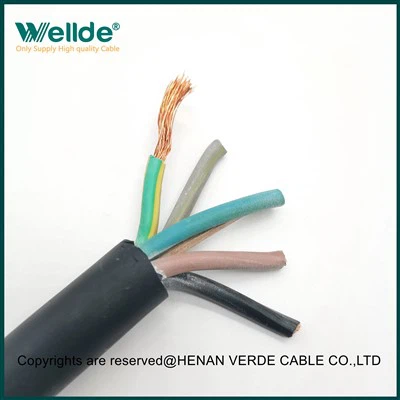
At the end of the day, marine flexible cables aren’t just wires—they’re the backbone of everything that runs on a boat or offshore structure. If you cut corners on them, you’re looking at costly downtime, safety risks, and replacements every year. As a flexible cable supplier, we’ve been in the trenches with marine clients for years, testing, tweaking, and building cables that actually stand up to the harsh marine environment. Whether you’re outfitting a new vessel, replacing old cables on an existing one, or working on an offshore project, we can help you find the right flexible cable that meets all your requirements—no fluff, no overpriced garbage, just a product that works when you need it to.
Submersible Pump Cable If you’re dealing with cable failures, need help sourcing certified marine flexible cables, or want to talk through a custom solution for your specific application, hit us up to connect. We’re here to make sure your marine equipment runs smooth, no matter how tough the conditions get.
References
- International Maritime Organization (IMO). (2022). Resolution A.081(19): Guidelines for the Approval of Marine Cables and Wires.
- American Bureau of Shipping (ABS). (2023). Rules for Building and Classing Marine Cables and Electrical Systems.
- International Electrotechnical Commission (IEC). (2021). IEC 60092-350: Electrical Installations in Ships – Part 350: Cables for Power and Control.
- National Electrical Manufacturers Association (NEMA). (2020). NEMA WC 100: Marine Flexible Cables for General and Special Applications.
- ASTM International. (2022). ASTM D471: Standard Test Method for Rubber Property—Effect of Liquids.
Henan Verde Cable Co., Ltd.
Henan Verde Cable Co., Ltd. is well-known as one of the leading flexible cable manufacturers and suppliers in China. Please feel free to wholesale high quality flexible cable in stock here from our factory. All products are with high quality and competitive price. Contact us for price list.
Address: Rm 1508, Kaixuanmen Building B#, No.238 Tongbai South Road, Zhengzhou City, Henan Province, China. 450006
E-mail: linda@welldecable.com
WebSite: https://www.welldecable.com/
