If you’ve ever spent time on a worksite where motor control circuits are being installed, repaired, or tested, you know these systems are the unsung backbone of everything from assembly line robots to industrial pumps, conveyor belts, and even electric vehicle charging stations. As someone who’s spent 12 years working for a motor and electronic control supplier (let’s just say we focus on building reliable, code-compliant components that power commercial and industrial operations day in and day out), I’ve seen firsthand how even a small misstep with these circuits can turn a routine job into a dangerous situation. Motor and Electronic Control

Last year, one of our regular clients had a junior technician skip a lockout-tagout (LOTO) step during a motor control upgrade. He’d worked on similar circuits a hundred times before, so he figured turning the main breaker off and walking away was enough. It wasn’t. A stray voltage arc burned his arm, landed him in the ER for a week, and cost his company over $100,000 in downtime and insurance claims. That incident stuck with me because it wasn’t a failure of a new, untested rule—it was a failure to follow a precaution that’s been around for decades, one we still remind every customer and every new hire about whenever they pick up one of our motor control panels.
This post isn’t just a list of rules I pulled out of a handbook. It’s the lessons we’ve learned from working side-by-side with technicians, electricians, and plant managers for years, tailored specifically to the unique risks that come with handling motor control circuits. These systems combine high-voltage power, moving parts, and complex electronics, so safety can’t be an afterthought—it has to be built into every step of the job, from pre-work prep to post-test checks.
First, let’s talk about the biggest, most often ignored risk: unexpected startup. Motor control circuits run on voltages that range from 120V for small shop motors to 480V and higher for industrial heavy equipment. Even at 120V, the shock can knock you off a ladder or cause a fall, but at 480V, it can be fatal in seconds. The only way to eliminate this risk? Lockout-tagout, and no, there’s no shortcut here.
A lot of people think LOTO is just turning off the main disconnect and putting a tag on it. But OSHA (Occupational Safety and Health Administration) defines proper LOTO as locking the energy isolation device in the off position, with only the worker performing the service having the key—no sharing keys, no leaving the tag to cover a coworker’s work, no assumptions that just because a light is off, the power is out. Before you even touch a motor control panel, test the circuit with a voltage tester rated for the voltage you’re working with to confirm it’s dead. We recommend non-contact testers because they let you check for live power without having to make direct contact, which adds a layer of safety, especially when you’re working in tight spaces. I once had a client tell me their technician skipped this step because the main breaker was labeled “off,” and the tester still picked up 240V on the line side of the breaker. That’s the kind of small oversight that leads to disaster.
Next up, personal protective equipment (PPE) that’s not just generic “work gear” but matched to the job. A lot of people wear steel-toe boots and safety glasses, which are good for walking around a worksite, but motor control work needs specific, tested PPE. For work on circuits over 50V, you should be wearing arc flash-rated clothing—flame-resistant shirts and pants, arc-rated face shields (not just safety glasses—an arc flash can generate temperatures hotter than the surface of the sun, which will melt regular glasses), and rubber insulating gloves rated for the voltage of the circuit. We always tell customers to check the expiration date on their gloves: rubber gloves degrade over time, even if they look fine, so a pair that’s a year past its date might as well be regular work gloves. Even for low-voltage jobs, a pair of gloves is non-negotiable— I’ve seen a minor shock turn into a blister that took two weeks to heal because someone skipped that step.
Another common mistake we see is working alone. Motor control troubleshooting and repair should never be a one-person job. If something goes wrong—an arc flash, a motor suddenly starting, a fall from a ladder—you need someone nearby who can cut power, call 911, or administer first aid. We recently supplied a new motor control system to a food processing plant, and when we trained their maintenance team, we drilled into them that every service call requires at least two people. One does the work, the other stands by at the disconnect, ready to lock it out if something unusual happens. It’s a simple rule, but it’s prevented more incidents than I can count.
Then there’s the part of motor control work that’s easy to overlook: the circuit’s electronic components. Modern motor control panels have programmable logic controllers (PLCs), variable frequency drives (VFDs), and sensors that rely on low-voltage signals—often 24V DC—to communicate. A lot of technicians think because those are low voltage, they’re safe to work on with power still connected. That’s a dangerous myth. Even 24V DC can cause a short circuit if you touch the wrong terminals, and when a short happens on a live panel, it can create a surge that blows out expensive components, or worse, causes an arc flash that spreads from the low-voltage section to the high-voltage side of the circuit. If you need to work on those low-voltage control circuits, we recommend powering down the entire panel, not just the VFD or motor, to eliminate any risk. And if you have to troubleshoot a live control circuit (sometimes it’s necessary for calibration), make sure you’re using insulated tools—no exposed metal screwdrivers or pliers that can touch two terminals and create a short. We supply insulated tools as part of our safety kit for clients, and it’s the one item every technician keeps in their toolbox now.
We also can’t forget about post-installation or post-repair testing. Once you’ve finished working on a motor control circuit, you have to test it properly before letting it run, and that means doing it with the right processes in place. Too often, technicians do a quick test, hit the start button, and walk away, assuming everything is fine. But a miswired motor or a loose connection can cause the motor to run in reverse, which can damage equipment or even throw off a conveyor belt, causing a hazard. Before testing, make sure all the covers on the motor control panel are secure—exposed terminals are a shock risk for anyone who might walk by, even if you’re the one doing the test. When you test, start with a no-load test: run the motor without a load attached to confirm it starts and stops correctly, and listen for any unusual noises (grinding, humming, that’s a sign of a loose connection or a damaged motor) before attaching the actual equipment. We always tell clients to test with a disconnect switch within arm’s reach during the entire process, so if something goes wrong, you can cut power immediately.
Another thing we emphasize is training. Motor control technology changes fast—new VFDs, new PLC software, new safety standards that come out every few years. A technician who learned how to work on circuits 10 years ago might not be aware of the risks of new components like regenerative drives, which can feed power back into the circuit even when the main breaker is off. All our clients get free annual training on the motor control systems we supply, and we encourage them to send every maintenance team member, not just the new ones. Even experienced technicians can get complacent—we had a long-time client’s lead electrician retire last year, and his replacement, even though he had 5 years of experience, didn’t know about the LOTO requirements specific to our VFD panels, which have an additional secondary disconnect for the regenerative section. That’s why training isn’t a one-time thing—it’s ongoing.
I’ve been in this industry for long enough to know that no matter how good your components are, or how well your worksite is set up, accidents happen when people cut corners. The rules I’ve laid out here aren’t just OSHA requirements—they’re the lessons we’ve learned from clients who’ve had to pick up the pieces after a preventable incident. If you’re working with motor control circuits, whether you’re a technician, electrician, or plant manager, don’t just follow the rules because you have to—follow them because they protect you and your team.
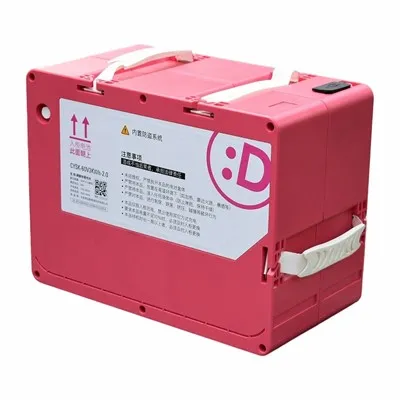
If you’re a facility owner, maintenance manager, or technician looking for reliable motor control components, safety-compliant design support, or training for your team, reach out to our team to discuss your specific needs. We’ve partnered with operations across manufacturing, food processing, warehousing, and more, to build systems that are both high-performing and safe for everyone on the worksite.
Mofang 50 Series References
OSHA. 29 CFR 1910 Subpart S – Electrical.
National Electrical Manufacturers Association (NEMA). Standard for Motor Control Circuits, Publication ICS 2.
Institute of Electrical and Electronics Engineers (IEEE). Recommended Practice for Electrical Safety in Industrial Plants, IEEE 1100.
Jiangsu Changyun Drive Techniques Co., Ltd.
As one of the leading motor and electronic control manufacturers and suppliers in China, we offer a wide range of products with superior quality. Please rest assured to wholesale advanced motor and electronic control from our factory. If you have any enquiry about cooperation, please feel free to email us.
Address: Building B, 1st Floor, Chuangyan Port, Science and Education City, Wujin District, Changzhou City, Jiangsu Province
E-mail: eva@czbenma.com
WebSite: https://www.cyevenergy.com/
