If you’ve ever stood at a construction site, walked through a grain handling facility, or waited for packages to unload at a shipping depot, chances are you’ve encountered a nylon fabric conveyor belt without even realizing it. As a fabric conveyor belt supplier who’s been working with these materials for over a decade, I’ve spent thousands of hours walking job sites, troubleshooting belt performance issues, and walking new clients through exactly what makes this type of belt different from every other option on the market. It’s not just a generic rubber strip—its construction, material properties, and design are tailored to solve very specific problems that older conveyor belts can’t handle. Fabric Conveyor Belt
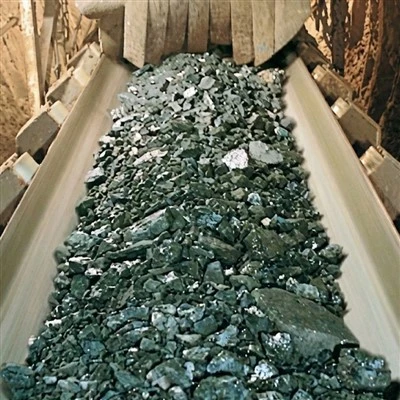
First, let’s break down the core structure of a nylon fabric conveyor belt, because that’s where its strength starts. Unlike solid rubber belts or metal-link conveyor chains, these belts are layered: they have a tough, woven nylon fabric core encased in two layers of durable rubber (called cover rubber) on the top and bottom. The nylon weave isn’t just any plain fabric, either. Most suppliers use high-tenacity nylon 6 or nylon 6,6 yarns—these are the same types of nylon used in things like heavy-duty climbing ropes and race car tires, because they can stretch under extreme weight but snap back without breaking permanently.
The weaving pattern matters too, for two reasons. A tight, uniform plain weave or a balanced twill weave spreads tension evenly across the belt, so you don’t get thin spots that wear out prematurely. It also keeps the core from bulging or stretching unevenly even when carrying loads that are 500 times the belt’s own weight. For context, a standard 36-inch wide nylon fabric conveyor belt can support up to 10,000 pounds of material per linear foot, depending on the grade—most agricultural, mining, and logistics applications don’t need anything close to that, but that capacity is built to handle the rough stuff.
Why nylon, specifically? That’s a question I get all the time from clients who have used polyester or cotton belts in the past. Cotton is cheap, but it absorbs moisture, rots in humid environments, and stretches permanently over time. Polyester is more durable than cotton, but it’s stiffer and less impact-resistant than nylon—drop a 50-pound rock onto a polyester belt, and it might crack or develop a split; drop that same weight on a nylon belt, and it bounces back, no damage. Nylon’s biggest superpower, though, is its elongation at break: around 20% for high-tenacity grades, compared to just 10% for polyester and 7% for cotton. That extra stretch lets the belt absorb sudden shocks, like when a loader dumps gravel onto it, without tearing. It also means the belt runs a little quieter on conveyor pulleys, because it doesn’t vibrate as much as stiffer materials.
Now, those rubber cover layers aren’t just for looks, either. The top cover handles direct contact with the material being transported—so if you’re moving sharp coal grains, sticky sugar, or abrasive construction aggregate, the top cover needs to be tough enough to resist wear. The bottom cover runs against the conveyor frame and pulleys, so it needs to have just enough grip to prevent slippage, but not so much that it creates extra friction and wears out faster. We offer different cover compounds for different jobs: natural rubber for general light-to-medium use, nitrile rubber for jobs that involve oil or grease, and urethane for extremely abrasive materials like sand or metal chips.
Let’s talk about where nylon fabric conveyor belts actually shine, because they aren’t one-size-fits-all. I’ve sold these belts to grain elevators, where they carry wheat and corn 24 hours a day, 7 days a week—their resistance to moisture means they don’t mold or rot even in damp storage facilities. Mining sites use them for hauling ore and overburden, because their impact resistance means they can survive being loaded directly from heavy dump trucks without developing tears. Package shipping centers rely on them to move boxes and pallets, because their quiet operation doesn’t disrupt the busy facilities, and their flexibility works with curved conveyors that turn corners.
We’ve also had clients in recycling plants, where the belts have to handle everything from cardboard to broken glass. The nylon core doesn’t absorb debris, so cleaning the belt is easy—just a quick pressure wash on the weekend, and it’s good to go. One of my most memorable projects was with a concrete supplier that was using metal belts that would dent and warp after a few months of heavy use; switching to nylon fabric conveyor belts cut their belt replacement costs by 60%, and they haven’t had a downtime related to belt failure in three years.
That’s not to say nylon belts don’t have limitations, though—part of my job as a supplier is being honest about what these belts can’t do, so clients don’t waste their money. Nylon isn’t as heat-resistant as aramid (the material used in fire-resistant conveyor belts), so if you’re moving hot asphalt or molten material, a nylon belt will degrade quickly. It also isn’t as resistant to strong acids or oils as specialty rubber belts, so we always ask clients to share exactly what they’re hauling, the temperature of the material, and the total load, before we recommend a belt. A lot of new buyers try to cut corners by buying the cheapest belt available, but that leads to more downtime and higher long-term costs—something I’ve seen too many times to let happen.
Another common question: how long do nylon fabric conveyor belts last? That depends entirely on the application, maintenance, and installation. A belt that’s running 8 hours a day, carrying grain, and gets inspected every month can last 5 to 7 years. A belt running 24 hours a day, carrying abrasive ore, with no regular cleaning or pulley maintenance, might only last 12 to 18 months. That’s why we work with clients to not just sell them a belt, but to help them set up a maintenance schedule—things like cleaning the belt regularly, checking for fraying edges or cracked covers, and aligning pulleys correctly, which reduces wear by 30% or more.
Let’s talk about installation, too, because installing a nylon fabric conveyor belt is different from installing other types. The woven core means it’s easier to splice—we use hot splicing or cold splicing, depending on the belt grade, to join the ends into a continuous loop. Hot splicing creates a bond that’s just as strong as the belt itself, so there’s no weak point at the splice, which is where most belt failures happen. We always recommend hiring a professional for splicing, because a bad splice can cause the belt to slip, tear, or even come off the conveyor entirely. One client of ours tried to splice a new belt themselves, and a week later the splice failed, costing them an entire day of production and $1,200 in lost materials—something we helped them avoid with a proper professional splice on their next belt.
Over the years, we’ve also seen a lot of innovations in nylon fabric conveyor belts. Ten years ago, most belts were only available in standard widths, 24, 36, 48 inches, but now we can custom-make belts to any width from 6 inches (used for small package conveyors) up to 72 inches, and even longer lengths up to 500 feet, to fit clients’ exact conveyor setups. We also use anti-static nylon yarn for belts in mines where flammable gasses are a risk, to prevent sparks that could cause explosions. For food and pharmaceutical applications, we offer FDA-compliant rubber covers that don’t react with food products, so they’re safe for moving snacks, pills, and other consumables.
I think what I enjoy most about working as a fabric conveyor belt supplier is being able to solve problems for people. A lot of the time, a facility’s biggest bottleneck isn’t old equipment—it’s a belt that’s not designed for their specific needs. A few months ago, a small construction company came to us with a belt that kept tearing when they hauled sharp gravel; we recommended a heavy-duty 4-ply nylon fabric conveyor belt with a top cover made of abrasion-resistant urethane, and their tear rate dropped to zero. Another client, a local brewery, needed a belt to move empty beer bottles through the packaging line, so we supplied a smooth, anti-slip nylon belt with a food-grade cover that prevented bottles from sliding during turns.
If you’re in the market for a conveyor belt, it’s important to work with a supplier who doesn’t just sell you a product, but understands the details that make a belt work for your operation. Nylon fabric conveyor belts aren’t the right choice for every job, but for most general, medium-to-heavy-duty applications, they’re the sweet spot between durability, cost, and performance. They’re stronger, more flexible, and more resistant to impact than cotton or polyester belts, and more versatile than specialty options like metal or aramid belts.

If you’re looking to replace an old belt, or are setting up a new conveyor system and want to learn more about the right nylon fabric conveyor belt for your needs, we’re here to help. We’ve worked with small local businesses and large national corporations alike, and we can provide custom cuts, splicing services, and maintenance guidance to make sure your belt lasts as long as possible. Whether you’re moving grain, packages, ore, or any other material, a nylon fabric conveyor belt is an investment in less downtime, lower replacement costs, and smoother operations. Reach out to our team today to discuss your specific requirements, and we’ll help you find the perfect belt for your application.
Aramid Conveyor Belt References
- Conveyor Equipment Manufacturers Association (CEMA). Conveyor Belt Manual, 11th Edition. CEMA International, 2021.
- Brandrup, J., Immergut, E.H., and Grulke, E.A. Polymer Handbook, 4th Edition. John Wiley & Sons, 1999.
- Rubber Manufacturers Association (RMA). Rubber Conveyor Belt Specifications. RMA, 2019.
- Textile Institute. Technical Textiles for Conveyor Belting. Textile Institute Series, 2020.
- Occupational Safety and Health Administration (OSHA). Conveyor Belt Safety Standards. U.S. Department of Labor, 2022.
Alumina Technology (Qingdao) New Materials Co., Ltd.
As one of the most professional fabric conveyor belt manufacturers and suppliers in China, we also support customized service. With abundant experience, we warmly welcome you to buy fabric conveyor belt for sale here and get quotation from our factory. For price consultation, contact us.
Address: No.448, Jiangshan South Road, Huangdao District, Qingdao City, Shandong Province
E-mail: Gloria.zhang@contitech.cn
WebSite: https://www.altechconveyorbelt.com/
