If you’ve ever worked in industries like automotive engineering, aerospace, medical device manufacturing, or even heavy machinery, you’ve probably encountered a wave spring—those compact, flexible components that replace multiple stacks of flat washers to manage axial load, maintain tension, and save critical space. As a wave spring supplier who’s talked to engineers on the shop floor and R&D teams in clean rooms for over a decade, I know most folks don’t stop to ask what these small, seemingly simple parts are made of—until a batch fails in the field, or they need to adjust a design for extreme temperatures, corrosive chemicals, or tight weight constraints. Today, I’m pulling back the curtain on the materials we use, why we choose them, and how we match the right material to your specific application. Wave Spring

Let’s start with the basics: wave springs aren’t stamped from just any metal sheet. Unlike a standard flat washer, they undergo a precise bending or coiling process to create that characteristic wave profile, which means their material needs a unique balance of tensile strength, elasticity, and fatigue resistance. The material has to hold its shape through thousands, even millions, of load cycles without permanently deforming—something a flimsy or poorly suited metal can’t do. Over the years, we’ve tested dozens of alloys and materials, and three core categories dominate our production: carbon steels, stainless steels, and high-performance alloys. But let’s break each down, because it’s not one-size-fits-all.
First up, carbon steel. This is the workhorse of wave springs, and it’s what we reach for when cost is a top priority, and the application is relatively mild. Most of our standard wave springs for general industrial use, like those in conveyor systems, small pumps, or agricultural equipment, are made from 1075 carbon steel. Here’s why: 1075 has a high carbon content (around 0.75%) that gives it exceptional tensile strength—up to 220,000 psi when properly heat-treated—plus good springback, meaning it returns to its wave shape after being compressed and released. But carbon steel has a downside: it’s prone to rust and corrosion if exposed to moisture, oils, or outdoor elements. That’s why we add a protective finish to most carbon steel wave springs, like zinc plating or black oxide coating. Zinc plating is the most common for indoor applications, adding a thin layer of corrosion resistance without sacrificing elasticity, while black oxide is ideal for parts that might be handling small components, as it’s low-friction and doesn’t flake. We do warn customers that carbon steel isn’t for harsh environments—if you’re working in a coastal factory where salt air is present, or a outdoor construction site where rain is frequent, carbon steel with a basic finish might not hold up long-term.
Next, stainless steel—this is the workhorse for medium-duty, corrosion-resistant applications, and it’s one of the most requested materials we order. When people say “stainless steel,” they’re usually referring to 300-series austenitic stainless steels, and our go-tos here are 302 and 316 stainless steel. Let’s compare the two, because their difference matters a lot. 302 stainless is the most versatile of the bunch, with good strength, excellent corrosion resistance, and formability that makes it perfect for precision wave springs. It’s used in everything from appliance components to general automotive parts, and it holds up well to mild moisture, detergents, and many common oils. But where 316 stainless stands out is in harsh, chemically aggressive environments. 316 contains molybdenum, an alloy that makes it resistant to pitting and crevice corrosion—those tiny, localized spots that can eat away at metal when it’s exposed to salt, acids, or chlorides. That makes 316 our top pick for medical devices that need to be sterilized (like surgical instruments or implant components), marine equipment, food processing machinery (where cleaning chemicals are heavy), and chemical processing plants.
Wait a second, though—people often ask if stainless steel is as strong as carbon steel. The short answer is, not exactly, but it’s still plenty strong for most applications. 302 stainless has a tensile strength of around 180,000 psi when tempered, which is slightly less than 1075 carbon steel, but it compensates with better fatigue resistance, especially when cycles are frequent. 316 is a bit lower still, around 160,000 psi, but that tradeoff for corrosion resistance is non-negotiable in the right settings. We also use a 17-7 PH stainless steel for high-stress, medium-temperature applications—this precipitation-hardening alloy has even better strength than 302, up to 200,000 psi, and it retains its properties at temperatures up to 600°F. That’s perfect for parts in automotive engines or HVAC systems where temperatures spike occasionally.
But for really extreme conditions—think aerospace, deep-sea drilling, or industrial furnaces—stainless steel and even carbon steel won’t cut it. That’s where our third category, high-performance alloys, comes in. These are specialized materials that are more expensive, but worth every penny when standard alloys fail. The most common high-performance alloys we use are Inconel, Elgiloy, and MP35N. Let’s start with Inconel, a nickel-chromium alloy that can handle temperatures from -423°F to 2,000°F, which means it doesn’t deform in extreme heat or cold. We use Inconel wave springs for gas turbine engines, power generation equipment, and parts that operate in cryogenic environments, like rocket components. It’s also highly resistant to corrosion from acids and high-velocity salt spray, making it ideal for offshore oil and gas tools.
Elgiloy is another go-to for extreme applications—it’s a cobalt-nickel-chromium alloy with incredible fatigue resistance, even at high loads, and it holds up well to corrosion and wear. Elgiloy wave springs are often used in medical implants, like pacemakers or orthopedic devices, because they’re biocompatible (meaning the body doesn’t reject them) and can flex millions of times without breaking. We’ve also supplied Elgiloy wave springs for aerospace navigation systems, where reliability over decades is critical. Then there’s MP35N, a nickel-cobalt-chromium-molybdenum alloy that’s basically the gold standard for high-stress, corrosive environments. It’s even stronger than Elgiloy, highly wear-resistant, and biocompatible too. We use MP35N for deep-sea subsea components, high-performance automotive racing parts, and medical devices that require constant, precise tension. The tradeoff here is cost—these alloys are 5 to 10 times more expensive than standard carbon steel—so we only recommend them when the application can’t be met with a more common material.
I should also mention that the material choice isn’t just about the alloy itself—we adjust the manufacturing process to match the material too. For example, when we’re making a wave spring from Elgiloy, we use a precision coiling process instead of stamping, because Elgiloy is harder than carbon steel and stamping can cause microcracks that lead to failure under load. For 316 stainless steel used in medical parts, we use passivation after manufacturing to remove free iron from the surface, which prevents corrosion and ensures it meets FDA standards for medical devices. For high-temperature Inconel parts, we do a stress-relief heat treatment to remove any residual stress from bending, which prevents the spring from losing its shape when it’s heated up.
Over the years, we’ve had customers come to us with horror stories: wave springs that failed after 10,000 cycles because the wrong material was chosen, or parts that corroded and jammed because carbon steel was used in a saltwater environment. That’s why we always ask questions before we quote a job: what’s the operating temperature? Is it exposed to chemicals, salt, or moisture? How many load cycles will it go through? Is it for medical, food, or aerospace use, which have strict regulatory requirements? That’s how we make sure you get the right material, not just the cheapest one.
If you’re a design engineer sourcing wave springs, or a maintenance team needing replacement parts, don’t guess at the material. Even a small difference in alloy can mean the difference between a part that lasts a year and one that lasts a decade. We’ve worked on projects ranging from tiny wave springs for a pacemaker (less than 1mm thick) to large wave springs for wind turbine gearboxes (over a foot in diameter), and every one starts with matching the material to the application.
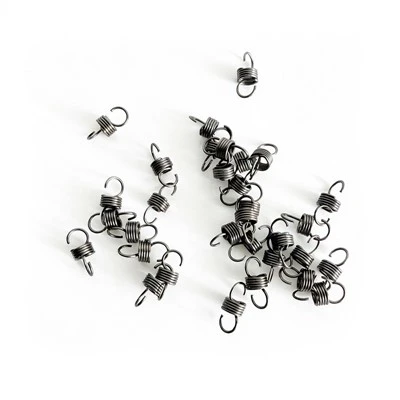
If you’re looking for a reliable wave spring supplier that can walk you through material choices, test samples, and deliver parts that meet your specs, we’re here to help. Whether you need a standard carbon steel part for a conveyor, a custom 316 stainless spring for a food processing line, or a specialized Inconel spring for a gas turbine, we have the expertise to get it right. Reach out to us today to discuss your project, and we’ll provide a custom quote tailored to your needs.
Flat Springs References:
- SAE International. (2021). Spring Materials and Design for Load-Bearing Applications. SAE International Technical Paper Series.
- ASM International. (2019). Materials Selection for Mechanical Components. ASM Handbook, Volume 20: Materials Selection and Design.
- Medical Device and Diagnostic Industry (MDDI). (2020). Biocompatible Materials for Implantable Wave Springs. MDDI Manufacturing Guide.
- Nickel Institute. (2018). High-Performance Nickel Alloys for Extreme Temperature and Corrosion Environments. Nickel Institute Technical Report.
Wenzhou Huajie Precision Spring Co., Ltd.
As one of the most professional wave spring manufacturers and suppliers in China, our products have good reputation in the market. Please rest assured to wholesale bulk wave spring in stock here and get pricelist from our factory. We also accept customized orders.
Address: No.6 Chuangsan Road, Lingang Industrial Zone, Yueqing, Wenzhou City, Zhejiang Province, China.
E-mail: ZGhuajieTH@163.com
WebSite: https://www.huajiespring.com/
