Let’s cut to the chase—whether you’re a small business owner with a batch of scuffed metal parts, a homeowner staring down a dull kitchen sink, or a manufacturing lead prepping components for a big client, you’ve probably asked: Are polishing services even worth the cash? I’ve been in this game for 8 years, running a polishing shop (no fancy corporate jargon here), and I’ve heard every take from “it’s just shiny stuff, I can do it myself” to “I’d pay twice as much to not deal with the hassle.” Today, I’m breaking this down like we’re chatting over coffee, no sales fluff, just real data and actual customer wins (and losses, because the bad stuff matters too). Polishing Services
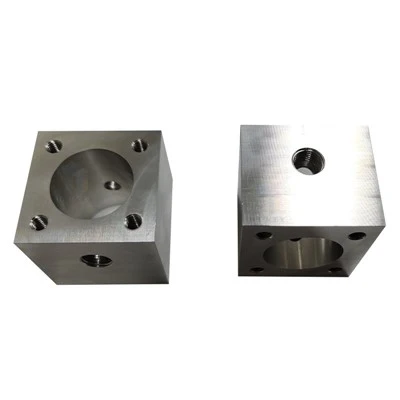
First, let’s get one thing straight: Polishing isn’t just making things look shiny. That’s the biggest myth out there. Sure, the end result is a glossy finish, but that finish does actual work. Think about it: if you’ve got a medical tool that’s used in surgery, a rough, unpolished edge can trap bacteria—leading to infection risk. Or a metal part for a boat? Unpolished steel will pit, corrode, and fail way faster, even if you coat it. DIY polishing at home or a in-house amateur polish job skips the scientific part, and that’s where the hidden costs hit. I had a customer last year, a small aerospace component maker, who tried to polish their parts in-house with a random sander and some buffing compound they picked up at a hardware store. They messed up the precision finish—costing them $12k in reworks when their client caught the roughness at 100x magnification. Compare that to sending the same parts to our team, where we use computer-controlled polishes and measure every micron of smoothness, and it would’ve cost them $800 total. That’s not “wasting money”—that’s saving 15x the cost of our service.
But wait, not all polishing services are equal. I see customers get burned all the time by cheap, fly-by-night polish shops that cut corners. Like, we had a guy come in last month with a set of custom furniture metal accents he’d gotten from a shop that charged him $50 to polish them. He thought he scored a deal—until he used them for 2 weeks and the finish turned cloudy, with tiny rust spots popping up. Why? That shop used a generic abrasive and skipped the final acid rinse that removes all metal residue, which is non-negotiable for long-term protection. Now he’s paying us $300 to redo them. So the “cost” of polishing isn’t just the invoice—it’s the hidden cost of a bad finish: premature replacement, client churn, lost revenue, even safety risks. Let’s run some numbers to make this concrete. A manufacturing client of ours, let’s call them a food equipment maker, was polishing their stainless steel mixing bowls in-house. Their process took 2 hours per bowl, with a single employee. Each bowl cost them $45 in labor, materials, and wasted parts (since they’d scratch 1 in 10 bowls during polish). We polish the same bowl for $18 each, and our defect rate is less than 0.5%. That’s a $27 per bowl savings, and they cut their polishing labor by 100%—they now assign that employee to another job that makes them more money. For 1,000 bowls a month? That’s $27k a year. No brainer.
But what about smaller, non-commercial stuff? A lot of people ask me: “I’ve got a old silver teapot that’s tarnished—can’t I just use Brasso and a rag?” Sure, you can, but here’s the thing: Brasso is a harsh abrasive that wears down the metal over time. We had a customer bring in a 100-year-old silver teapot that her grandmother left her. She tried Brasso, and now the engraving is faint because the harsh compound ate away at the edges. We polished it with a gentle, pH-neutral silver polish that brings back the shine without damaging the delicate metal. That teapot is now worth what it was when it was made, instead of being ruined. The cost? $120. Would she have been able to get that same result with DIY? No—she would’ve destroyed a family heirloom, which is way more expensive than $120. I see this with jewelry too—people try to polish their engagement rings at home with toothpaste (don’t do that, it’s abrasive and scratches the metal). A quick pro polish job from us costs $50-$100, and it brings back the sparkle, protects the metal, and even checks for loose stones. DIY? You risk scratching the ring so bad you have to replace the entire band for $500.
Now, let’s talk about the times people think polishing isn’t worth it, and they’re right—sort of. If you’ve got a rusty old wrench you found in the garage, and you just want it to look pretty for a shelf, DIY is fine. No need to drop $50 on a polish job. But if that wrench is going to be used to work on a $10k piece of equipment, or it’s a custom metal part for your motorcycle engine? Yeah, polish service is worth it. It’s about the value of what you’re polishing, not just the price of the service. I always tell customers: Ask yourself, “What happens if this part/ item fails or is damaged because of a bad polish?” If the answer is “I lose $10k in revenue” or “I put someone at risk,” then paying for a pro polish is the cheapest part of that equation.
Another big one: turnaround time. A lot of small business owners I work with hate waiting around. We offer 24-48 hour rush polishing for urgent orders, because we know if a client needs parts by Friday, they can’t wait a week. A DIY job can take hours, maybe days if you’re not good at it. For a bakery that needs custom metal signage for a grand opening? Paying $75 for a rush polish means you get that signage on time, no delay to your opening. If you tried to polish it yourself, you might mess up, delay the opening, and lose foot traffic. That’s way more costly than the polish service.
Wait, but let’s be real—polishing isn’t cheap. Our rates are higher than the “guy with a buffer in his garage” who charges $20 for a car door. But that garage guy doesn’t have liability insurance, he doesn’t use the right equipment, and he doesn’t guarantee his work. If he scratches your car, you’re out of luck. We have insurance, we use industrial-grade buffers and micron-measure testing tools, and we guarantee our finish for 2 years. If it tarnishes or scratches, we fix it for free. That peace of mind is worth something, right? I had a customer last year whose car door was polished by a garage guy, and a week later, the clear coat peeled. She had to get the whole door repainted for $800. If she’d used us, we would’ve fixed it for free, no charge. The $200 we charge for a car door polish vs. $800 to fix a garage guy’s mistake—yeah, that’s worth it.
Now, I’m not here to brag about how great my shop is. Let’s talk about the exceptions, because not everyone needs a pro. If you’re polishing a small, non-valuable item that’s for personal use and you’re okay with a less-than-perfect finish, DIY is fine. If you’re on a super tight budget and the item doesn’t have any functional purpose, save your cash. But if you’re talking about parts that affect safety, parts that need to last, items that hold value (heirlooms, jewelry, custom work), or items that impact your business’s bottom line? Polishing services are absolutely worth the cost.
At the end of the day, it’s all about return on investment. Let’s wrap it up with a simple example: You’re a manufacturer making 500 metal brackets for a new piece of gym equipment. Each bracket costs $10 to make. A DIY polish job (bad one) costs $1 per bracket, but 10% of them will corrode in a year, leading to equipment failure, a customer lawsuit, and a $50k settlement. A pro polish job costs $3 per bracket, defect rate 0%, brackets last 10 years. Which is cheaper? The pro service, by a million miles.

If you’re curious about what polishing could do for your parts, items, or equipment, hit us up to chat through your needs. No pressure, no hard sell, just real advice. We’re here to help you figure out what’s worth investing in, and what’s not. Don’t let the upfront cost scare you—think about the long game, the hidden risks, and the value of a job done right.
CNC Turning Services References:
- Occupational Safety and Health Administration (OSHA). (2022). "Hazard Control for Metalworking Tools: Surface Finishing and Polishing." OSHA.gov.
- American Society for Metals (ASM International). (2021). "Surface Finish Effects on Corrosion Resistance of Stainless Steel." ASM Materials Education Foundation.
- National Association of Manufacturers (NAM). (2023). "Cost Savings of Precision Surface Finishing for Small to Medium Manufacturers." NAM Research Report.
- Jewelry Society of America. (2022). "Home vs. Professional Jewelry Polishing: Impact on Metal and Gemstone Integrity." JSA Guidelines.
Aqua Precision Machining Limited
As one of the most professional polishing services suppliers and precision parts manufacturers in China, we’re featured by quality products and low price. With a professional production team, we are able to meet the needs of the majority of our customers. If you have any enquiry about quotation, please feel free to email us.
Address: Sanjiang Industrial Zone, Beihuan Road, Hengli Town, Dongguan, China
E-mail: marketing@aq-machining.com
WebSite: https://www.aq-machining.com/
