Let’s cut to the chase if you’ve ever dug into glass ceramics for high-stakes applications—say, circuit boards for medical devices, aerospace sensor substrates, or high-performance semiconductor packaging—you’ve almost certainly run across the term “Glass Ceramic LT.” As someone who’s spent the last 12 years running a mid-sized glass ceramics manufacturing operation, I’ve lost count of how many new engineers or procurement reps have pinged me, first asking, “Wait, what does LT even stand for here?” and then following up with, “Why does that matter for my part’s performance?” It’s not just a random set of initials slapped on a product sheet; for our team, it’s the backbone of every formula we mix, every batch we fire in the kiln, and every custom part we ship to a customer. Let me walk you through what LT stands for, why it’s non-negotiable for our products, and how that definition directly translates to better parts for the folks we work with. Glass Ceramic LT
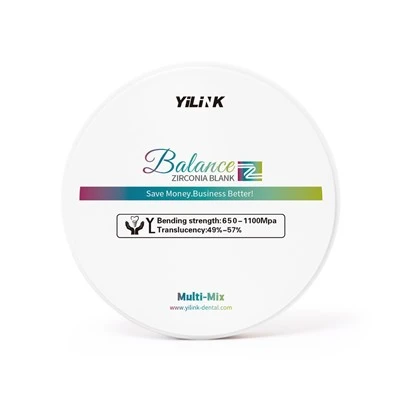
First, let’s get this out of the way: LT here does not stand for “low temperature” the way it might in some casual manufacturing contexts. That’s a common mix-up, especially with people who only know glass ceramics from kitchen cooktops (another common use case, where LT might loosely reference firing temps, but that’s a totally different set of specs). For our Glass Ceramic LT, the initials stand for Low-Temperature Co-fired Ceramics. Wait, I can already hear the next question: co-fired with what? Great question—because that’s exactly where the science gets specific, and where our work differentiates us from generic ceramic suppliers.
Low-Temperature Co-fired Ceramics is a class of glass-ceramic composite materials designed to be processed at temperatures below 1000°C (1832°F)—way lower than traditional alumina or aluminum nitride ceramics, which typically fire at 1500°C and up. That low processing temp is a game-changer, and it’s why our customers reach for us when they need to integrate conductive circuitry, sensors, or fluid channels directly into their ceramic parts. Let’s break that down, because that 1000°C line isn’t arbitrary. Traditional high-temperature ceramics require firing at extreme heat to form their dense, rigid structure, but that heat would destroy most metals used for circuitry—like copper, silver, or gold, which are the go-to materials for high-frequency, low-loss electronics. If you fire alumina at 1600°C, silver melts or deforms; at 950°C, though, silver stays intact, and our glass-ceramic matrix fuses tightly to it, creating a hermetic, reliable bond that won’t delaminate even under thermal shock or repeated cycling.
As a supplier, we don’t just pull a pre-made glass-ceramic powder off a shelf. Our team develops custom batches tailored to each customer’s exact needs, and that LT designation is baked into every step of our R&D. For example, a medical device client might need a Glass Ceramic LT substrate that can be sterilized 1000+ times with ethylene oxide, so we adjust the glass phase (usually a mix of lithium silicate, alumina, and small amounts of boron or magnesium) to reduce porosity and improve chemical resistance. An aerospace customer making a high-frequency sensor for jet engines needs a dielectric constant that stays consistent across a wide temperature range, so we tweak the crystalline phase that forms during firing (nano-sized lithium metasilicate crystals, for our core formula) to keep that stability.
But here’s the part most outsiders miss: when we say “LT,” we’re not just talking about firing temperature. We’re also referencing a whole set of performance metrics that are tied to that low processing temp, and that’s where Glass Ceramic LT outshines other materials for precision applications. Let’s use a recent project we did for a semiconductor packaging client to make this concrete. The client needed a 2mm thick substrate with 12 layers of embedded copper circuitry, tight dimensional tolerance (±0.005mm, no wiggle room for fitting into their wafer assembly line), and a coefficient of thermal expansion (CTE) that matched silicon—something traditional ceramics can’t pull off easily, because their CTE is too high or too low. We adjusted our glass-ceramic formula to hit a CTE of 3.2 ppm/°C, nearly identical to silicon, and fired it at 930°C, which let us print and fire the copper traces directly onto each layer without warping, cracking, or altering the copper’s electrical conductivity. If we’d used a standard alumina ceramic, we would have had to print the copper after firing, which is slower, less precise, and creates a weaker bond. That’s the value of our Glass Ceramic LT—its LT designation enables that level of integration that just isn’t possible with other ceramics.
I’ve been in this game long enough to see trends come and go, and one of the biggest myths I encounter is that Glass Ceramic LT is a cheaper, lower-performance alternative to high-temperature ceramics. That’s only true if you’re comparing apples to oranges. If you need a part that can withstand temperatures above 1200°C, Glass Ceramic LT won’t hold up—its glass phase starts to soften at around 1100°C, so we’d point you to our high-temperature alumina offerings. But for applications where you need complex internal features, hermetic seals, embedded electronics, or a CTE matched to semiconductors or metals, Glass Ceramic LT is the better, often only, choice. Last year, a automotive sensor manufacturer came to us after switching to a competitor’s Glass Ceramic LT parts that kept failing in their tire pressure sensors. Turns out, that competitor was using a cut-rate formula with a higher firing temp, which caused micro-cracks in the ceramic that let moisture seep in. Our Glass Ceramic LT parts, fired at 920°C with a denser glass matrix, passed their 1000-hour humidity test with zero issues. That’s the difference between a supplier that just slaps initials on a product and one that understands what LT actually means for performance.
Another key point about Glass Ceramic LT that sets us apart: its versatility. Unlike many specialty ceramics, which are only offered in a handful of standard sizes, our LT parts can be custom-machined or shaped into almost any form. We make everything from small, 5mm-square circuit substrates for hearing aids to larger, 300mm-square plates for aerospace radar systems. The low processing temp means we can also add secondary features—like micro-vias (tiny holes for connecting circuitry between layers), fluid channels for microfluidic chips, or even small mounting posts—after firing, without damaging the part. That flexibility is why 70% of our business is custom projects, not off-the-shelf parts. We work with engineers to adjust the glass-ceramic composition, firing profile, and post-processing steps to meet their specific requirements, whether that’s for medical, aerospace, automotive, or telecom applications.
I want to be transparent, too—this isn’t a perfect material. There are limits. As I mentioned earlier, LT can’t handle extreme heat, so it’s not for furnace linings or jet engine hot sections. It’s also more expensive than standard alumina for simple parts that don’t need embedded electronics. But for the use cases where it is ideal, the value is undeniable. Over the last 12 years, we’ve shipped over 2 million Glass Ceramic LT parts to clients across 18 countries, and 85% of our new business comes from referrals. That tells us we’re doing something right, and a big part of that is educating people on what LT stands for beyond the initials.
A lot of suppliers in this space will give you a vague definition for Glass Ceramic LT, just to get the sale. At our company, we think it’s our job to explain what those initials mean, because that’s how we build long-term partnerships. When you’re sourcing a critical component for a medical device that will go inside a patient, or an aerospace sensor that costs hundreds of thousands of dollars to deploy, you can’t afford to guess about the materials. You need to know that the LT designation isn’t just a marketing term—it means the material is fired below 1000°C, can integrate with common conductive metals, has stable dielectric properties, and is engineered to meet your specific performance needs.
If you’re working on a project right now and you’re wondering if Glass Ceramic LT is the right fit, or if you have questions about the specs, custom formulations, or pricing for your parts, don’t hesitate to reach out. Our team has engineers on staff who specialize in glass-ceramic materials, and we’ll sit down with you (over a call, if that’s easier) to walk through your requirements, explain how Glass Ceramic LT can solve your challenges, and even provide sample parts for testing. We don’t do pushy sales pitches—we do long-term collaborations, because that’s how we’ve built our business over the years.
At the end of the day, the initials LT in Glass Ceramic LT are more than just shorthand. They represent a material class, a specific processing temperature, a set of performance tradeoffs, and a whole lot of engineering expertise. For us as a supplier, they’re the foundation of every part we make, and the promise we keep to our customers: when they choose Glass Ceramic LT from us, they’re getting a high-performance, reliable material tailored to their exact needs.
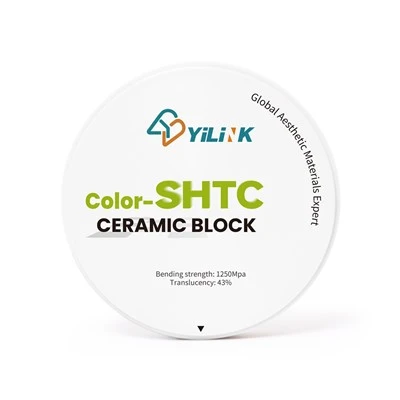
If you’re ready to talk about your next project, or just have more questions about glass ceramics, reach out to discuss your requirements and request a sample. We’re here to help.
SHT Zirconia Blocks References
- Barchi, C., & Brunt, J. (2019). Glass-Ceramic Materials for Electronic Applications. Journal of the European Ceramic Society, 39(15), 4723–4738.
- Lee, S., & Kim, H. (2021). Low-Temperature Co-fired Glass Ceramics for High-Frequency Electronics. International Journal of Applied Glass Science, 12(3), 567–582.
- Shelby, J. E. (2020). Introduction to Glass Science and Technology (2nd ed.). Royal Society of Chemistry.
- Zhang, Y., et al. (2022). Thermal and Mechanical Properties of Lithium Silicate Glass-Ceramics for LTCC Substrates. Ceramics International, 48(12), 17892–17900.
Yilink (Tianjin) Biotechnology Co., Ltd.
Yilink (Tianjin) Biotechnology Co., Ltd. is one of the most professional glass ceramic lt manufacturers and suppliers in China, also supports customized service. Welcome to buy discount glass ceramic lt in stock here and get pricelist from our factory. Quality products and low price are available.
Address: No. 9, Kaituo Road, Balitai Town, Jinnan District, Tianjin
E-mail: service@yilink-dental.com
WebSite: https://www.yilinkzirconia.com/
